
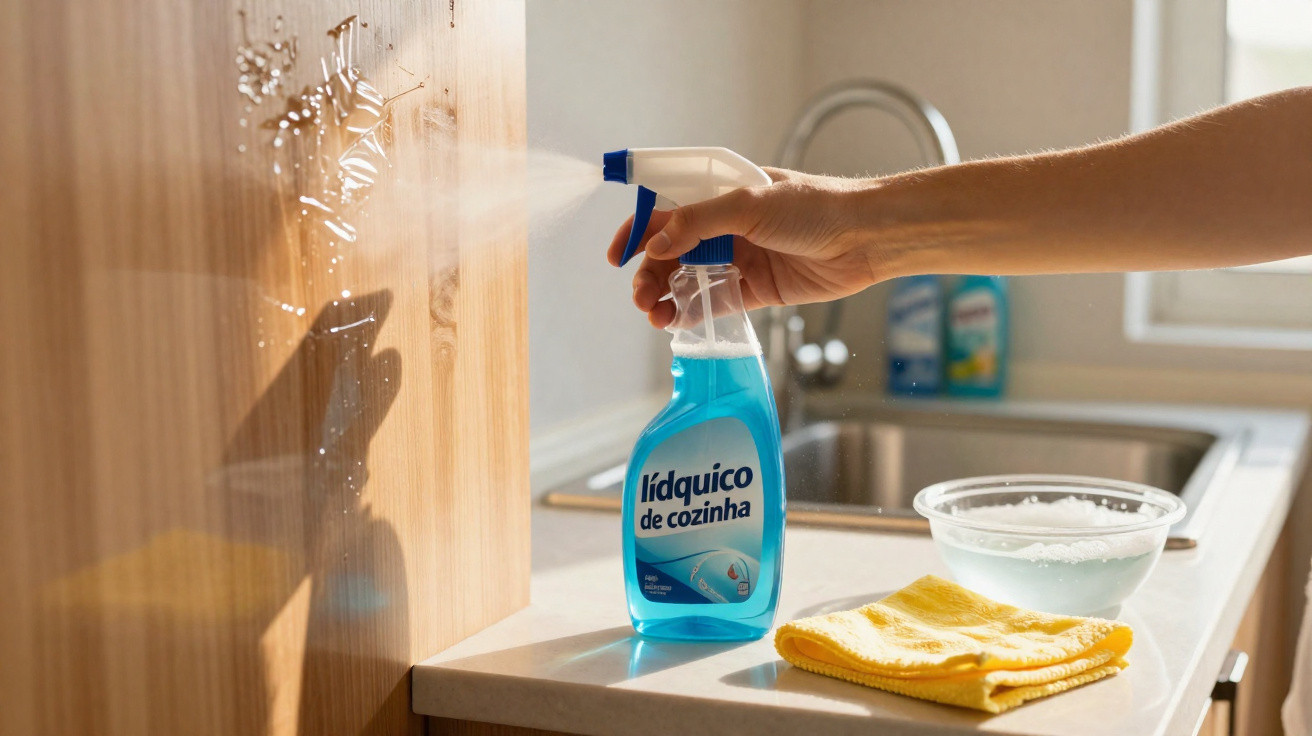
It begins with that slightly guilty glance towards the cupboards while the kettle comes to the boil. The doors near the hob seem… tacky. They are not quite filthy enough to warrant sacrificing an entire weekend to a deep clean, yet grimy enough that you would rather not touch them with unprotected fingertips. One pass with a sponge and washing-up liquid leaves grey smears behind, along with that all-too-familiar sense of defeat.
Then a video appears on your phone. In it, someone casually sprays their cupboards with clear liquid from an inexpensive bottle, wipes once, and uncovers a gleam that looks almost edited. The comments section erupts. Professional cleaners are outraged. DIY enthusiasts cannot get enough.
The supposedly “magic” product? An ordinary bottle that has probably lived in your kitchen for years - one most people reserve for windows.
Online, it is being described as a scandal in a spray.
The overlooked liquid sitting beside your sink
The controversial star of the moment is glass cleaner. Yes, the blue liquid. The spray normally used for streaky mirrors and, occasionally, the microwave door is now being celebrated as an easy shortcut for greasy, lacklustre kitchen cabinets. Social media feeds are packed with striking before-and-after images: yellowed cupboard fronts returning to a gentle cream shade, imitation wood laminate appearing nearly new again, and fingerprints disappearing with one wipe.
The surprising part is that glass cleaner was never really sold for this purpose. It has simply been sitting there beside the kitchen roll while we spend money on specialist degreasers and elaborate “cabinet restorer” creams.
One viral video that particularly fuelled the backlash features a compact rented kitchen, with the sort of standard off-white cupboards that seem to arrive with a faint layer of mystery left by every previous tenant. The creator sprays glass cleaner straight onto a door, leaves it for ten seconds, and wipes it away with a cheap microfibre cloth. The cloth becomes completely brown. The door becomes bright - almost unnervingly bright.
Within a few days, the clip had attracted millions of views and prompted waves of opposing comments. Some professional cleaners branded it “irresponsible” because of the chemicals involved. Others conceded, occasionally with reluctance, that they had used this method for years on laminate and painted cupboards. DIY fans hurried to try it themselves. A handful even recorded their parents saying, “We did that in the ‘80s, this isn’t new.”
What is happening comes down to straightforward science combined with modern-day anxiety. Glass cleaner is essentially a mild solvent blend: a little alcohol, surfactants that break down grease, ammonia in certain formulas, and water to carry the ingredients. On sealed finishes, including finished cabinets, it can rapidly dissolve the sticky build-up of cooking oil, dust and grime from hands.
The anger is coming from two directions. Cleaners dislike watching people ignore patch tests and spray every surface in sight. DIY purists object to “chemical” products when vinegar and bicarbonate of soda have dominated cleaning trends. Even so, the results are difficult to dismiss. One neglected bottle is quietly revealing just how unnecessarily complicated our cleaning routines have become.
How to use glass cleaner on cabinets without damaging them
If you are tempted to pick up the bottle by the sink and spray with abandon, pause for ten seconds. The more measured cleaning advice begins with one small but important step: try it on a concealed area first. Use the inside of a cupboard door, the lower edge of a cabinet, or anywhere the finish will not be noticeable if it reacts.
Instead of spraying directly onto the door, apply a light mist of glass cleaner to a microfibre cloth. Clean a small section using gentle circular movements. If no colour comes away from the cabinet and the dried finish remains smooth rather than cloudy, it is generally safe to continue. Tackle sections roughly the size of a notebook, preventing the liquid from drying too quickly or running into the hinges.
Many people make mistakes by using far too much spray. That is when streaks appear, liquid runs along the wood grain, or you get that alarming “did I just strip the shine?” sensation. There is no need to drench the door. Think “light mist on the cloth, not shower on the cabinet.”
Failing to consider the material is another frequent error. Painted MDF and laminate will usually tolerate glass cleaner. Bare timber, waxed finishes and very old oil-based varnishes are a different matter. This is why professionals become frustrated when a trend goes viral without proper context. They are the people called when someone soaks antique cabinets and is left with dull areas. Realistically, nobody carries out this task every day, so it is worthwhile taking a moment to identify the surface you are dealing with.
The professionals prepared to discuss this cleaning shortcut publicly often sound equally exasperated and entertained.
“Glass cleaner is not evil,” one veteran housekeeper told me. “It’s just misunderstood. Used right, it’s a shortcut. Used wrong, it’s a headache. The product isn’t the problem - impatience is.”
They commonly combine the method with a straightforward, almost unexciting checklist:
- Where possible, select a glass cleaner without strong colouring or heavy fragrance.
- For greater control, always spray the cloth rather than the cabinet.
- Wipe softly instead of scrubbing as though you are sanding the surface.
- If residue concerns you, go over the area afterwards with a damp cloth.
- Polish with a dry cloth to restore that soft, freshly cleaned shine.
It may not be glamorous guidance, but it is the sort that saves you from shouting at a patchy cupboard door at 10 p.m.
Why glass cleaner is changing ideas about “proper” cleaning
Part of the reason this unassuming bottle is generating so much attention is that it challenges the message we have been sold: a separate product is needed for every material and every cleaning problem. One cream for wood. One foam for grease. One spray for fingerprints. One wipe for “kitchen energy”, whatever that is meant to mean. Then a video shows someone using something already in their home and getting better results in five minutes.
There is a quiet sense of relief in that discovery. It invites the thought, “Oh, maybe I’m not lazy. Maybe the system is just noisy.” The frustration voiced by professionals exists alongside the understated satisfaction of ordinary people who are tired of feeling as though they are falling behind in every area of life, including the state of their cupboards.
Beneath the grease, this is really a story about feeling in control. It is the moment you open a cupboard and the door no longer feels sticky. It is when daylight catches a smooth, clean finish rather than a cloudy layer of splashes and smudges. The change may be small, but it alters the atmosphere of the entire room. Suddenly, the kitchen feels easier to breathe in.
There is an emotional aspect as well. Everyone knows that moment of looking around the house and thinking, “How did I let it get this bad?” A fast, low-effort solution does more than clean a cupboard door. It quietens that inner voice a little.
For professional cleaners, the concern is more complicated than online arguments make it appear. Many do use glass cleaner on cabinets in particular circumstances. Their issue is the viral promise of “effortless” cleaning without any explanation of the limits. They are concerned that people may overlook signs of wear, apply ammonia to delicate finishes, or mistake a shiny cupboard door for proof of a healthy home.
At the same time, they are dealing with a public that is more rushed, more exhausted and less prepared to spend half of Saturday scrubbing with three separate products. Sometimes the plain truth is this: the best cleaning routine is the one you’ll still do on a tired weekday night. This is why the small blue bottle has become more than a cleaner: it represents a shortcut, a rebellion and a little permission to choose “good enough” instead of perfect.
| Key point | Detail | Value for the reader |
|---|---|---|
| Glass cleaner can cut cabinet grease fast | Light solvents and surfactants dissolve built-up cooking film on sealed finishes | Gets visible results in minutes with a product you probably already own |
| Application method matters more than the brand | Spray onto a microfibre, test a hidden spot, work in small sections, buff dry | Reduces risk of streaks, damage, or cloudy patches on cabinet doors |
| Know your cabinet material and limits | Best on painted, laminate, or sealed surfaces; avoid raw wood and delicate antique finishes | Helps you use the hack safely without expensive restoration later |
FAQ:
- Can I use glass cleaner on real wood cabinets? Only when the timber is fully sealed with a modern finish and has passed a patch test. For bare wood, waxed surfaces or very old varnish, use gentler cleaners designed specifically for wood.
- Will glass cleaner damage the paint on my cabinets? Light application on a cloth is fine for most good-quality painted cabinets. If paint colour appears on the cloth during testing, stop at once and move to a milder mixture of soap and water.
- Do I need to rinse the cabinets after using glass cleaner? It is not strictly necessary on sealed finishes, but many cleaners prefer to wipe the area once with a damp cloth and then dry it, simply to remove any remaining residue.
- Is this trick safe around kids and pets? Apply common sense: ventilate the room, do not allow anyone to lick or chew the cabinets, and keep the bottle out of reach. If that is a concern, choose a low-odour, ammonia-free formula.
- How often can I clean my cabinets this way? In most busy kitchens, once a month for high-touch areas is sufficient. For everyday marks, a damp cloth with a drop of mild washing-up liquid will usually do the job.






Comments
No comments yet. Be the first to comment!
Leave a Comment