
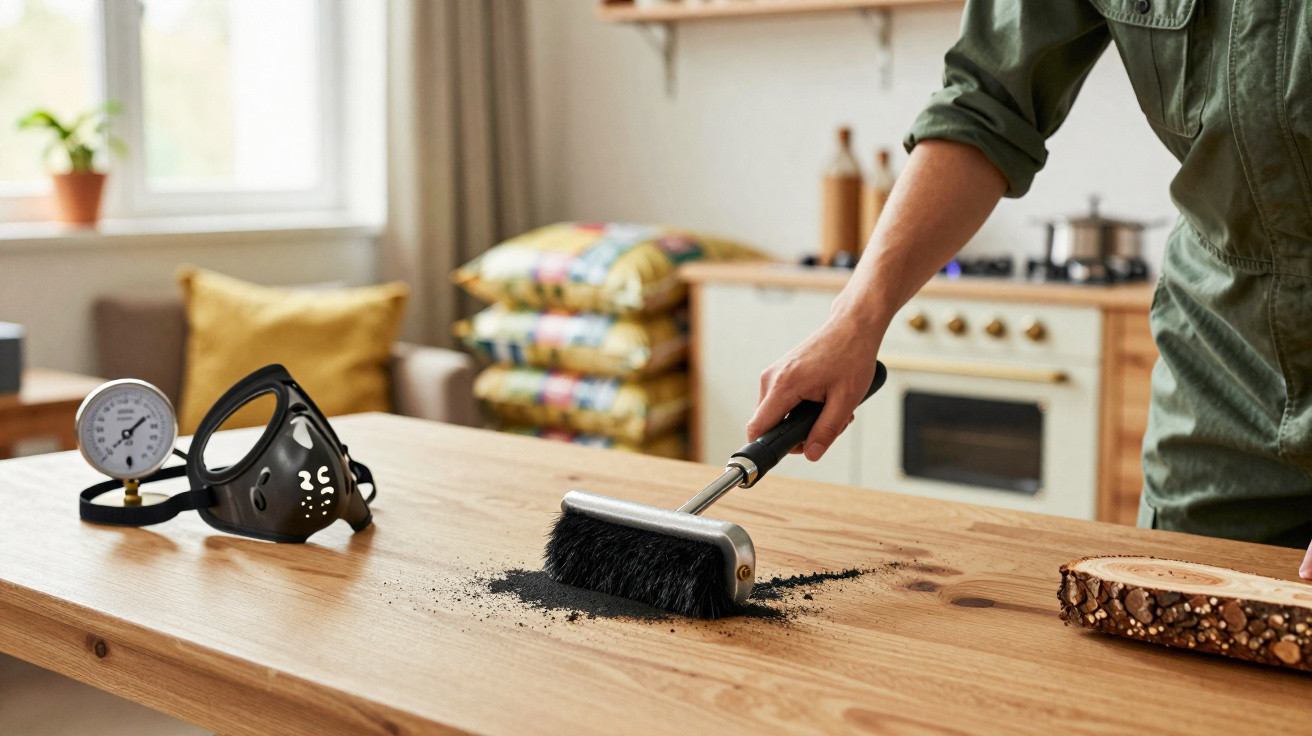
As the nights start to draw in and the temperature drops, millions of homes turn back to their wood burners - and many miss one vital step.
From Europe to North America, stoves and fireplaces come back into regular use as summer gives way to autumn. Before you enjoy that first reassuring fire of the season, there is one safety and legal requirement that needs sorting - and leaving it until the last minute can become both risky and costly.
Why wood heating is booming again
Over the last ten years, wood heating has made a noticeable comeback. Higher gas bills, worries about energy supply and a growing appetite for self-reliance are pushing many households towards logs, pellets and wood briquettes. Today’s stoves and pellet boilers can warm a property effectively, while providing a cosy focal point that conventional central heating rarely replicates.
In France - as in a number of European countries - public schemes even help fund high-efficiency wood appliances. Certifications such as “Flamme Verte” highlight models designed to burn more cleanly while using less fuel for the same heat. Comparable efficiency labels exist in the UK, US and Canada, guiding buyers towards lower-emission options.
This renewed enthusiasm sits alongside tighter rules. Running a chimney or stove is no longer simply a matter of piling on logs and lighting them. There are now defined legal duties covering installation, upkeep and how often the flue must be cleaned.
"Regular chimney sweeping is not just a good habit. In many regions it is a legal requirement tied to fire safety and insurance coverage."
The legal rule: sweeping is not optional
France is a clear illustration of the way wood heating is now regulated. A July 2023 decree covering the maintenance of fireplaces, heating appliances and hot water systems sets out a straightforward requirement: any flue used to carry away combustion gases must be swept at least once a year.
This applies to:
- Open fireplaces
- Closed inserts and wood stoves
- Pellet stoves and boilers
- Traditional fuel or biomass boilers connected to a flue
In built-up areas, or places categorised as higher risk, the minimum increases to two sweeps per year. Local rules and building standards may add further conditions, particularly in city centres where air quality is already under scrutiny.
The decree also stresses that installation must be carried out professionally. The appliance and its flue have to be fitted by a certified technician so the system meets safety and performance requirements. For many homeowners, that documentation is closely tied to their insurance terms. Insurers prefer work that can be evidenced, and they may ask for paperwork after a fire-related claim.
What “proper sweeping” actually means
It may sound straightforward: remove the soot from the chimney. However, the technical standard is more demanding. The French wording specifies a “mechanical action” across the full internal surface of the flue, with the aim of clearing soot and deposits and ensuring the passage is completely unobstructed from one end to the other.
That process includes:
- Brushing the main flue using rods and appropriate heads
- Cleaning the connecting pipes between the stove and the chimney
- Checking the terminal section at roof level (the “stack” or “pot”)
- Examining ventilation and smoke-extraction components
"A full sweep is not just a quick pass with a brush. It is a safety inspection of the entire route that smoke and hot gases follow out of your home."
Why September is the real deadline
In legal terms, French households must have at least one sweep carried out during the heating season, from November through to March. That wording could tempt you to book it in mid-winter. In reality, September is the sensible - and safer - cut-off.
Cutting the risk of chimney fires
Each time you light a fire, small amounts of soot build up, and in some situations creosote accumulates as well. This sticky, tar-like material develops when wood burns slowly or when ventilation is poor. It adheres to the flue walls and can ignite when temperatures climb high enough.
After a full winter of use, a flue may contain several millimetres of combustible residue by the end of summer. When the first stronger autumn fires are lit, the hotter plume of gases can sometimes set those deposits alight. Flames race up the flue, tiles may crack, and at worst roof timbers can catch fire.
Arranging a professional sweep early in autumn removes the build-up before the stove is used again. That single appointment significantly reduces one of the most common causes of domestic fires.
Protecting your health and your neighbours’ air
A soiled flue also performs poorly. Soot narrows the effective internal diameter and makes the surface rougher, which interferes with the draw. Weak draw can force smoke and fine particles back into the room, or send emissions out at a lower height and speed, allowing them to hang around at street level.
Fine particles - especially PM2.5 - can penetrate deep into the lungs and are associated with respiratory and cardiovascular illness. In towns where many properties burn wood, winter smog episodes are already a challenge. On calm, cold evenings, low chimneys and neglected stoves can turn an otherwise peaceful neighbourhood into a smoky haze.
"Sweeping your flue once a year reduces particulate emissions and improves combustion, which means more heat from each log and less smoke for everyone."
Unwanted guests and blocked flues
Chimneys can also attract wildlife. Birds, squirrels and even wasps may use an unused flue during spring and summer as a convenient nesting spot. By September, nests or combs can be obstructing airflow, increasing the chance of smoke spilling back and carbon monoxide entering the home.
During autumn call-outs, technicians frequently remove twigs, nesting material and even dead animals. Booking in September leaves time to deal with any unpleasant surprises before you are relying on the system daily.
Beating the seasonal rush
There is a practical scheduling issue too. Chimney sweeps are typically booked up from October onwards, sometimes for weeks. If you wait until mid-November, you may be left without heating - or be tempted to light the stove without having it checked.
An early-September booking helps you avoid the backlog and usually offers a wider choice of appointment slots, particularly if you want to be at home while the work is carried out.
The hidden cost of skipping your sweep
In France, ignoring sweeping obligations can lead to a fixed penalty of up to €450. Some local authorities go further with stricter rules and inspection arrangements. A comparable approach exists in parts of Germany, where chimney sweeps can have a quasi-public role and specific legal duties.
The bigger financial exposure often comes afterwards. Following a fire, insurers generally request evidence of recent maintenance. Without a valid sweeping certificate, they may cut the payout or refuse the claim altogether, on the basis that avoidable negligence played a part.
| Aspect | With annual sweeping | Without annual sweeping |
|---|---|---|
| Fire risk | Lower, deposits removed | Higher, creosote builds up |
| Insurance coverage | Easier to validate | Possible refusal after a claim |
| Heating efficiency | Better draft, more useful heat | Poor draft, more fuel wasted |
| Legal exposure | Compliance with decree | Risk of fines and disputes |
Timing your log and pellet purchases
Getting ready for a winter of wood heating is not only about the flue. Your fuel plan can have just as much impact on household spending. Prices for logs and pellets tend to rise and fall during the year in fairly predictable cycles.
In most European markets, two periods are especially clear:
- Spring and early summer: demand falls, yards remain well stocked and prices ease.
- Late autumn and early winter: demand surges with colder weather, which drives prices higher.
Purchasing in April, May or June often brings a lower price per tonne and a broader choice of suppliers. It also gives the wood several months to dry under cover before use, improving the heat you get from it. When logs contain too much moisture, energy is wasted boiling off water rather than warming the room.
"Seasoned wood with less than 20% moisture can deliver up to twice as much usable heat as freshly cut logs of the same volume."
If you hold off until late September or October, you are more likely to face reduced availability and higher charges. Many households try to restock as soon as the first cold mornings arrive, and suppliers understand that seasonal pattern. Those who order earlier typically pay less and are more likely to secure the driest loads.
How to check if your logs are really dry
Even well-timed purchases can be undermined by poor storage. A few quick checks can help:
- Check for radial splitting at the cut ends.
- Knock two logs together: dry wood gives a crisp, ringing sound.
- Use an inexpensive moisture meter; readings below 20% are ideal.
Store logs off the ground, under cover with open sides, and leave a small gap between the stack and any wall to allow airflow. Pellets need even more protection: keep them indoors or beneath a fully waterproof cover, as one soaked pallet can collapse into unusable sawdust.
Beyond France: what other homeowners can learn
Even for people living in the UK, the US or elsewhere in Europe, the French approach is a useful indicator. Lawmakers increasingly treat domestic wood burning as more than a private comfort - it is also a public-safety and air-quality concern. Routine sweeping and efficient appliances are likely to become baseline expectations rather than optional choices.
Homeowners can take the opportunity to assess their own arrangements. A yearly visit from a qualified sweep, a simple draw test and closer attention to fuel quality can substantially cut risk. If you rely heavily on wood, working out annual usage, storage needs and the best time to buy can also make costs more predictable.
Some households also combine a wood stove with another low-carbon solution, such as a heat pump or solar thermal panels. In that set-up, wood is reserved for the coldest spells or used as backup during power cuts. This “hybrid” approach spreads risk, helps avoid sharp spikes in local pollution and keeps the familiar comfort of a visible flame without depending on it every day throughout winter.



Comments
No comments yet. Be the first to comment!
Leave a Comment