
“Microcement again?” he sighed, looking from the couple to the half-stripped living room around them. They paused. A year ago they would have answered yes on instinct. Now they swapped a glance and reached for their phones. Both screens showed the same thing: fresh case studies, new finishes, a new buzzword. Tadelakt.
He’d already heard it three times that week. From clients chasing a bathroom “like a boutique spa in Marrakech”. From an architect who’d quietly removed microcement from her sample board. From a tile showroom that had just enlarged its section labelled “lime-based plaster”.
Something was clearly changing. Microcement was starting to feel… very 2020s. And in its place, a gentler, more tactile contender was steadily moving in.
Why microcement is fading – and what’s taking its place
Step into any design-led showroom today and you notice it before you can name it. There are fewer perfectly level, slightly chilly microcement blocks. In their place: soft, velvety surfaces with a muted shimmer-like stone that’s been handled for years.
The vocabulary has shifted too. Sales teams talk about lime plaster, tadelakt, clay finishes and mineral coatings. Rooms are looking less “Instagram loft” and more boutique hotel in a 300-year-old building. The movement is away from hard, seamless shells and towards finishes that show a little variation and character.
Clients are remarkably direct about it: they’ve had enough of surfaces that feel like phone screens.
Ask anyone mid-renovation why they’re walking away from microcement and the same themes come up. Fine cracks around a shower niche. Constant repair kits for a chipped kitchen island. Floors that photographed beautifully but felt oddly clinical once you lived with them.
One couple in London told me they’d fallen in love with microcement on Pinterest-then spent two winters picking their way across an open-plan floor that felt icy and sounded echoey. When they renovated again, they covered it with a warmer-toned lime plaster and finished it with a softer, matte sealer.
They said visitors stopped praising the “cool finish” and began saying, “This feels so calm in here.” It wasn’t just a visual change; it altered how people acted in the space.
And the pivot isn’t purely about looks. It’s also about the reality of living in a home. Microcement was sold as “bulletproof”, yet everyday life isn’t tidy: children drop metal toys, dogs skid across floors, curry splatters on walls.
Lime- and clay-based finishes assume that living leaves traces. They can be patched, re-waxed and lightly reworked. Rather than chasing an eternal, flawless skin, homeowners are choosing materials that develop over time-more like leather than lacquer.
There’s another factor in the background: sustainability. Microcement systems have improved, but lime and clay plasters arrive with a compelling, low-tech narrative that suits the mood of 2025-natural binders, breathable walls, less plastic shine and more mineral depth.
Meet the material quietly replacing microcement
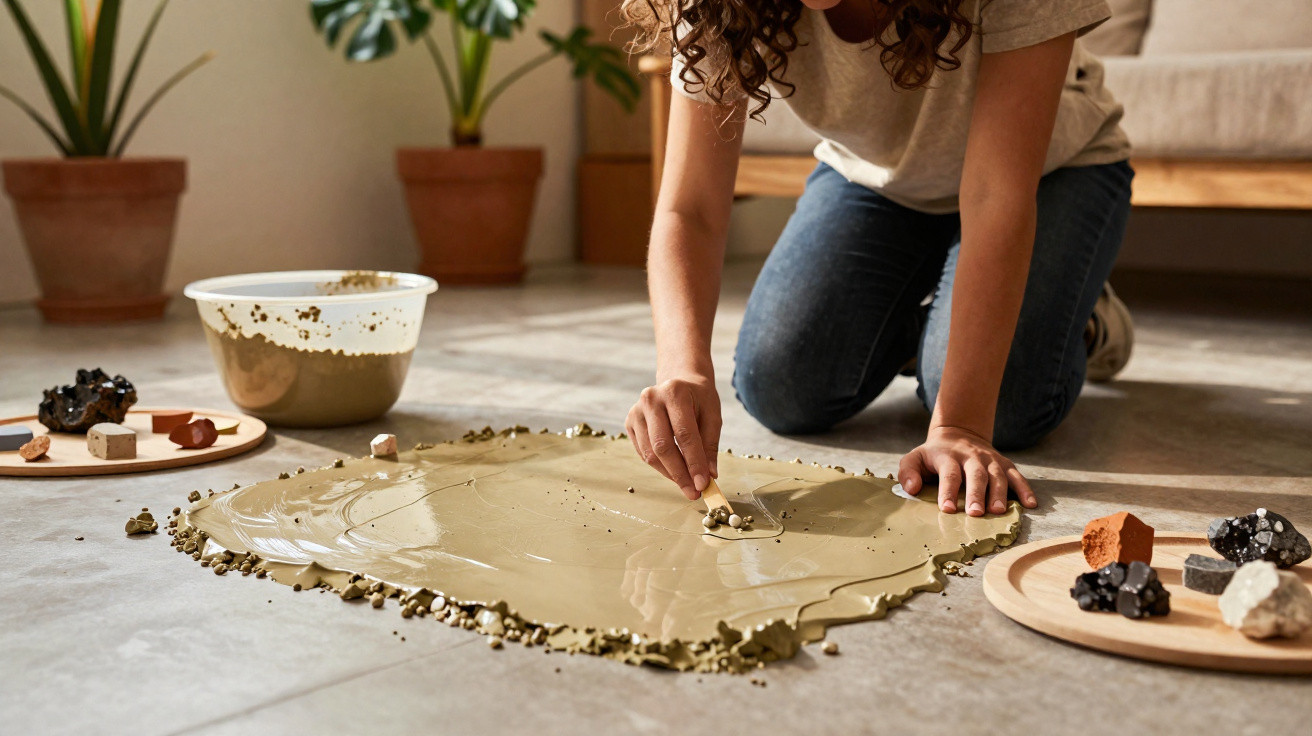
At the centre of this slow revolution is a traditional finish enjoying a modern comeback: tadelakt-style lime plaster. With Moroccan roots and a long history in hammams, it’s applied by hand, compacted and polished with stones, then protected using soap or wax. In 2025, many manufacturers offer more user-friendly systems, but the essence remains.
Visually, it’s soft and clouded, often in gentle, warm shades. Details can be shaped rather than boxed in: rounded corners, curved niches, even sinks formed as a single continuous surface. It’s used on walls, shower enclosures and vanity fronts, and sometimes even for bathtubs.
On Instagram it translates as “spa-like minimalism”. In real life it reads as unexpectedly human: slight ripples, subtle shifts in tone, and a finish you want to touch with your hand rather than simply look at.
Designers are now specifying tadelakt and other mineral plasters in many of the same places microcement once dominated-walk-in showers, hotel-inspired bathrooms, open-plan kitchen splashbacks-but the atmosphere is noticeably different.
In a Paris flat I visited, the owner had swapped a grey microcement bathroom for a warm, sand-coloured lime plaster. The layout hadn’t changed. The glass screen was the same. The black taps were the same. Yet the room’s energy felt completely transformed-less concept store, more Sunday morning.
It doesn’t take much to get the effect. One tadelakt wall behind a bed, or a single curved plaster shelf in a hallway, can make the whole home feel considered rather than overdesigned.
What’s powering the shift is how these old-new finishes connect style with wellbeing. After years of cold greys and glossy surfaces, people are craving warmth, gentler acoustics and rooms that don’t throw light back at them like a screen.
Lime plasters naturally soften and diffuse daylight, so a south-facing room stops feeling like a showroom and starts feeling lived-in. They also sit perfectly with the earthy palette everywhere right now: mushroom, oat, terracotta and stone.
Microcement hasn’t suddenly become “bad”. It’s simply no longer the default choice. We’re moving into an era where texture, tactility and quiet luxury beat slick uniformity. And tadelakt-along with its modern mineral relatives-fits that brief almost too well.
How to switch from microcement to tadelakt-style finishes at home
If you’re renovating in 2025 and microcement was already saved in your inspiration folder, the first practical move is to reconsider your “hero surface”. Instead of thinking, “Where can I put microcement everywhere?”, ask, “Where do I actually want calm, touchable texture?”
Choose one or two focal points: a shower enclosure, a kitchen splashback, a feature wall that wraps into a window seat. Tadelakt is particularly flattering on corners and curves, so it’s worth considering rounded window reveals or softening a sharp partition.
Next, find an installer who genuinely understands the material. Ask to see photos of work that’s been lived with for at least a year-not just brand-new finishes. You want evidence it holds up to daily showers, soap marks and the occasional dropped shampoo bottle.
These finishes come with a learning curve, and that’s where many expectations collide with reality. People see dreamy images and assume a magical, zero-maintenance surface. In practice, it needs looking after-more like a good pair of leather boots.
That isn’t an invitation to daily rituals. Let’s be honest: nobody really does that every day. What it does mean is gentle cleaning, occasional re-waxing or resealing, and accepting small marks as part of the appeal.
If that sounds stressful, begin somewhere low-stakes: behind a headboard, in a reading corner, or around a niche. Once you’ve lived with it and enjoyed the patina, you’ll feel more confident using it in bathrooms and kitchens.
One plasterer I spoke to put it simply:
“Microcement tried to be perfect. Tadelakt is more honest. If you want a bathroom that never changes, pick tiles. If you want a room that grows with you, pick plaster.”
That change in mindset matters. You’re not paying for a forever-pristine skin; you’re bringing a living material into your home.
- Start small: Try it in a cloakroom or on one wall before committing to the whole house.
- Plan lighting: Wall washers and soft side lighting make mineral finishes look premium.
- Avoid harsh cleaners: Mild soap and soft cloths are your friends.
- Talk budget early: Skilled application costs more upfront than basic paint or tiles.
Once you accept that trade-off, it stops feeling intimidating and starts to feel oddly freeing.
What this shift says about how we’ll live at home after 2025
The gradual farewell to microcement-and the rise of tadelakt-style finishes-goes beyond a small design moment. It points to what many of us are asking from our homes after years of glass, screens and constant brightness.
We’re leaving “show home” styling behind in favour of spaces that are forgiving. Surfaces that don’t require us to live like professional stylists. On a Tuesday night, with laundry draped over a chair and children’s toys under the sofa, that matters more than any Pinterest board.
There’s something quietly grounding about a wall that looks a little different each time the light moves across it. It reminds you that time is passing, and that a house isn’t meant to be frozen on the day it was photographed for a listing.
Walk into a room finished in soft mineral plaster and people tend to lower their voices without thinking. Meetings feel less brittle. Arguments lose steam faster. That may sound poetic, but anyone who’s sat in a tiled echo chamber understands how sound affects mood.
Most of us have experienced a hotel room that felt soothing for reasons we couldn’t quite name-without any single standout piece of furniture. Often it’s the background surfaces doing the heavy lifting.
Perhaps that’s the real point: not the downfall of microcement, not the comeback of lime, but the recognition that what’s underfoot and on our walls can either work against us or quietly support us. Microcement had its moment and delivered clean, cinematic interiors. Now the pendulum is swinging back to finishes that forgive, soften and age alongside us.
In a few years we may look back at endless grey microcement boxes the way we now view avocado bathrooms from the 1970s: a time, a taste, a phase. What replaces them won’t only be “prettier”. It will feel more human.
| Key point | Detail | Why it matters to you |
|---|---|---|
| Microcement is losing its crown | Homeowners report cracks, coldness and a clinical look that feels dated in 2025 | Helps you avoid investing in a finish that’s already on the way out |
| Tadelakt-style lime plaster is rising | Soft, tactile, mineral surfaces used in showers, kitchens and feature walls | Gives you a clear alternative that fits current design and wellbeing trends |
| Mindset shift: from flawless to living | New finishes embrace patina, gentle care and visible texture | Lets you design a home that feels calmer, warmer and easier to live in |
FAQ:
- Is microcement really “over” or still worth considering? It’s not dead, just less of a default. It still works in some contexts, especially for very minimal, industrial spaces, but it no longer matches the warmer, softer direction many homes are taking.
- Can tadelakt be used safely in a shower or wet room? Yes, if applied correctly by a trained installer and regularly maintained with the right waxes or sealers. The system behind it (waterproof substrate, membranes) matters as much as the final plaster.
- Is lime plaster more expensive than microcement? Often the material cost is similar, but true tadelakt and high-end mineral plasters can be more labour-intensive, so you pay for craftsmanship. Starting with a small area is a good way to keep budgets under control.
- Will these new finishes crack like microcement sometimes does? Any rigid surface can crack if the substrate moves, but lime plasters are often more forgiving. Good prep, stable bases and experienced trades reduce the risk dramatically.
- Can I DIY tadelakt or mineral plaster at home? Some brands offer DIY-friendly versions, yet the classic polished, water-resistant tadelakt in a bathroom is usually a pro job. If you want to experiment yourself, start with a decorative, non-wet area first.




Comments
No comments yet. Be the first to comment!
Leave a Comment