
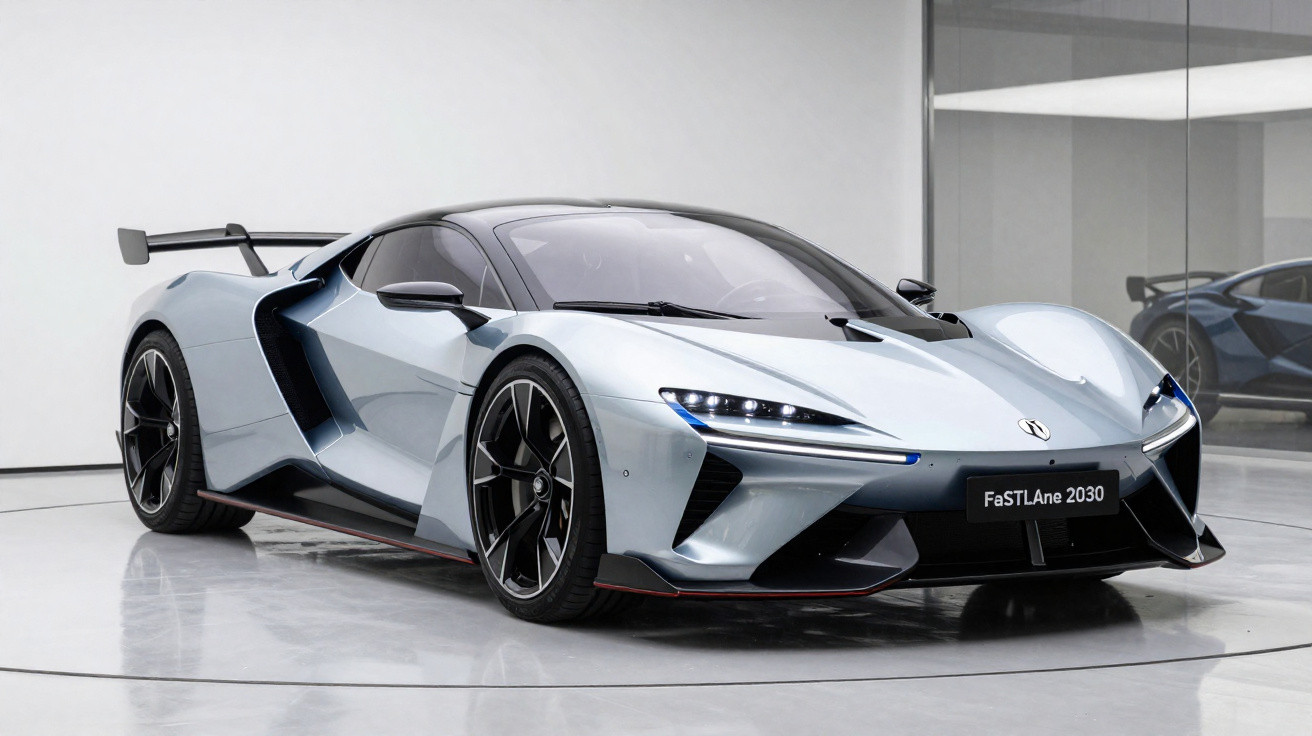
The unveiling of Stellantis’ new strategic plan took place in Auburn Hills, Michigan, in the United States - not in Amsterdam, Paris or Turin. When the industrial giant chose its North American headquarters to present the €60 billion FaSTLAne 2030 plan, the geographic signal was clear before a single measure had been announced.
Naturally, no-one at the company will spell it out like that. The official messaging talks about “empowering regions”, “deep local roots” and an “unmatched brand portfolio”. Antonio Filosa, the chief executive, insisted that “all brands will play a clear role”. The language is inclusive; the figures point in a different direction.
Of the €60 billion pledged, €36 billion is earmarked for brands and products, with 60% directed to North America. The remaining 40% is shared across the rest of the world, including the Enlarged Europe region, which accounts for 45% of the group’s global sales. The area with the most brands, the most plants and the most heritage is allocated less than half of the product investment. There is a reason for that outcome - but it is not a comfortable one.
Europe’s market has stalled
The first explanation lies in the European market itself, and it is more serious than the plan’s topline numbers suggest. Stellantis forecasts that Europe will hold steady at 15 million units a year (including commercial vehicles) between 2025 and 2030, with no major shift in the segment mix. What the plan does not spell out is that those 15 million units are still around 2 to 3 million below pre-pandemic levels - a gap the market has never closed, and which Stellantis now treats as the new normal.
In a market that is not expanding, one manufacturer can only grow by taking share from another. That is where pressure from China becomes especially damaging: dozens of brands have entered Europe in recent years, most of them in the B and C segments - precisely where Stellantis is most heavily concentrated and where margins are tightening.
For Europe, Stellantis is targeting 15% revenue growth and an operating margin of 3% to 5% - a range that sits at the edge of what is acceptable. In North America, the group is projecting 25% revenue growth and margins of 8% to 10%, a far healthier and more sustainable level. Stellantis is not walking away from Europe; it is managing a problem with the resources left over after funding growth elsewhere.
Four “super-brands” - and what gets left behind
A second, more telling indicator is the internal pecking order now taking shape. Under FaSTLAne 2030, the portfolio is built around four global brands - Jeep, Ram, Peugeot and FIAT - which will receive 70% of investment in brand and product, alongside the profitable Pro One commercial division. Two of those brands are North American and two are European.
The so-called regional brands - Chrysler, Dodge, Citroën, Opel and Alfa Romeo - will rely on the assets of the global brands to stand out. DS Automobiles and Lancia drop another rung, becoming managed by Citroën and FIAT respectively and labelled “specialist brands”. In effect, Stellantis is acknowledging they do not have the scale to justify independent teams and budgets. Compared with Carlos Tavares’ 2021 structure, which kept brands autonomous, the shift could hardly be clearer.
STLA One as a way to do more with less
The technical lever designed to handle such variety with less capital is called STLA One. This mega-platform is due to enter production in 2027, will cover the B, C and D segments with more than 30 models by 2035, and claims costs 20% lower than the current Europe-built generation. It also sits within a broader ambition to halve the group’s total number of platforms.
Much of this is Stellantis’ response to “China speed”. With STLA One, the company wants to shrink development cycles from 44 to 24 months - a tacit admission that, until now, it has been moving too slowly.
That acceleration will be reinforced by bringing to Europe models from Peugeot and Opel developed through partnerships with Dongfeng and Leapmotor respectively. It is a sign of how quickly roles have reversed: today, Western giants are the ones turning to Chinese groups for access to the best processes and the latest technologies.
The installed-capacity problem
A fourth issue is more structural and affects the entire industry. In 2025, Stellantis’ European plants were running at only 60% of their 4.65 million-unit capacity. The plan anticipates cutting capacity by around 800,000 units, aiming to reach an 80% utilisation rate by 2030.
The route to solving Europe’s inefficiency is not to flood factories with new models - even though the plan announces 50 new models for Europe by 2030, split evenly between all-new vehicles and refreshes - but to reduce capacity so that existing and future models fill what remains more effectively.
On top of that, the Madrid and Zaragoza plants (in Spain) will be shared with Leapmotor. Rennes (in France) will host the joint venture with Dongfeng. Poissy (also in France), which once built more than half a million cars a year, will stop producing cars. The official statement speaks of “preserve jobs in industry”. Realistically, not every job will be preserved.
The question no-one wants to answer
There is a near-taboo question that has followed Stellantis since 2021: does it have too many brands? In the FaSTLAne 2030 presentation, the answer looked more postponed than resolved. Antonio Filosa is keeping all 14 brands in the portfolio, but what is happening to the smallest ones makes the issue harder and harder to ignore. DS and Lancia have lost their independence.
Maserati continues to push back against sale rumours and has even been promised two new models. More detail on its future will only emerge in December, in Modena. For a brand that has absorbed years of investment without a proportional return, it reads less like a genuine vote of confidence and more like a difficult decision being put off.
If the plan works, the question remains on hold. If it does not, the pressure to rationalise will intensify. In a fresh restructuring round, the choices are harsher: shut down, sell, or let a brand wither through lack of investment. The car industry offers plenty of examples of all three outcomes.
North America gets the bigger slice of the cake, and Europe’s role - to be run efficiently rather than drive growth - is plain to see. That positioning is defensible, but it is not risk-free. Stellantis is Europe’s second-largest manufacturer, and the newest competition - the same one now entering as a partner through the gates of its factories - is showing a momentum that is difficult to match.
The €60 billion will be spent. The question is whether, by 2030, Europe’s share of that sum will have been enough to defend and strengthen its position - or whether it will merely have stopped it from losing ground.





Comments
No comments yet. Be the first to comment!
Leave a Comment