
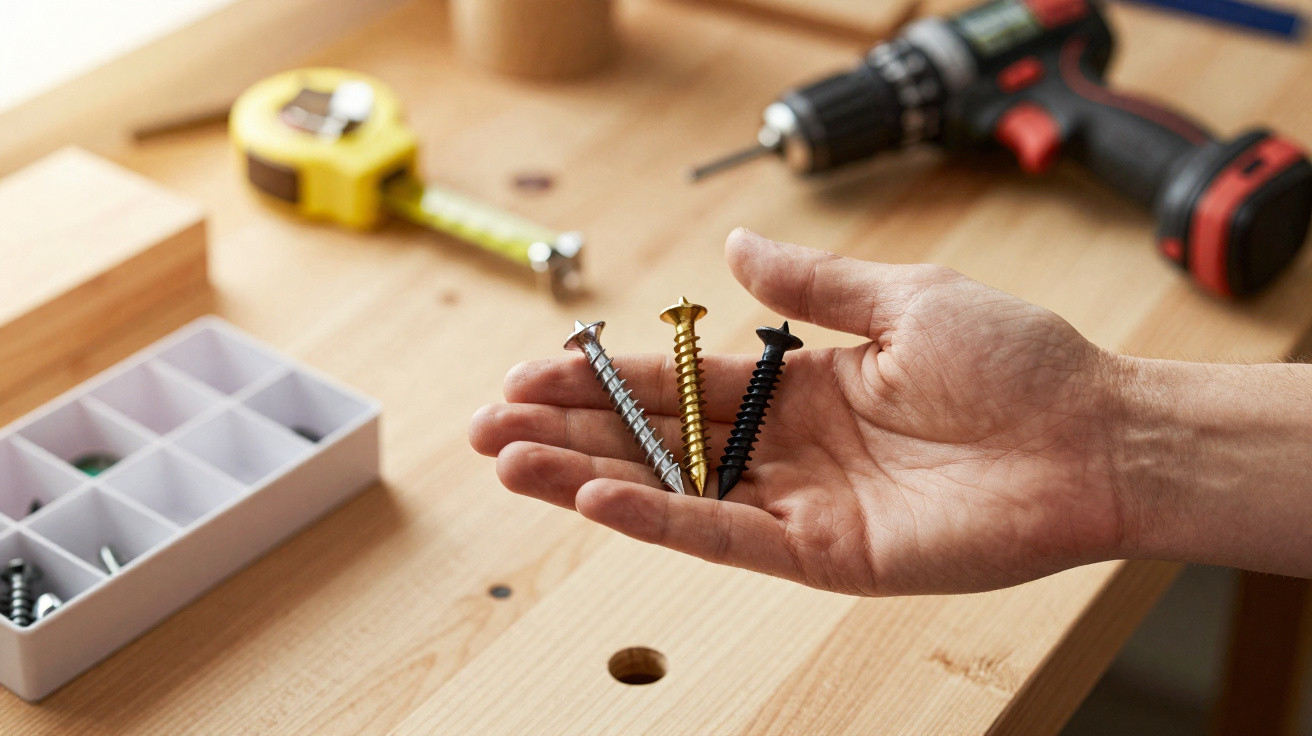
Silver, gold and black screws are not coloured purely for looks. Their shade is usually the result of the base metal or a surface finish, which can affect corrosion behaviour, appearance and the most suitable use. Even so, colour never replaces checking the manufacturer’s specifications.
What do screw colours really indicate?
A screw’s colour can hint at zinc plating, passivation, oxidation or the metal it is made from, but it is not a universal code. Two screws that look identical can have completely different strength, mechanical class and moisture protection when used in the same setting.
That is why choosing based on appearance alone can lead to early rusting, staining on the fixed part, or assembly failures. Before buying, you need to confirm the material, coating, intended environment, load capacity and compatibility with the structure.
In practice, colours are often associated with the following:
- Silver: may indicate clear zinc plating, galvanising, or stainless steel.
- Gold: may come from brass or yellow zinc plating.
- Black: may indicate black oxide, phosphate, or paint.
- Environment: humidity and salty coastal air require specific protection.
- Data sheet: the technical specification matters more than the shade.
What does a silver-coloured screw mean?
A silver screw is commonly made from steel with clear zinc plating, galvanised steel, or stainless steel. As explained in articles discussing what screw colours mean, each finish provides a different level of protection and durability.
Clear zinc plating tends to provide moderate protection in indoor, low-aggression environments, while stainless steel usually copes better with exposure to moisture. Even so, the silver colour by itself does not confirm the material, so checking the packaging remains essential.
Why are some screws gold?
Gold-coloured screws may be made from brass, but many steel versions receive yellow zinc plating or another type of surface passivation. The colour gives a decorative finish and may increase protection, although performance depends on the layer, its thickness and the environment.
Gold does not necessarily mean brass
Steel can also be given a yellow finish
Yellow zinc plating and other surface treatments can create a gold appearance.
Always confirm the base material and the manufacturer’s recommended use.
For furniture and visible joinery, a gold finish can match fittings and decorative details. In technical applications, however, you should not assume the part is brass: the description must state the base metal, the type of coating, and its strength.
Before choosing a gold screw, check:
- whether the screw is brass or simply coated steel;
- which surface treatment created the colour;
- whether the part is suitable for humid environments;
- which material will be drilled or joined;
- whether the decorative finish will remain exposed.
Does a black screw offer greater strength?
Black colouring can come from black oxide, phosphating, black zinc plating, paint, or other specific coatings. These treatments reduce glare and improve appearance, but they provide varying levels of protection, particularly when used outdoors or in areas exposed to water.
Traditional black oxide offers limited corrosion protection and often relies on an additional oil or sealant. Black screws used for timber, drywall or structural work can also differ in composition, so the intended application should take priority over the colour.
When assessing a black screw, consider:
- the exact surface finish that has been applied;
- whether it is specified for timber, metal, drywall or masonry;
- the likelihood of exposure to rain or condensation;
- whether a discreet finish or painting is required;
- the mechanical class required for the assembly.
How do you choose the right screw for each job?
A suitable choice starts with the materials being joined, the expected load, and whether the fixings will face rain, salty sea air or chemicals. Then compare diameter, length, thread type, head type, strength class, corrosion treatment and metal-to-metal compatibility.
For outdoor work, choose screws explicitly rated for that environment, such as certain stainless steels or appropriate anti-corrosion coatings. For structural, electrical or other critical installations, follow the design and any applicable standards, because colour is only a clue-never a guarantee.






Comments
No comments yet. Be the first to comment!
Leave a Comment