
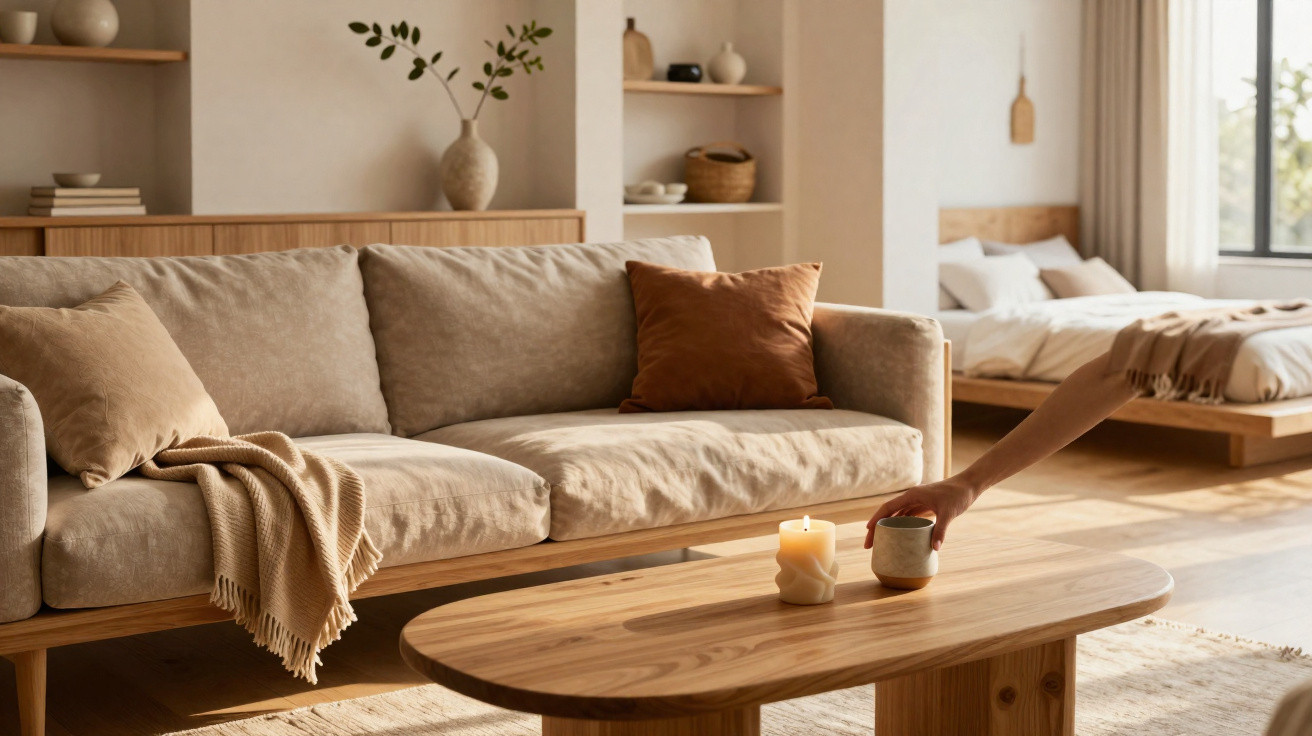
As life outside becomes ever faster, many people want the opposite within their homes: clarity, warmth and balance. Interior trends respond with pared-back shapes, plenty of wood, soft fabrics and a colour palette inspired by coffee, sand and earth. The Japandi style plays an important part in this, and labels such as SHEIN are embracing it deliberately through collections including CIRELLE.
Why living rooms need calm in 2025
Working from home, rising rents and constant pressure mean that our homes now have to serve several purposes at once: a workplace, family hub, hotel alternative and wellness space. It is hardly surprising that crowded decoration and bold colours are becoming less important. The demand is for rooms that create visual order and help to clear the mind.
“Fewer objects, but consciously chosen pieces with a defined shape and tangible material quality – this is what characterises interior trends in 2025.”
The Japandi look brings together Scandinavian practicality and the Japanese Wabi-Sabi philosophy: objects can be simple, understated and slightly imperfect. Minor irregularities in ceramics or subtle variations in wood colour now appear more premium than flawless high-gloss surfaces.
Function meets elegance: living without unnecessary frills
In 2025, furniture and accessories are expected to do more than simply look attractive. Decoration is given a purpose: bowls organise everyday items, trays contain smaller belongings, and baskets conceal cables and throws.
Statement pieces with genuine purpose
SHEIN’s CIRELLE range addresses exactly this idea, with understated yet distinctive objects that help to define a room. Large ceramic or wooden bowls for the kitchen and dining table are one example.
- Filled with citrus fruit on the dining table to add a colour accent
- Used in the hallway as a place for keys and sunglasses
- Placed in the living room for remote controls and small gadgets
This makes one bowl a visual focal point while also bringing order to the space. This blend of design and everyday usefulness shapes many new home accessories.
Wood takes centre stage: natural details for added warmth
Few materials make a room feel welcoming as quickly as wood. In 2025, warm honey-toned finishes are coming to the fore instead of extremely pale or very dark woods. They feel gentle and unobtrusive, and work with almost any wall colour.
Small, adaptable elements are especially sought after:
- Wooden frames for photographs or art prints
- Trays for the coffee table or kitchen
- Coasters and small plinths for vases and candles
These details can be changed easily without the need for a full refurbishment. Paired with ceramics and soft textiles, they establish a calm foundation that still feels lively.
“The mix makes the difference: wood, ceramics and fabrics create a tactile setting that can be rearranged time and again.”
Japandi in everyday life: minimalist rituals instead of decorative overload
One trend becoming stronger in 2025 is that people are no longer styling every corner; instead, they are intentionally creating a few “islands of calm”. An armchair with a side table, a thoughtfully arranged tea or coffee station, or a neatly organised bedside table all create small zones focused on wellbeing.
Ceramics for the daily pause
Minimalist ceramics with rounded shapes and matt finishes fit this development perfectly. Pale beige, warm off-white and soft grey shades look refined without being loud. Even a simple cup with a pleasing feel can unexpectedly elevate a daily coffee break.
This is precisely where the CIRELLE collection comes in: simple cups, bowls and jugs become quiet stars when combined with care. Anyone sitting in their favourite armchair with a warm drink after work will quickly notice how strongly such details shape a room’s character.
Textiles: linen and cotton for genuine comfort
Fabrics are essential when it comes to creating comfort. In the interior trends of 2025, linen and cotton take the leading role, not just in the bedroom but in almost every room.
Sleeping with a natural look
Linen and cotton bedding is increasingly popular because it is breathable and durable. Linen feels cool on warm summer nights, while cotton is softer against the skin and well suited to the transitional seasons and winter.
Muted colours are particularly popular:
- Sand and stone tones
- Off-white
- Soft grey and taupe shades
Textured throws and blankets are also draped loosely over the sofa or at the foot of the bed. A linen table runner or tablecloth in the kitchen completes the look, adding an effortless yet elegant touch to the dining table.
Colour trend mocha mousse: the new favourite shade
One term appearing constantly in the interiors world in 2025 is “mocha mousse”. Pantone has chosen this warm beige shade with a hint of brown as a colour star. Reminiscent of cappuccino foam or milky coffee, it works perfectly with wood, linen and ceramics.
| Area | Use of mocha mousse |
|---|---|
| Walls | As a calming base shade for the living room or bedroom |
| Textiles | Scatter cushions, throws and bedding for a warm atmosphere |
| Décor | Vases, bowls and candles for subtle accents |
When paired with pale beige and grey, it creates a soft, almost spa-like look. Those who prefer more contrast can introduce companion shades such as olive green or deep navy blue. The result is a calm room that does not feel dull.
Trend: soy candles as sculptures
In keeping with the new colour palette, candles remain a major feature but their forms are changing. Rather than classic pillar candles, 2025 brings more ribbed, folded or sculptural versions, often made from soy wax and coloured in shades such as mocha mousse.
The contrast of clean lines and soft organic curves creates small works of art. They are no longer placed only on the windowsill, but deliberately arranged on plinths, trays or stacks of books to form miniature scenes.
CIRELLE by SHEIN: design for everyday life, not only for photographs
The CIRELLE collection illustrates how accessible interior trends work today: not dramatic individual pieces that look good only in magazines, but products that can be integrated into real homes.
“The philosophy: beautiful everyday objects that are often held and used – rather than display pieces left to gather dust.”
These include ceramic mugs, wooden trays, bowls, textiles and candle holders that can be combined with one another. By taking a step-by-step approach, it is possible to create a noticeable change in how a room feels with just a few items.
How to adopt the trend stylishly without emptying your bank account
Anyone who does not want to buy everything new straight away can begin with a clear strategy:
- Set a colour base: no more than three main shades, such as white, warm beige and mocha mousse.
- Define the material mix: use wood, ceramics and linen/cotton as the core building blocks.
- Clear out unnecessary décor: keep only items that suit the scheme or hold emotional significance.
- Add two or three high-quality accents: for example, a large bowl, new cushion covers or a linen runner.
Small changes often have more impact than a complete refit. A fresh wall colour, replaced cushions, or a different arrangement of bowls and candles can immediately make a room feel much more cohesive.
What really lies behind Japandi, Wabi-Sabi and similar styles
Terms such as “Japandi” and “Wabi-Sabi” are now used everywhere, although many people employ them simply as trend labels. At their heart is an attitude: accepting imperfection, using things for longer and buying only what has a genuine place in everyday life.
A small scratch on a wooden table or faint shading in the glaze of a cup are not flaws in the Wabi-Sabi approach, but signs of life. Those who take this idea seriously decorate less, but with greater intention. As a result, rooms feel more personal and less like a catalogue.
To feel happy with a home in 2025, there is no need to recreate a showroom. What matters is a clear base tone, natural materials, a few well-chosen favourite pieces and the confidence to leave space in the room. That is exactly how the sense of calm so many people currently seek can emerge.


Comments
No comments yet. Be the first to comment!
Leave a Comment