
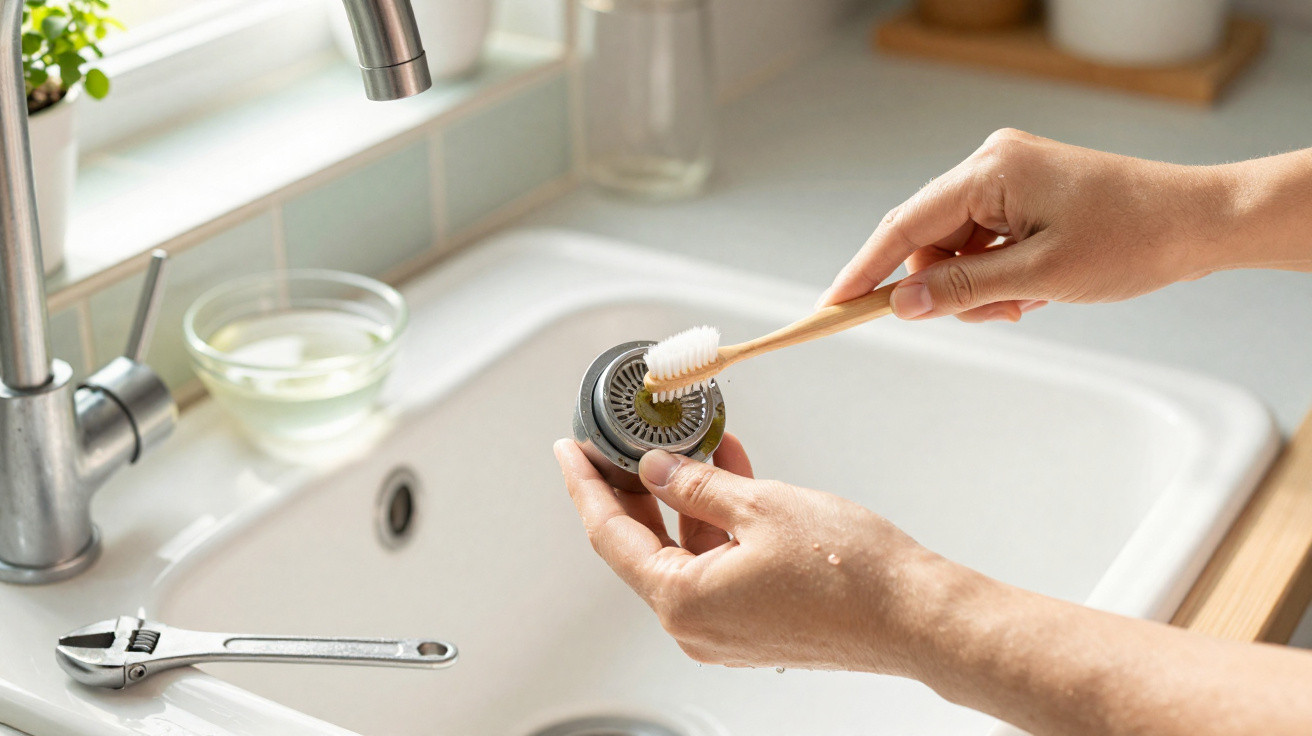
With everyday use, it’s normal for a tap’s water flow to lose force or start spraying off in different directions. In many cases, this has nothing to do with the pipework and everything to do with a near-invisible part: the tap filter-also known as the aerator-which builds up dirt and limescale, lowering water pressure and distorting the stream.
What is a tap filter and how does it work?
The tap filter sits on the very end of the spout and helps shape the water into a neat stream. It does this by blending air into the flow, which reduces splashing. At the same time, it traps small bits of debris carried through the plumbing-such as sand and tiny flecks of rust-acting as a simple, effective barrier.
Over time, minerals found in water (including calcium and magnesium) can form limescale that blocks the tiny internal holes. In hard-water areas this happens more quickly, leaving the flow weak, skewed, or split into several thin jets-something that’s often mistaken for a fault in the installation.
Watch a video on the YouTube channel Oficina de Casa that explains how to remove and clean a blocked aerator on older taps to bring back strong water pressure in minutes:
How to clean a tap filter and restore pressure
Cleaning a tap filter is straightforward and can usually be done in just a few minutes using common household items. Once you remove the limescale and built-up grime, the water typically runs more evenly again and the stream becomes better aligned, helping to prevent unnecessary splashes in the sink.
To keep things organised, it helps to gather what you need and follow a simple sequence, so the filter is taken apart and put back together properly.
- A soft cloth to protect the metal
- Tweezers or an adjustable spanner
- White vinegar to dissolve limescale
- An old toothbrush
- A small container of warm water
- Wrap the end of the tap with the cloth to prevent scratches.
- Unscrew the filter by hand, or use the adjustable spanner over the cloth.
- Check the internal mesh screens for limescale or trapped dirt.
- Soak the filter in vinegar for a few minutes.
- Gently scrub with the toothbrush, getting into the gaps.
- Rinse with warm water and screw it back onto the tap.
How to stop the tap filter blocking again
Once the filter is clean, a few simple habits can keep the stream steady for longer. The aim is basic preventative maintenance so a blockage doesn’t return and cause pressure loss or send the flow off course.
These steps include occasionally checking how the water is coming out, doing a quick vinegar clean when needed, and replacing the part if the metal is already corroded or damaged-something that’s usually inexpensive and easy to fit.
When should you investigate other parts of the plumbing?
If the water pressure stays low across several taps in the property even after the filter is cleaned, the cause is likely elsewhere. You may be dealing with partially closed stop taps/isolating valves, blocked internal hoses, ageing valves, or even restrictions in the building’s or street’s supply.
In situations like these, cleaning the aerator still makes sense, but it’s wise to assess the system more broadly, including the water tank, pipe sizing, and connections. That way, the tap filter works alongside a better-balanced installation, helping keep day-to-day water use comfortable and reducing the chance of bigger interventions before they’re actually needed.



Comments
No comments yet. Be the first to comment!
Leave a Comment