
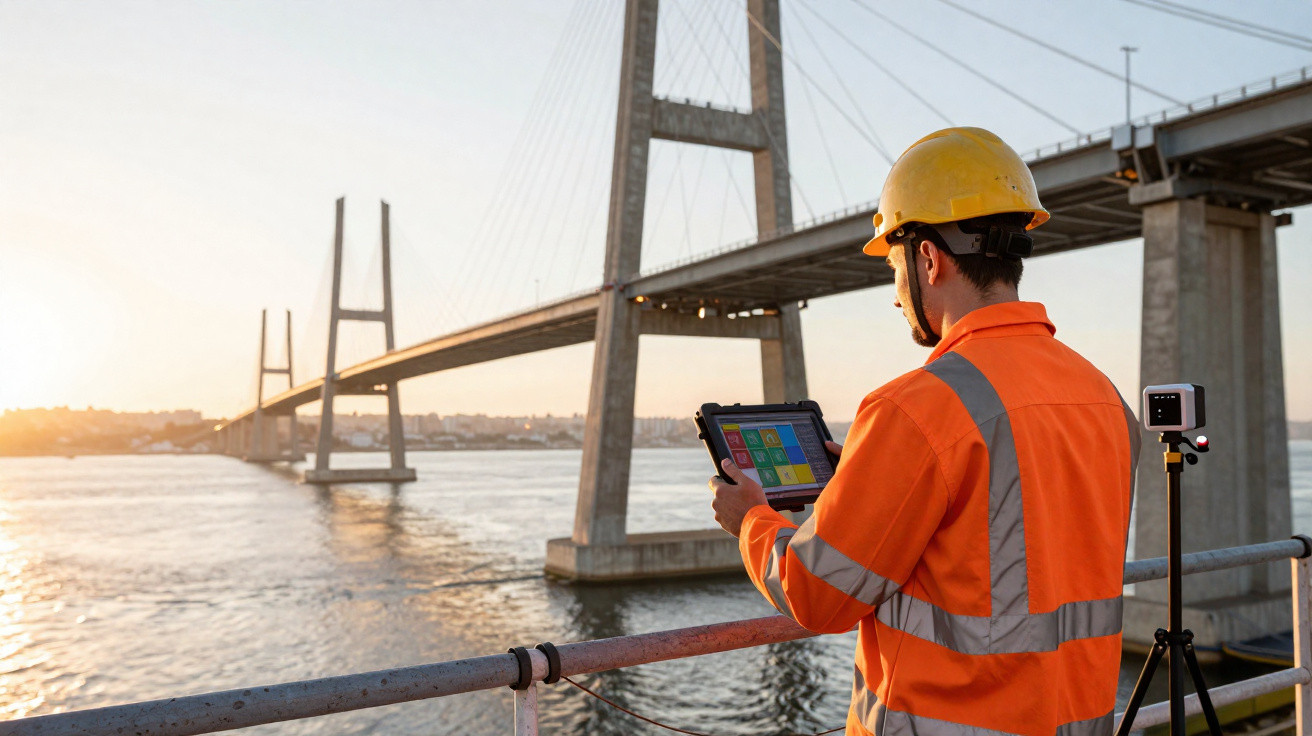
The Vasco da Gama Bridge will be fully closed to traffic overnight from 15 to 16 September (Monday into Tuesday), between 00:00 and 06:30.
Overnight closure on the Vasco da Gama Bridge (15–16 September)
This shutdown is linked to the pre-scheduled Structural Monitoring Programme of the Vasco da Gama Bridge. Since the bridge opened on 29 March 1998, this will be the tenth time this monitoring exercise has been carried out.
Alternative crossing via the 25 April Bridge
During the closure, Lusoponte recommends using the 25 April Bridge instead. However, it notes that this crossing has restrictions on the transport of dangerous goods, which is only permitted between 02:00 and 05:00.
What the monitoring has shown over 27 years
Overall, since traffic began in 1998, the Structural Monitoring Programme of the Vasco da Gama Bridge has recorded stable behaviour. The surveillance thresholds set at the outset have been adjusted over time, not because of any anomalies, but to reflect improved calibration of the instruments in use.
Across these 27 years, the same equipment has also helped build a clearer picture of how the infrastructure behaves under traffic loads, temperature changes and environmental conditions. As the dataset has grown, it has become possible to fine-tune alert limits and to separate fluctuations considered “normal” from those that may be viewed as potential warning signs.
In practical terms, the consistent records from the Vasco da Gama Bridge have confirmed the project’s forecasts and reinforced the value of this programme as a preventative tool.
What does it involve?
The Structural Monitoring Programme is an integrated system of surveillance and analysis designed to track the Vasco da Gama Bridge’s structural “health” on an ongoing basis. It brings together sensors, inspections and specific tests that measure deformation, vibration, movement and temperature variation, linking these readings to traffic and environmental conditions.
Among the components monitored are the bridge decks, piers, piles, expansion joints and bearings, as well as the stay cables on the main bridge.





Comments
No comments yet. Be the first to comment!
Leave a Comment