
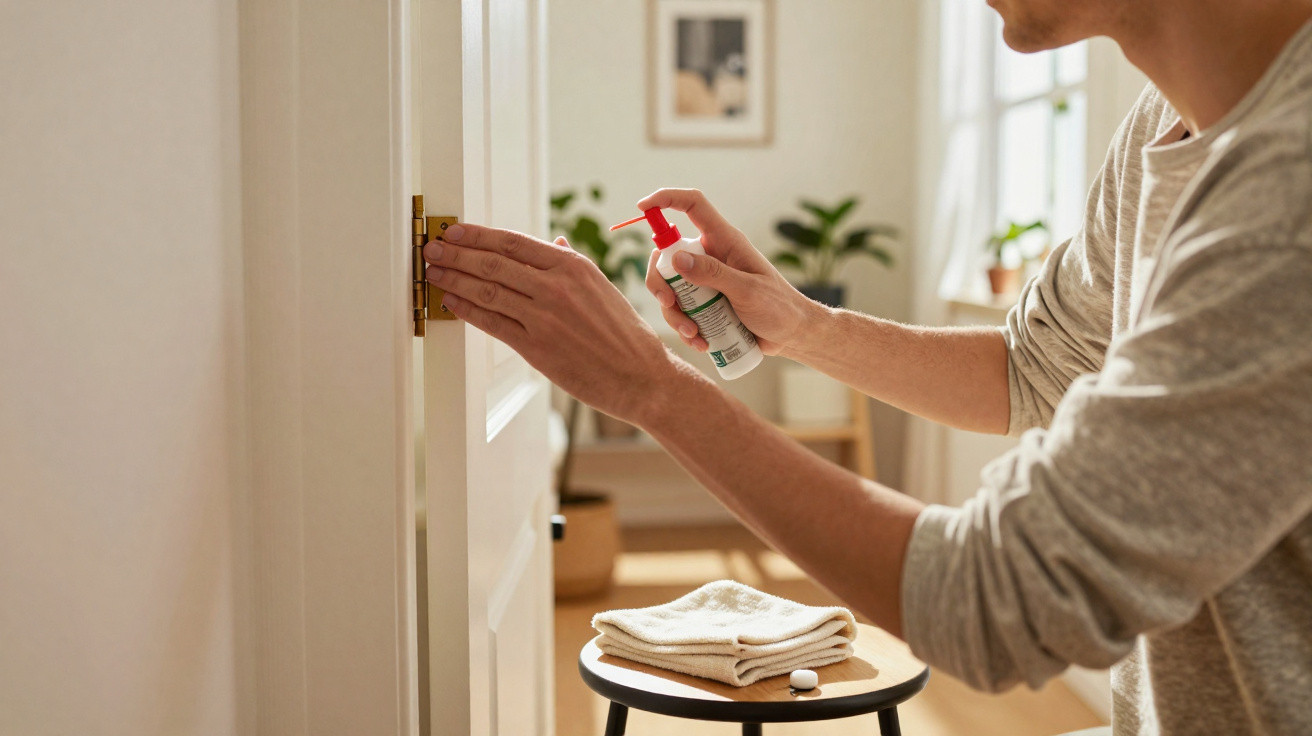
The house is silent, everyone is asleep, then it happens.
A long, shrill squeal comes from the bedroom door, slicing through the quiet like an out-of-tune violin. The hinge protests, one person groans, another mutters “oil that door tomorrow”, and, naturally, tomorrow never arrives.
Days go by, yet the same sound interrupts early mornings, midnight trips to the loo and children creeping towards the kitchen. It starts to feel like another resident of the house: irritating, and faintly humiliating when visitors are staying. You find yourself shutting doors in slow motion, barely breathing as though you are disarming something dangerous.
Many people assume squeaky doors simply come with an older property. They see them as a quirk, a little bit of “character” to put up with instead of repair. Yet that irritating little noise has a very straightforward cause: friction, lack of maintenance and easy solutions that are right in front of you.
One small adjustment can keep it quiet for years.
Why your doors squeak – and why it feels weirdly personal
The first time a squeaky door truly catches your attention, it is more than just a sound. It feels like a small reproach: proof that the house needs some care while you have been scrolling on the sofa instead. That drawn-out creak signals metal components grinding and rubbing together, wearing down bit by bit whenever the door is pushed without thought.
There is something surprisingly personal about the noise. Doors belong to the private rhythm of a home: children banging one shut after an argument, someone arriving late, someone else leaving before dawn. A squeak broadcasts all that movement more loudly than it should. It can seem as though your house is clearing its throat in front of an audience.
Once you notice one, they seem to be everywhere. There is the bathroom door screeching in the morning, or the kitchen cupboard clicking and groaning whenever you reach for coffee. Before long, you begin plotting exactly where each sound comes from.
In a 2023 UK home survey, more than half of respondents described squeaky doors as “mildly infuriating”, but only a small proportion had ever removed a hinge pin. These noises flourish in that gap between being annoyed and taking action. Most people tolerate the squeak for years, adapting their behaviour around it: lifting the door a little by its handle, applying pressure at exactly the right angle, or planning journeys around sleeping children and flatmates working night shifts.
One renter in London called it “living with a noisy secret”. When guests slept over, she dreaded the recognisable whine of the bathroom door during the night. She attempted to shut it halfway, keep it completely open and even wedge a sock beneath it. The hinge continued to complain. When she eventually dealt with it, the solution took less than five minutes and did not cost a penny.
That is the odd nature of minor household issues. They can look difficult until you confront them directly. A squeaky hinge appears to need “someone who knows what they’re doing”, so the task is postponed repeatedly. Eventually, the noise becomes part of everyday life.
Fundamentally, the sound comes from metal components moving with too little lubrication, or with dirt and light corrosion trapped between them. In some cases, the door has moved slightly and is placing additional force on one side. In others, loose screws mean the hinge is carrying more strain than it should. Remove the fuss and the cause is simply friction, grime and gravity.
This is also why spraying a hinge with just any product rarely provides a lasting answer. It may cover up the issue for several days, only for the squeak to return. Recognising the basic mechanism – pressure combined with friction – helps you resolve it properly rather than merely quietening it for a weekend.
From squeal to silence: simple fixes you can do in your socks
The most dependable repair begins with a step that almost everyone overlooks: clean the hinge before lubricating it. Look closely at the hinge knuckles and the pin passing through them. Carefully tap the pin upwards using a small nail and hammer, or even the back of a screwdriver, and it should gradually lift out. This pin is the central shaft that allows your door to move.
Place the pin on kitchen roll and clean off the black deposit. The residue is a blend of old oil, dust, rust and tiny particles of worn metal. Once the pin is clean, use a small amount of suitable lubricant: one or two drops of light machine oil, silicone spray applied to a cloth, or a little white lithium grease if you have some available.
Put the pin back while moving the door gently, allowing the lubricant to distribute itself evenly. Then open and close the door several times. The improvement is often immediate, like switching off a background drone that you had not realised was making you tense.
When there is no “proper” lubricant at home, it is tempting to reach for whatever is nearest in the kitchen. Some people rely on a very small amount of petroleum jelly, while others choose olive oil or sunflower oil. They may provide an immediate result, particularly on internal doors, but they draw in dust and can leave hinges sticky and dirty after a few months.
Let’s be honest: nobody actually does this every day. You are unlikely to add “clean hinges” to a weekly schedule. If you are going to do it, you want the result to endure. That means steering clear of products that become tacky with age, such as cooking oils, and anything that could mark paintwork or timber.
There is also the simple risk of applying too much. Plenty of people drench hinges in spray lubricant until it runs down the door. It may feel rewarding, as though you are genuinely “fixing” the issue, but it can create streaks and attract dirt. Usually, a few carefully placed drops or short bursts are plenty.
“I used to think squeaky doors meant something was breaking,” says Mark, a maintenance worker from Birmingham. “Most of the time it’s just a dry hinge that’s been ignored for years. Five minutes, a cloth, a bit of oil, and the house suddenly feels calmer.”
Before deciding that the hinge alone is at fault, carry out a few quick checks. Step back and inspect the gap around the door: is it consistent, or does the upper corner rub against the frame? Carefully lift the door using the handle; considerable movement may indicate loose screws or a slightly distorted hinge.
- Carefully tighten the hinge screws, beginning with the top hinge.
- Where screws turn without gripping, place a wooden matchstick or thin piece of dowel in the hole.
- Remove old ridges of paint around the hinge that could be causing rubbing.
- Check the door after every minor adjustment rather than changing everything in one go.
- When a hinge is severely rusted, replacement may be faster than trying to repair it.
A quiet door is not solely about silence; it is about feeling that your home is working with you, rather than objecting every time you move.
Living with quieter squeaky doors – and why small fixes change how a house feels
After quietening a few persistent hinges, you begin to experience the sounds of your home in a different way. You notice the dull impact of footsteps, the gentle click of latches and the near-silent sound of a wardrobe door closing at midnight. The squeak that once jolted you awake has disappeared, replaced by something softer and almost imperceptible.
This kind of DIY can become addictive because it brings a fast, obvious result. There is no need for a shed full of equipment, a van or a YouTube-sized budget. You only need a cloth, perhaps a small step stool for high hinges, and a little attention. Soon, you start listening for other sounds: the creaking cupboard above the kettle or the gate that shrieks whenever the wind catches it. Rather than remaining background annoyances, they become opportunities.
There is also a subtle pleasure in understanding the objects you use every day. Hinges may be small, but they support doors opening into bedrooms and bathrooms, cupboards filled with food and wardrobes holding memories. When they move smoothly rather than screeching, the daily choreography of life feels easier and less rough around the edges.
Perhaps that is why a simple squeak can be so aggravating: it is the sound of an item you constantly rely on but that has not received attention for years. Repairing it is not only about the hinge; it is about taking back that small measure of control.
| Key point | Detail | Benefit for the reader |
|---|---|---|
| Clean before lubricating | Remove the hinge pin, wipe away dirt, then apply a small quantity of suitable oil | A longer-lasting result, with less chance of the squeak returning |
| Choose the right product | Opt for light oil, silicone or white grease rather than cooking oils | Avoids stains, dust build-up and rancid smells |
| Check the door alignment | Inspect the gaps, tighten screws and fill holes that have become too large | Reduces wear, takes pressure off hinges and improves day-to-day comfort |
FAQ:
- How long should a proper hinge fix last? With a decent lubricant and a cleaned hinge pin, many interior doors stay quiet for one to three years, unless the door is heavily used or misaligned.
- Is WD‑40 good for squeaky hinges? It can stop the squeak quickly, but it’s more of a water-displacing cleaner than a long-term lubricant, so pairing it with a light oil or grease gives better results.
- Can a squeaky door mean something is structurally wrong? Occasionally, yes: if the door is sagging, scraping heavily, or the frame is cracked, the squeak might be a symptom of movement or damage rather than just dryness.
- What if I live in a rented flat? You can still clean and lightly oil hinges without altering the property; if a hinge is badly rusted or loose, speak to your landlord before replacing it.
- Are there “no-mess” options for people who hate DIY? Yes, small precision oil pens and silicone sticks let you apply lubricant exactly where it’s needed without drips, making the whole job a two-minute, no-clean-up task.





Comments
No comments yet. Be the first to comment!
Leave a Comment