
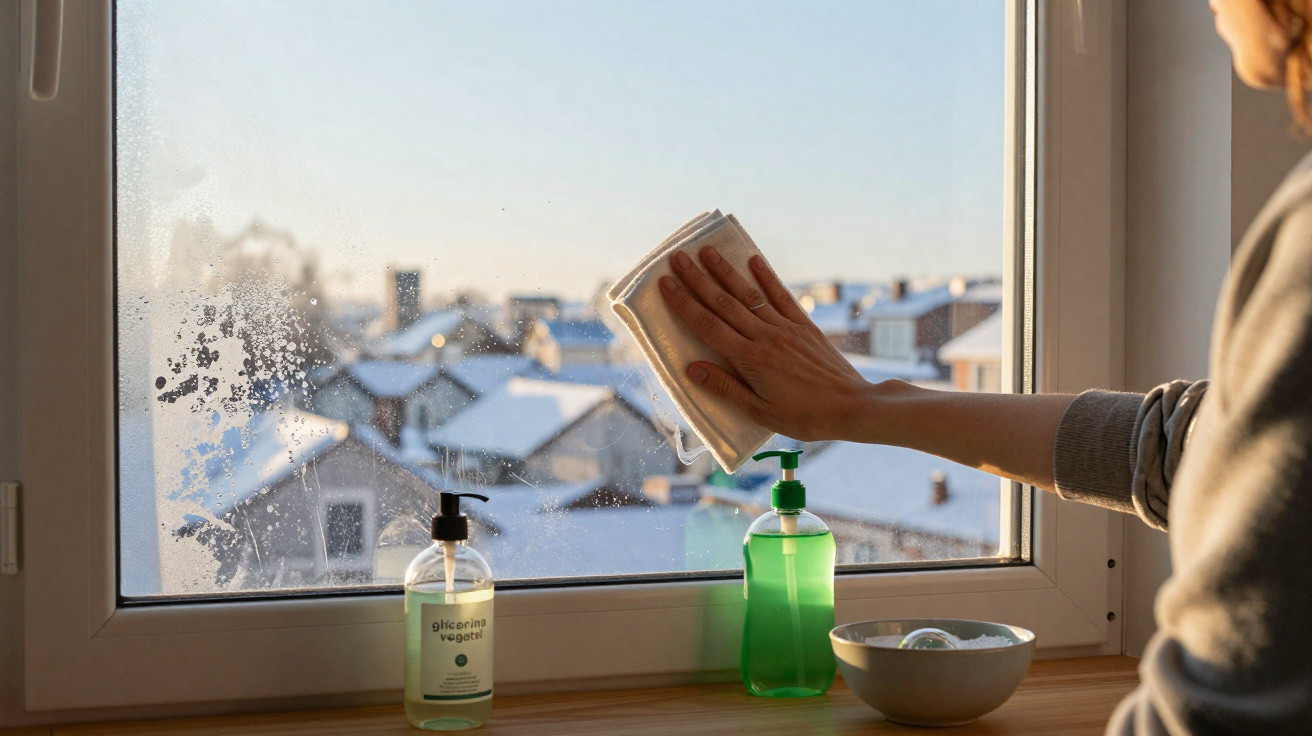
Across the UK and US, the winter routine is much the same: open the curtains to see windows coated in moisture, beads of water running into the frames and a slight damp smell in the room. But well before dehumidifiers and smart thermostats became common, households used an unassuming everyday product to help keep their windows clear.
Why winter turns your windows into waterfalls
Condensation on window glass does not mean that a home is “dirty” or “old”. It is simply physics at work. Indoor warm air collects moisture from showers, cooking, breathing and even houseplants. As this moist air touches cold glass, it cools quickly.
As cooler air is unable to retain as much water vapour, the surplus becomes liquid water on the coldest surfaces in a room - most often the windows. This critical point is called the dew point.
When indoor air hits its dew point on cold glass, you do not just lose your view – you create a miniature swamp for mould.
When this happens day after day, the issue goes beyond misty windows in the morning. Water flows into the frames and onto the sills, particularly with older timber windows. Eventually, this moisture can:
- Promote black mould around corners and seals
- Rot timber frames and spoil paintwork
- Create musty smells and an ongoing sense of humidity
- Set off allergies or make asthma symptoms worse
Most people take familiar approaches. They dry the windows every day with towels, turn the heating up to try to “dry the room out”, or leave a window tilted open and let warmth escape outdoors. These measures address the symptom rather than the cause.
The old-fashioned trick: a thin, invisible film on the glass
Long before anti-fog sprays were sold in shops, households had a simple solution: alter how water behaves on the glass itself. Instead of attempting to remove moisture from the entire room, they changed the surface so that droplets could not stick in the usual way.
The method uses an item that is likely already beneath your kitchen sink or in your bathroom cabinet: washing-up liquid or vegetable glycerine.
A microscopic film of dish soap or glycerine can stop water beading on the pane, so your window stays clear instead of milky.
Each product is a surfactant, meaning it changes surface tension - the force that causes water to gather into rounded droplets. On untreated glass, this surface tension creates countless tiny beads that disperse light and give windows their cloudy, fogged appearance.
Applying a minute amount of surfactant across the pane makes the droplets spread flat or run off instead. They form a thin, more even layer that is much less noticeable. This lets light travel through the glass, leaving it visibly clearer even if the room air remains humid.
Why this low-tech hack still works in 2026
Today’s homes are generally better insulated but frequently less well ventilated. Double-glazing is helpful, yet it can also trap moisture indoors more efficiently. For that reason, this understated and nearly forgotten practice from earlier generations still offers practical benefits.
It provides several benefits at the same time:
- No electrical appliance buzzing away in a corner
- No need to purchase specialist sprays or aerosols
- A virtually free solution using things already at home
- Less need for daily drying, with fewer marks on the glass
How to apply the anti-condensation film properly
Using only a small amount is essential. Apply too much and the windows will look greasy and smeared; use too little and the treatment will not remain effective for long.
| Step | What to do | Why it matters |
|---|---|---|
| 1. Clean | Clean the inside glass, then dry it completely. | Dirt beneath the film causes patches and streaks. |
| 2. Prepare | Use a clean microfibre cloth that is slightly damp. | This makes it easier to distribute the product evenly in a thin layer. |
| 3. Add product | Put one small drop of washing-up liquid or glycerine onto the cloth. | A very small quantity covers an entire pane. |
| 4. Spread | Work over the inside window in circular movements, covering all of the glass. | This produces an even, invisible layer over the pane. |
| 5. Buff | Polish with another dry cloth until the glass is crystal clear. | This clears away visible residue while retaining a microscopic coating. |
Do not rinse the window after buffing. The remaining trace is exactly what keeps condensation at bay.
Rainbow-like patches or smeary marks indicate that slightly too much product was used. Usually, polishing a little longer with a dry cloth will resolve this.
What difference can you expect the next morning?
On a cold January morning, untreated windows around the home will probably mist up as they normally do. Treated panes, however, should look noticeably different. They will usually remain largely clear, while any moisture forms flatter, nearly invisible layers rather than thick white fog.
In many homes, this can also influence the feel of the room. With less water dripping down cold glass, there may be less of the chilly, damp feeling that often prompts people to turn the thermostat up slightly.
When condensation stops clinging to the glass, the room often feels warmer and drier, even at the same thermostat setting.
This coating does not last indefinitely. In high-humidity rooms such as bathrooms and kitchens, it may need reapplying every few days. In a bedroom with average moisture levels, it can work for a week or longer before fogging starts to return.
Glycerine or dish soap: which should you use?
Both options are effective, although they perform a little differently:
- Vegetable glycerine usually lasts longer and is commonly found in pharmacy preparations. When used in an extremely thin layer, it forms a clear, stable coating.
- Washing-up liquid costs less and is more readily available, although some brands include fragrances and dyes that can leave slight marks when too much is applied.
For people with sensitive skin or respiratory concerns, unscented or “sensitive” products are the safer option. One bottle can be enough to treat all the windows in an entire flat throughout the season.
Going further: reducing moisture at the source
This traditional method tackles condensation on the window, but it does not remove moisture from the air itself. Combining the window treatment with a few everyday habits can make a meaningful difference to a healthier home.
- Open trickle vents or a window for 5–10 minutes after cooking or showering.
- Cover pans with lids when food is boiling or steaming.
- Where possible, dry laundry outside or near an extractor, rather than on radiators.
- Position furniture a little away from external walls so air can circulate.
Together, these steps reduce the chance that condensation simply moves from the glass to colder wall corners or behind wardrobes, where mould may spread unnoticed.
When condensation becomes a warning signal
A small amount of fogging during a freezing morning is normal for many homes. Regular, heavy condensation may instead point to more significant insulation or ventilation issues.
If water regularly collects in pools on window sills, black mould appears on walls or there is a continual smell of damp, an anti-fog film is only one part of the solution. Extractor fans, trickle vents or even insulation improvements may need consideration.
Even so, for households managing tight energy budgets, this straightforward treatment offers an unusual combination: it is inexpensive, takes little effort and makes an immediate difference. The approach quietly used by previous generations before central heating and double glazing still deserves a place alongside modern high-tech devices.






Comments
No comments yet. Be the first to comment!
Leave a Comment