
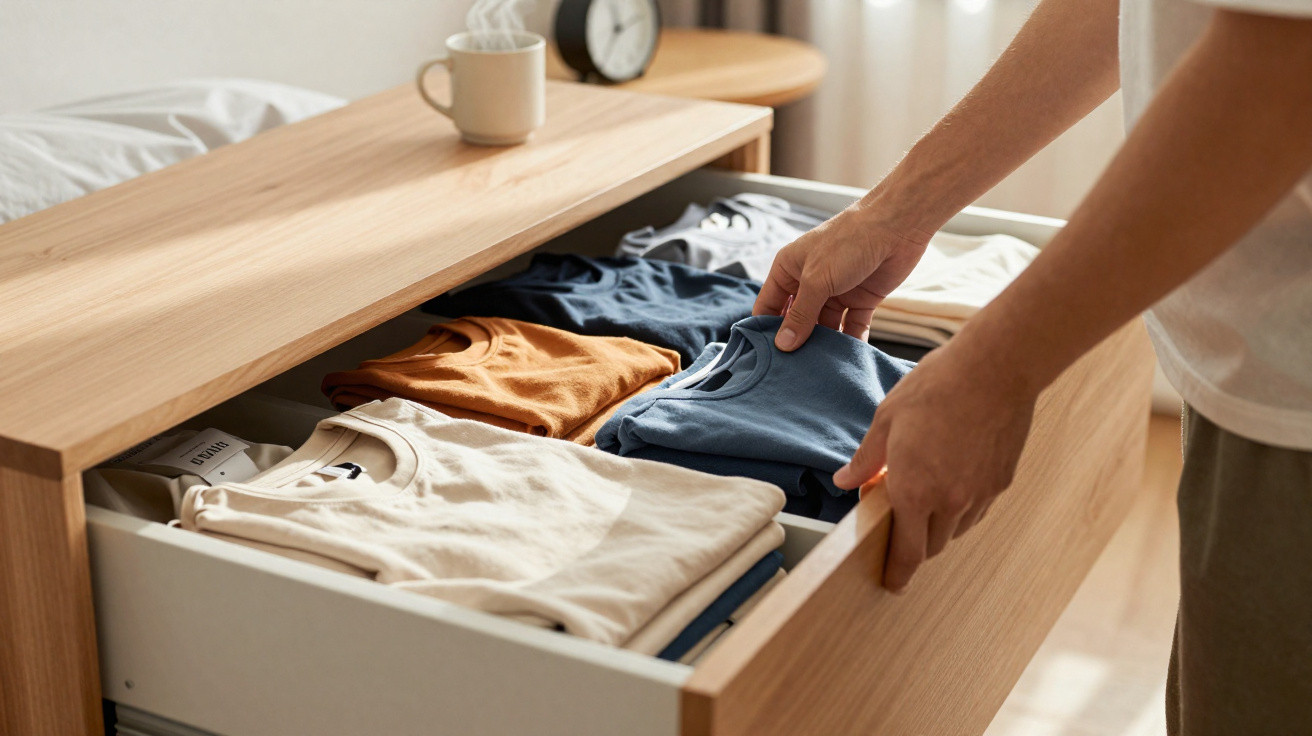
The first time you open a drawer in which every T-shirt is standing upright like a row of files, it can feel oddly unnatural.
Surely clothes should sit in soft, slightly collapsed piles? Yet there they are: orderly, colourful and quietly ready to be chosen. You notice the blue striped top that disappeared three months ago. A lone sock is suddenly reunited with its match. And the drawer no longer groans when you push it shut.
This modest, almost absurdly simple adjustment – folding clothes vertically rather than stacking them – has moved beyond minimalist blogs and into hectic, cluttered homes. It is less a passing trend than a small practical way to cope with everyday life. You reclaim a few centimetres of room, save a few minutes each morning and gain the faint feeling that your home might, just possibly, be under control.
Then another thought emerges: the way your clothes stand can reveal quite a lot about how you live.
Why vertical folding transforms what you can see
Open a conventional drawer and, for the most part, you see only the peak of a soft clothes mountain. The top two or three pieces seem usable; everything underneath is a mystery. You pull, rummage, disrupt the entire stack and close the drawer with more force than necessary. That routine plays out in bedrooms everywhere.
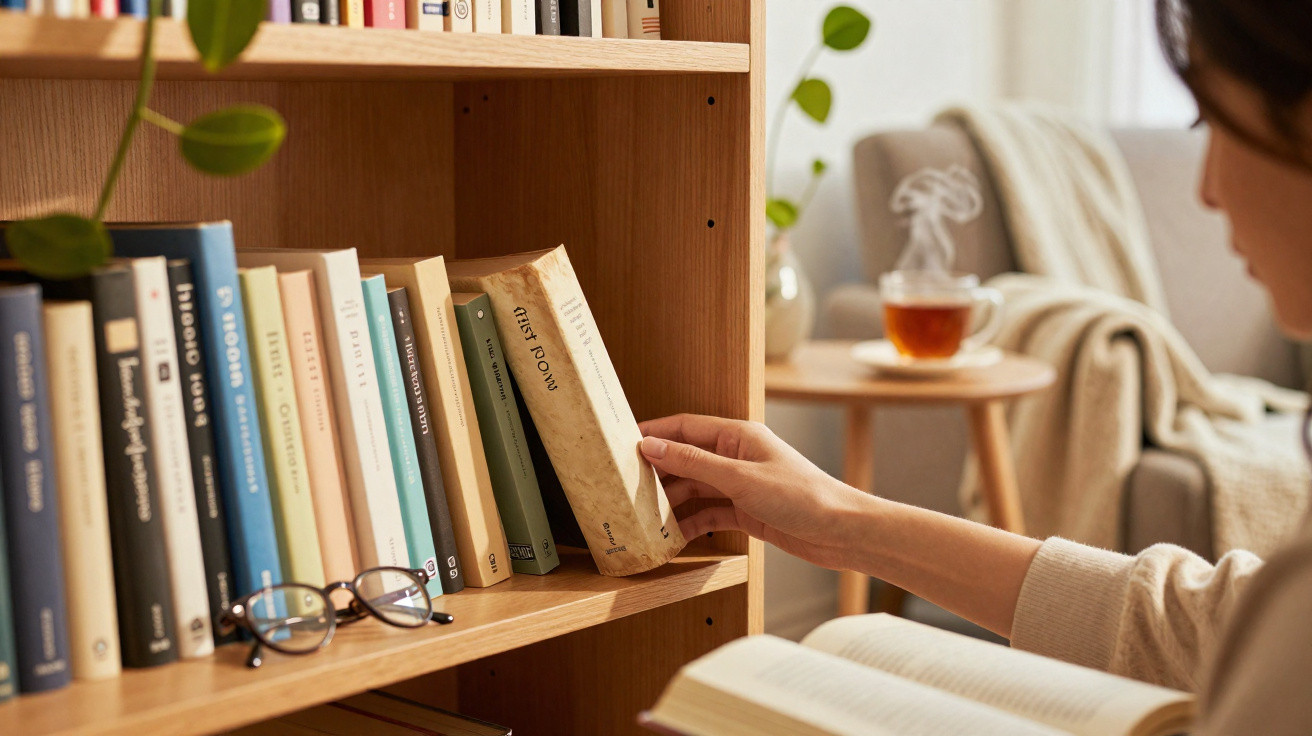
With vertical folding, the picture changes straight away. Each T-shirt, pair of leggings and hoodie sits upright at an equal height beside the next, much like books on a shelf. One quick look lets your eyes take in colours and fabrics. There is no digging required: you simply choose. Visibility stops being a luxury and becomes the standard.
It may sound like a minor difference, but in daily use it feels substantial. Once you can see an entire drawer in one glance, it is hard to go back.
Consider Emma, 37, a mother of two who was certain she would never “fold like those organizing ladies on YouTube.” Her bedroom chest of drawers was a battleground, with children’s sports tops hidden beneath work clothes and odd pyjama bottoms stranded at the back. On Monday mornings, choosing an outfit felt like negotiating with a bomb.
One Sunday, almost as a challenge, she emptied just one drawer and used vertical folding for T-shirts alone. There were no expensive organisers or labels, only neater, more compact folds and shirts arranged like files. More than twenty tops fitted into the drawer, with space left over. The following morning, her eight-year-old opened it, gasped and selected an outfit independently in ten seconds.
Emma did not suddenly turn into a compulsive tidier. However, she stopped purchasing duplicate black T-shirts “because they disappear.” She no longer shouted, “Where’s your football shirt?” down the hallway. Little by little, that one drawer eased the strain on her mornings.
The principle is almost comically straightforward. In flat stacks, only the garment on top is genuinely accessible; the rest is hidden stock. You possess those items, but do not properly use them. Vertical folding cuts down visual noise while increasing what specialists call visual inventory – the number of belongings your mind can identify at a single glance.
A drawer becomes a shallow container of upright garments rather than a deep hole filled with layers of fabric. Gravity is no longer working against the arrangement. Instead of clothes pressing down on one another, they rest lightly together, held in place by the drawer’s sides. This is why more can fit inside: fewer pockets of air are trapped between loose, uneven folds. The outcome is simple: more garments in each drawer and less daily rummaging.
Behind the pleasing appearance, it is simply a quiet partnership between physics and vision.
How to fold clothes vertically without losing your mind
Begin almost ridiculously small: one drawer and one category. T-shirts are ideal because their fabric is flexible and their shape uncomplicated. Place a shirt flat, smooth it once with your hand and fold it into a long rectangle roughly the width of your palm. Then fold the rectangle into thirds or quarters until it stays upright on its own, like a small fabric book.
Arrange these “books” from the front to the back of the drawer. They should be neither squeezed together nor spread too loosely, but lean a little rather than fall over. In a deep drawer, store seldom-worn pieces at the back, such as holiday tops or exercise shirts used only twice a week. Keep everyday favourites at the front, where you can reach them easily on a bleary-eyed morning.
That is all it takes: you have changed the drawer’s “view mode” from a pile to a gallery.
The real challenge is not the folding method but the habits we already have. You return home late, with washing still warm from the tumble dryer, and the urge to throw it in “just for tonight” is genuine. Let us be honest: nobody truly manages this every day. Life becomes untidy, and drawers do too.
So give yourself some grace. Aim for “good enough vertical” rather than Instagram-level perfection. Your children might roll their T-shirts, provided they can still stand upright. Socks may be loosely matched and placed in small upright bundles. Semi-upright disorder is still better than flat disorder that you cannot see.
A common error is committing completely at once and tackling every drawer in the home during one draining afternoon. That is when resentment sets in. Work on one drawer first, use it for a week and see what does and does not suit you. The technique should fit your life, rather than forcing your life to fit the technique.
“Once my T-shirts stood up, I saw which ones I actually loved. The rest were just guilt taking up space,” admitted Mark, 42, who turned his single overflowing dresser into two calm, half-empty drawers.
Some people find it helpful to support the change with a few straightforward rules, almost as though making a small agreement with themselves:
- Keep only one category in each drawer or section: T-shirts with T-shirts, rather than mixed in with jeans.
- Use a “standing test”: if a folded item will not stand up, it may be too flimsy or too worn out to retain.
- Follow one-in, one-out for basics: when you buy a new black T-shirt, let an old one leave.
- Allow quick resets: spending 3 minutes standing fallen clothes back up is better than waiting for an ideal tidying day.
These small actions make drawers feel less like basic storage and more like a calm, useful ritual.
What vertical folding changes in everyday life
During the first week of using vertical drawers, something subtle shifts. You open one while in a hurry without feeling that small surge of irritation. There is less sighing and less pulling at clothes. Your morning seems two minutes longer, even though the time has not changed. That extra breathing room creates an unusual sense of calm.
You also begin to spot the clothes you never wear: the neon vest that always ends up at the back, or the itchy jumper that looks wonderful but never comes out of the drawer. When they stand beside your favourites, these unsuitable pieces are easy to identify. They are not evidence of failure, but useful information. You see your actual habits rather than merely your shopping impulses.
A neat, visible drawer will not solve your life on a difficult day. Still, it quietly removes one source of stress: “Where is that thing I need right now?” In a week of delayed trains and overflowing inboxes, that is far from a small benefit.
| Key point | Detail | Benefit for the reader |
|---|---|---|
| Full visibility | Clothes are stored vertically, like files in a drawer | Lets you see every item at a glance and choose more quickly |
| Space saving | Compact folds reduce empty gaps between fabrics | Creates room in drawers without buying new furniture |
| Less mess | Taking one garment no longer disrupts the whole pile | Drawers stay organised for longer and need less tidying |
FAQ
- Does vertical folding genuinely save that much space? Many people say they fit 20–40% more items in each drawer because folds are tighter and less air is wasted between garments.
- Will standing clothes make them more creased? When garments are folded into firm rectangles, they usually crease less than they do in sagging stacks compressed unevenly at the bottom.
- Is this method only suited to minimalists? No. It can be particularly useful for people with many clothes, helping them see what they own, rotate outfits and avoid repurchasing similar pieces.
- Which clothes are best for vertical folding? T-shirts, leggings, pyjamas, underwear, baby clothes and lightweight jumpers adapt easily; bulky hoodies may require a larger fold.
- Are drawer dividers or special boxes necessary? They can help but are not essential. Start with empty drawers, then add small boxes later if you would like more structure.


Comments
No comments yet. Be the first to comment!
Leave a Comment