
I was in the hallway with a full laundry basket in my hands, looking at a pair of shoes left squarely in the centre of the floor. The dinner plates had not been cleared from the table. A wet towel was draped over the back of a chair like a piece of modern art. The house was not dirty exactly; it was simply… perpetually untidy.
It felt as though my whole life was spent going in circles: picking things up, wiping surfaces, sorting items, then starting again. Miss one day and the house appeared to erupt. First, I criticised myself for lacking discipline, then I resented everybody else for not doing enough.
One frustrated evening, I paused and asked myself a different question: “What if the problem isn’t us, but the way the house is organized?”
That small question changed everything.
The small change that stopped my house boomeranging into chaos
The answer was not a fresh cleaning timetable or some miraculous product. I stopped arranging the house by room and began organising it by activity.
Rather than seeing a “living room, kitchen, bathroom”, I started seeing a “coffee zone, drop zone, snack zone, mail zone, laundry launch pad”. Each recurring, irritating kind of clutter was given one small, obvious place to land.
It may sound theoretical, but the difference was very real. At last, belongings had somewhere to “live” that reflected where we genuinely used them, rather than where a Pinterest board suggested they belonged.
The cleaning workload did not vanish. It simply stopped growing when I was not looking.
Here is one straightforward example. Our kitchen worktop used to attract every stray item: keys, post, sunglasses, chargers, Lego pieces and receipts. I would clear it three times daily, yet it still resembled a lost-property counter.
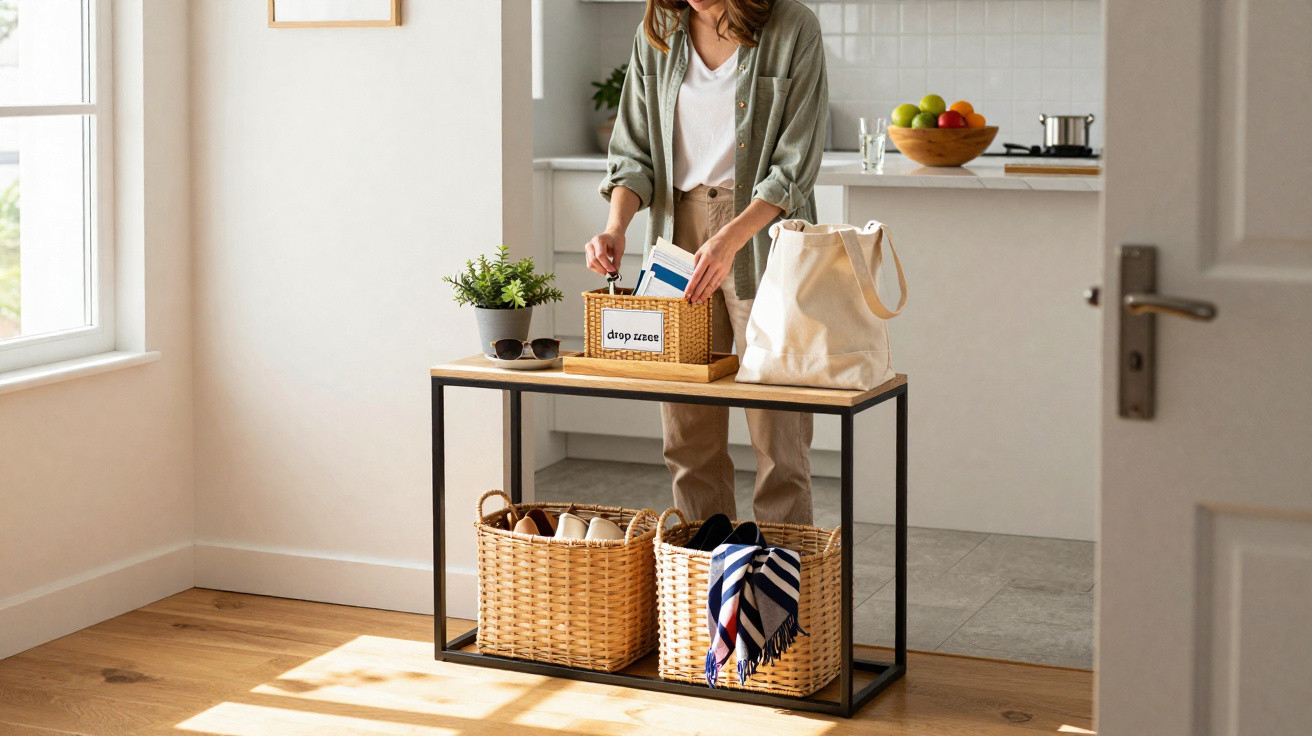
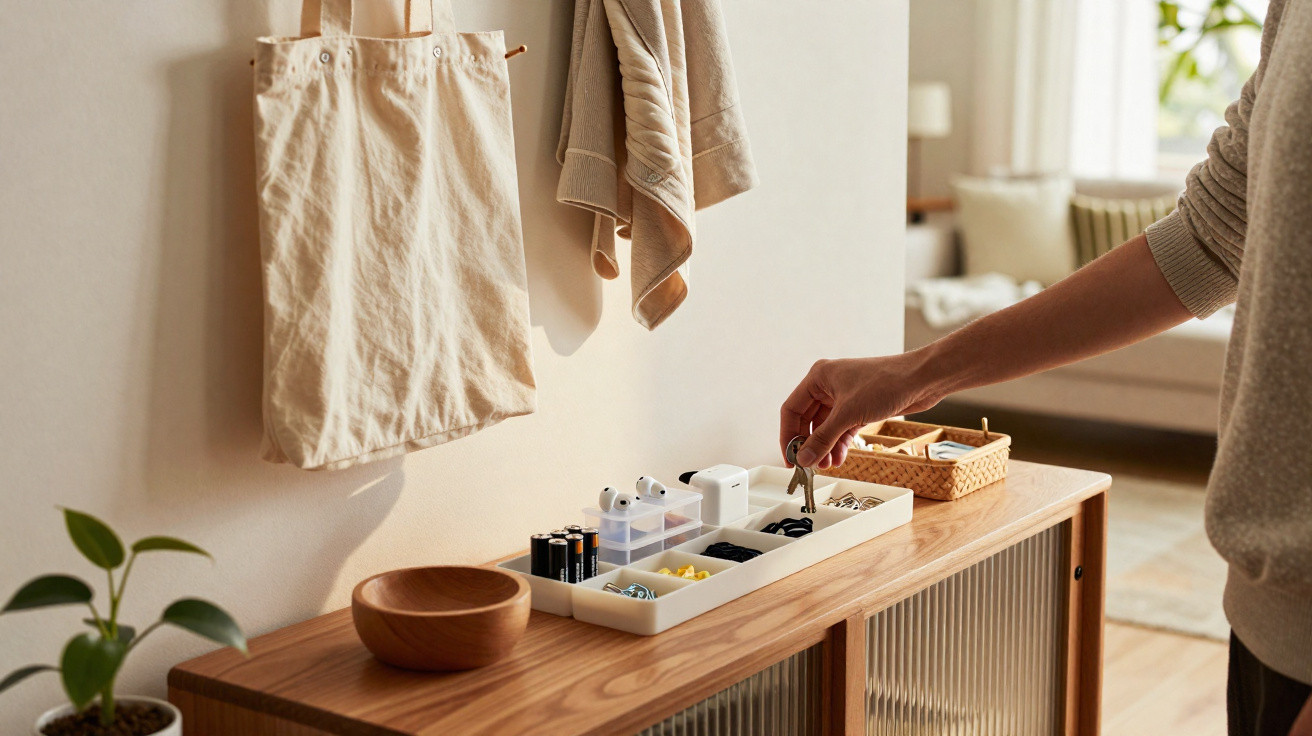
I therefore made an actual “Drop Zone” beside the door: a shallow tray for keys and sunglasses, a vertical letter organiser for post, and a small pot for coins and unidentified screws. The phone chargers were moved to one charging station in the same area.
After a week, the worktops remained 80% clearer without any nagging or constant bending down. Items still got dropped about, but “everywhere” had become a contained 40×40 cm space that took 30 seconds to reset.
The reasoning is uncomplicated. Our brains prefer the easiest route. When the place where an item is used is even a few steps away from where it supposedly “belongs”, it will end up on the closest flat surface.
When you organise by activity, you create mini-stations at the points where clutter usually develops: coffee supplies by the kettle, lunch boxes directly above the preparation worktop, and homework equipment beside the table where homework really gets done.
The cleaning workload reduces because you are no longer battling reality; you are planning around it. Housework begins to feel less like endless correction and more like a set of brief, reliable resets.
Moving from “cleaning all the time” to “resetting zones”
This practical approach is simple enough to try in one afternoon. Walk around your home and, instead of identifying rooms, name the activities that truly happen in every space. Do not focus on the ideal version of life; focus on the ordinary, messy weekday reality.
The morning-rush area. The work-bag dumping point. The snack-making corner. The make-up mirror. The dog-walking preparation spot.
Next, create a micro-station for every activity. It might be one basket, tray, shelf or hook. Put the objects and tools needed for that activity there, no farther than arm’s reach. It does not need to be elaborate; proximity is what matters.
You are not “making it pretty”. You are reducing the gap between “use it” and “put it back”.
Consider the entrance hall. Ours once looked like a battlefield, with shoes heaped up, backpacks slouching against the wall and coats gradually taking over chairs. Every evening, I spent 10 minutes hauling everything back to cupboards.
So I set up three micro-stations: a shoe bench with baskets below it, one hook for each person’s bag, and a slim shelf holding two small bins. One was labelled “Outgoing” for forms, parcels and returns, while the other was “Random”. The random bin holds things I have not worked out yet.
Now, when somebody arrives home, they instinctively leave everything inside a one-square-metre area. I still need to tidy it, but it is a single-stop reset rather than a treasure hunt around the whole house. Honestly, nobody manages this every day, but even in less motivated weeks the chaos does not travel as far.
The real benefit is that these zones subtly teach everyone in the household. You are not laying down vague rules; you are placing the easiest choice directly in front of them. Using a hook is simpler than opening a wardrobe, and using a basket is easier than walking along the hallway.
Eventually, you stop telling yourself, “I need to clean”, and instead think, “I’ll just reset the living room zone”. It feels psychologically smaller, quicker and manageable.
“Once I stopped organizing my house like a catalog and started organizing it like we actually live, the mess stayed the same… but the effort to deal with it was cut in half.”
- Give each recurring kind of clutter a dedicated zone.
- Store every tool for an activity within arm’s reach.
- Rely on trays, baskets and hooks more often than closed boxes.
- Plan for lazy habits rather than ideal behaviour.
- Think “reset this zone” instead of “clean the whole room”.
Why organising by activity feels easier than traditional “cleaning routines”
Cleaning checklists look excellent on paper, but everyday life rarely follows one. You may be exhausted, dinner may run late, or something urgent may happen, and the entire “nightly reset” falls apart. Then the guilt begins to creep in.
Organising by activity does not require flawless discipline. It depends on friction - more specifically, removing it. When dishwasher tablets are kept beside the dishwasher, loading it in the evening demands a few seconds less effort. Repeat that minor saving each day and your brain becomes less resistant to the job.
You are not turning into a different person. You are removing just enough resistance for maintenance to work in real life. Your home does not turn into a showroom; it simply becomes easier to live in.
| Key point | Detail | Value for the reader |
|---|---|---|
| Organise by activity, not by room | Set up micro-stations where clutter naturally occurs: a drop zone, snack zone and homework zone | Cuts back on daily picking-up by making clutter contained and predictable |
| Design for lazy habits | Put hooks, baskets and trays precisely where people already leave their things | Makes tidying close to automatic, requiring less nagging and less work |
| Think “reset”, not “deep clean” | Prioritise quick zone resets rather than perfecting an entire room | Reduces mental load and keeps the home consistently “good enough” |
FAQ:
- Question 1: How can I begin when my house already feels like a disaster?
Answer 1: Start with only one zone, usually the entrance hall or kitchen worktop. Set up a clear drop zone using a tray, a hook and a small container for miscellaneous items. Do not attempt to solve the entire house in one go; show yourself that one area can remain under control, then repeat the same idea elsewhere.
- Question 2: What happens if my family does not use the new system?
Answer 2: Some resistance at the beginning is normal, as people are accustomed to their own routines. Rather than lecturing them, discreetly put the easiest option exactly where they already drop their belongings. In time, most people will take the path of least resistance, particularly if you acknowledge the times it works instead of telling them off when it does not.
- Question 3: Do I have to purchase special organisers?
Answer 3: No. Use what is already available: old shoe boxes, trays, bowls, baskets or even strong paper bags. Once you know which zones genuinely work and last, you can replace them with nicer containers if you wish. The system is more important than its appearance.
- Question 4: How many zones should I set up?
Answer 4: Keep the system straightforward. Concentrate on the 5–7 messes that frustrate you most: entrance-hall clutter, washing-up, paperwork, laundry heaps, toys, bathroom products, and cables and chargers. One distinct micro-station for each repeating mess is normally enough to make a noticeable difference.
- Question 5: Will this completely replace deep cleaning?
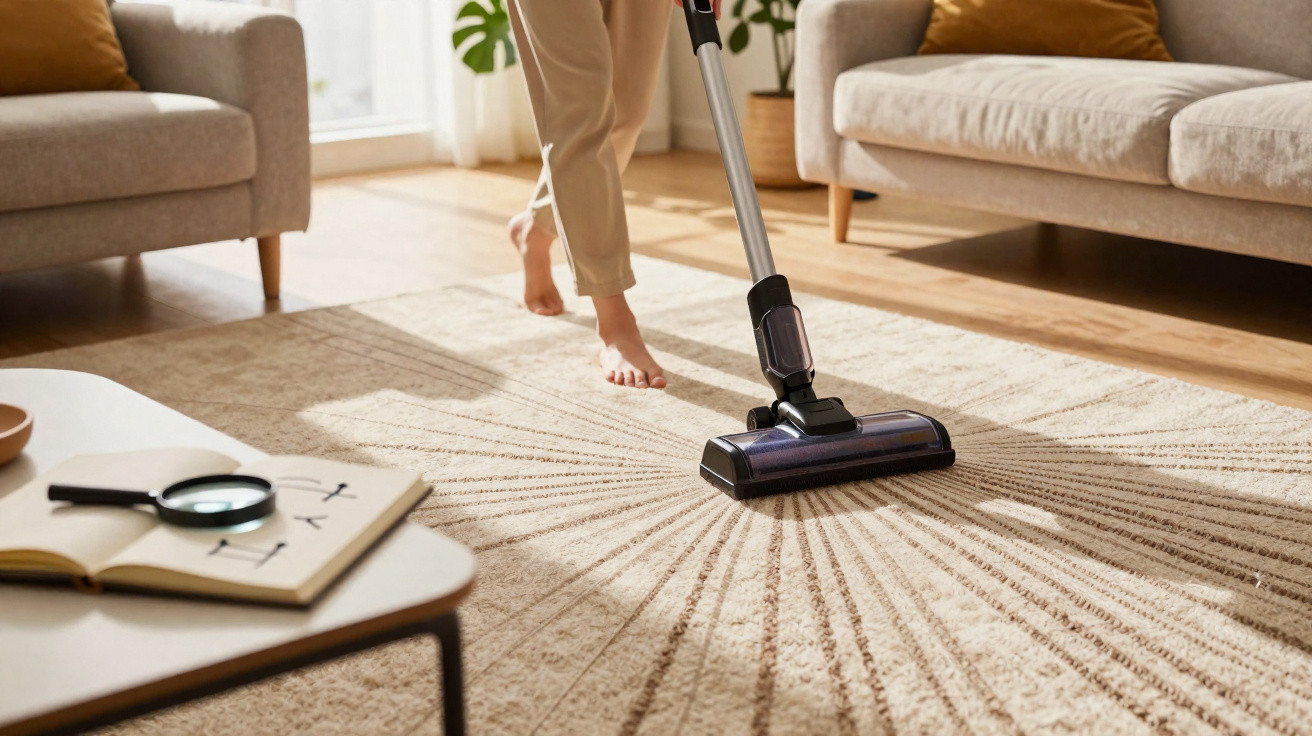
Answer 5: No. More intensive jobs such as scrubbing, vacuuming and washing floors will still be necessary. The aim is to reduce daily maintenance and stop clutter spreading so widely. Deep cleaning then becomes occasional fine-tuning rather than emergency damage control.
Comments
No comments yet. Be the first to comment!
Leave a Comment