
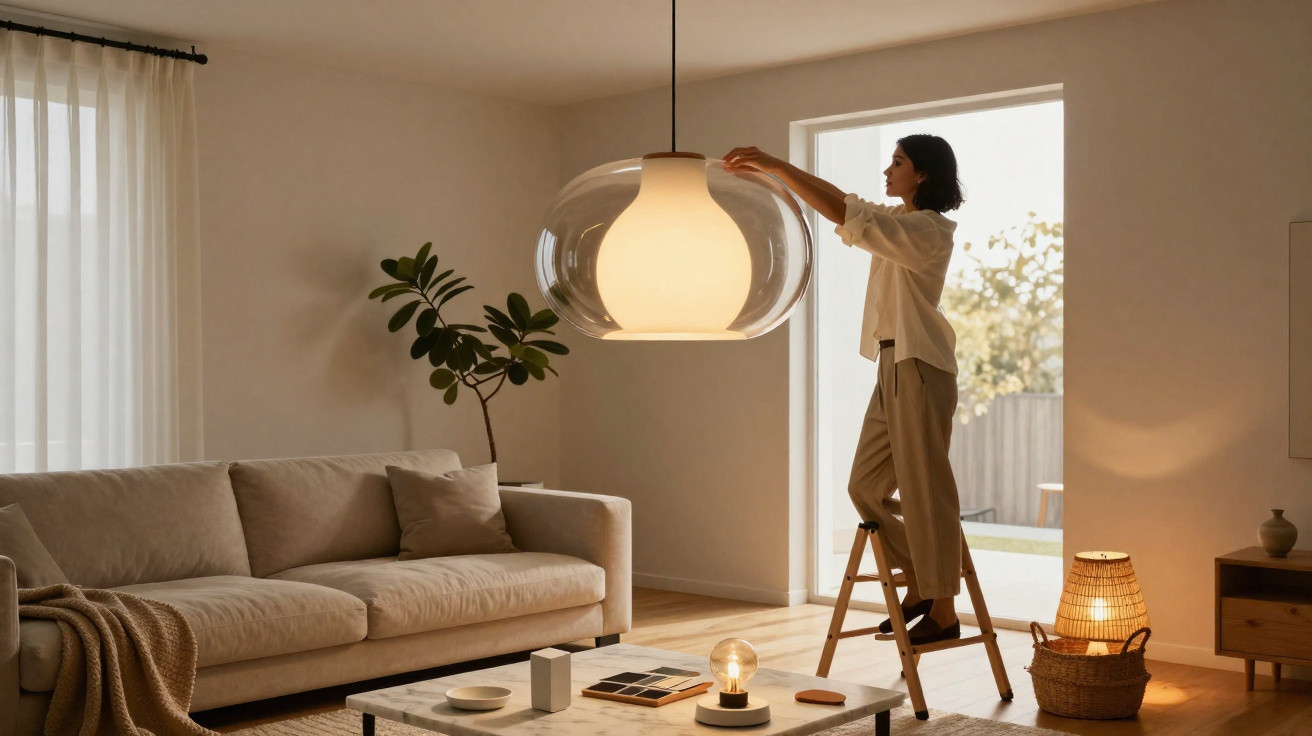
This spring, woven rattan looks are making their exit – a new lighting trend is bringing elegance and calm to living rooms.
For months, the same rattan lampshades have appeared across social media, furniture shops and interiors magazines. Now, sentiment is shifting. Many people feel that the bohemian look has lost its appeal, making a home resemble yesterday’s holiday let rather than a stylish retreat. In place of mass-produced pieces, authentic materials, defined shapes and warm, carefully placed pools of light are returning to the fore.
Why rattan is disappearing from the living room
When a trend suddenly appears everywhere
For a long time, woven shades made from rattan and other natural fibres embodied a relaxed, “boho”-influenced interiors style. Eventually, however, the look was hanging in every other living room, café, bar and boutique – and that is precisely why it lost its distinctive effect. What once looked like a thoughtfully chosen detail now strikes many as a quick decorating shortcut with no personality.
Interior designers are increasingly hearing a desire for calmer, more grown-up rooms. After work, people settling onto the sofa do not want to feel as though they are sitting in a showroom. They are looking for pieces with character that have not already appeared ten times in their feed.
Less trend, more conviction: lamps should once again feel like small works of art – not off-the-shelf decoration.
This is where the new lighting trend comes in: moving away from rustic woven shades and towards clean, honest materials that elevate a living room without dominating it.
A desire for greater calm and clarity
As people embrace a more peaceful way of living, their expectations of furnishings are changing too. Many sofas, sideboards and tables now have a highly minimalist feel, with smooth fronts, straight lines and plenty of wood or metal. Rattan’s comparatively coarse, textured appearance often no longer suits this setting and can quickly feel dated.
Instead, there is a growing preference for crisp silhouettes, a gentle sheen and materials that make a deliberate feature of light. A living room can certainly feel cosy, but it should also look refined and timeless – not like a southern holiday home that has somehow ended up in a city flat.
The new alternative: glass and ceramic take over the ceiling
Tinted glass turns light into atmosphere
One material is currently appearing particularly often in interiors schemes: tinted glass. Whether amber, smoky grey, olive green or deep blue, glass brings a different kind of elegance to the ceiling. Its subtly coloured surface creates warm, even illumination without making the room overly dark.
Unlike woven shades, glass does not cast patchy light; instead, it diffuses it softly and uniformly. Reflections across its surface also make the room feel more lively. During the day, when the light is off, a hand-blown glass form can look almost like a design object floating in mid-air.
- Amber glass globe: ideal for warm, cosy living rooms
- Grey smoked glass: perfect for contemporary rooms with metal and concrete
- Olive-green glass: works particularly well with oak, linen and natural tones
- Deep-blue glass: adds a striking accent above an armchair or side table
Many designs are surprisingly moderately priced. A single high-quality glass pendant can transform the feel of an entire room – taking it from “quite nice” to “considered and stylish”.
Ceramic as a suspended sculpture
At the same time, a second material is taking centre stage: handmade ceramic. From raw, lightly porous finishes to glossy glazed versions, ceramic lights often resemble small artworks. Every irregularity in the material makes the fitting more individual.
For anyone who values sustainability, ceramic is a fitting option. Made from clay, fired and durable for decades, it is often produced in small workshops. A ceramic pendant can ground a room while creating an interesting contrast with smooth walls, large sofas and technical equipment such as a television or soundbar.
A ceramic lamp does not feel like a decorative item that will eventually be replaced, but like a long-term part of the interior.
Ceramic creates a harmonious, almost soothing overall effect, particularly in living rooms with plenty of wood, wool rugs and linen cushions. Rather than shouting “Instagram-ready”, the interior says, “this is a home that is lived in – with style”.
How to use the new lighting trend effectively in the living room
Choose the right height and position
Glass and ceramic lamps call for a little more planning than a standard off-the-shelf rattan globe. Spending a moment on the height and placement will make a considerable difference to the result.
| Location | Recommended height | Effect in the room |
|---|---|---|
| Clear walkway | approx. 2.00 m above the floor | A pool of light without bumping heads; the room remains open |
| Above the coffee table | approx. 1.60 m above the floor | Creates intimacy and defines the seating area |
| Corner with an armchair / reading spot | Slightly lower than a floor lamp | A cosy bubble of light, ideal for reading |
Clusters of several smaller glass lights, suspended at varying heights, are also especially popular at the moment. This creates a kind of cluster of light that looks impressive without overwhelming the room.
Combining colours and materials for a truly refined look
Anyone replacing rattan with glass or ceramic should carry a few of those changes through the rest of the room. An amber glass shade, for example, works beautifully with brass or gold-coloured accents, such as picture frames, side tables and bowls. Smoked glass is better suited to black metal, clean lines and graphic rugs.
Ceramic lights, especially in beige, terracotta or off-white, feel particularly at home alongside linen, cotton and solid wooden furniture. Heavy curtains, textured cushions and thick rugs soften the material’s austerity and reinforce the welcoming effect.
Changing the lamp alone is rarely enough – it is only through the interplay of fabrics, colours and surfaces that the feeling of “everything finally works together” emerges.
Practical tips: switching without a major project
Quick changes with a big impact
You do not need an electrician among your friends to embrace this trend. Many models can be fitted directly to existing ceiling connections. In most cases, simply replace the old shade with a new glass or ceramic fitting.
It also makes sense to check the bulbs at the same time. Warm-white dimmable LED bulbs are ideal with glass and ceramic. They show off the material’s colour nuances more effectively and create a calm underlying mood in the room.
- Use the existing connection and simply fit the new light
- Install a dimmable warm-white LED bulb
- If possible, consider a dimmer at the switch
- Do not throw away rattan shades; give them away or sell them on
If you are unsure about the height, test a temporary position first and shorten the cable permanently later. Small adjustments of ten or fifteen centimetres can often make an enormous difference to how the room feels.
What really lies behind the trend
Rattan’s departure from the ceiling is less an attack on natural materials than a signal that living rooms should once again be designed to feel more individual and long-lasting. Glass and ceramic represent an approach that rejects fast decoration. You consciously choose a shape, a colour and a material – then live with it for many years.
Anyone investing in a good glass or ceramic light now is not only making a style statement, but also reducing the urge to keep buying replacements. The home feels calmer, more grown-up and more personal at the same time. Often, this one change is enough to make a familiar living room suddenly feel like a newly designed space.




Comments
No comments yet. Be the first to comment!
Leave a Comment