
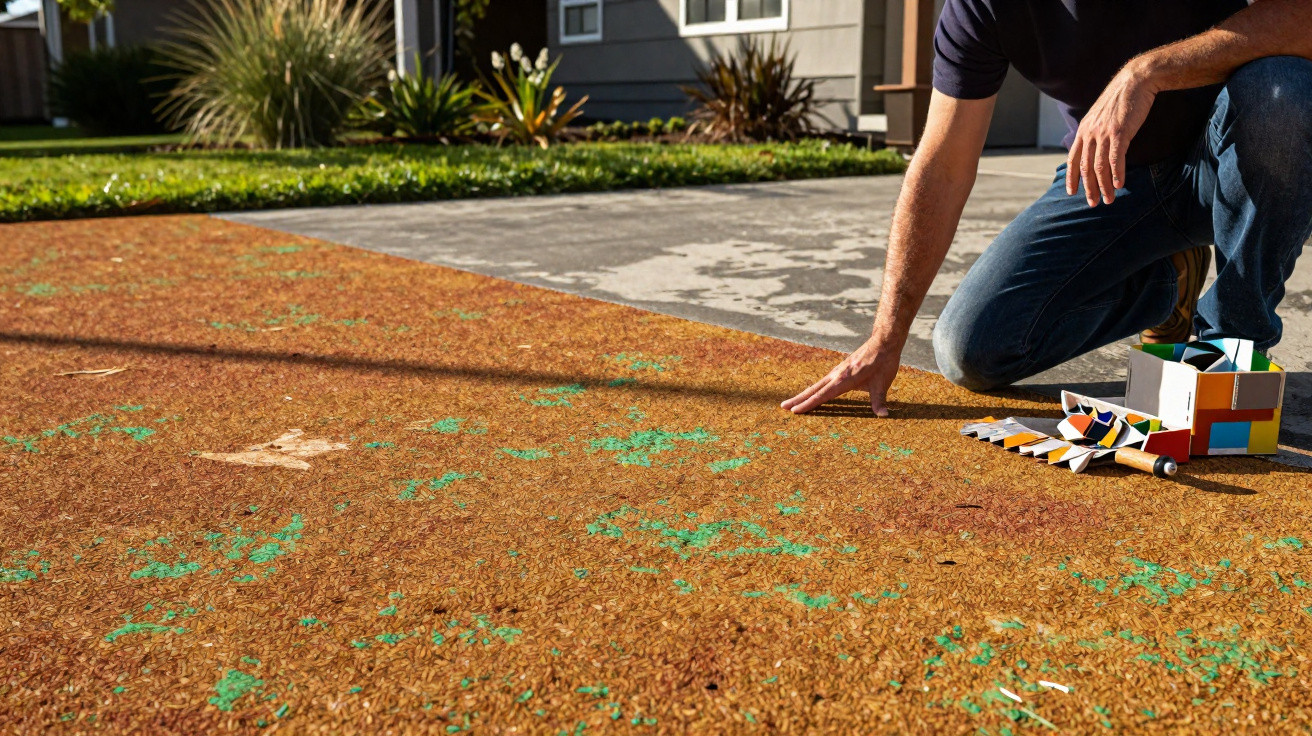
A new recycling-based alternative is now moving into the spotlight.
For years, the big grey slab was seen as the easy option outside the house, garage or carport. But cracks, puddles and mounting climate pressure are making concrete suddenly feel far less appealing. A surface made from recycled road asphalt-sometimes combined with plant-based binders and a water-permeable structure-is bringing a fresh approach to front gardens, and could ultimately replace the classic concrete slab.
Why many homeowners have had enough of concrete
Anyone with an older concrete driveway will recognise the familiar drawbacks: hairline cracks that widen with every winter, standing puddles after rain, and a surface that turns into a nightmare for bare feet in high summer. Visually, the grey expanse often looks dull-and in day-to-day use it is not always as practical as it seems.
Then there is the climate footprint. Concrete gets its strength from cement-and cement comes at a cost. Manufacturing it involves firing limestone at very high temperatures, typically using fossil fuels. Globally, the cement industry is responsible for a noticeable share of CO₂ emissions. If you have improved your home’s energy performance, installed solar panels and switched to a heat pump, it is increasingly fair to ask: does a huge, sealed concrete slab outside the front door still fit the overall plan?
In many local authorities, tougher rules add another layer of pressure. Councils want fewer sealed surfaces because they can worsen heavy rainfall events, overload drainage systems and heat up the local microclimate. For new driveways, many designers now explicitly recommend surfaces that let water through more effectively and do less to “suffocate” the soil.
"Concrete is considered hard-wearing, but it often looks like a foreign body in the garden-ecologically and visually."
Recycling asphalt: how this alternative surface works
The alternative comes from a sector built for hard use: road construction. For decades, so-called asphalt or bitumen mixes have been standard there. The basic principle is straightforward: aggregates such as gravel and sand are combined with a binder-usually bitumen-then compacted to form a load-bearing, slightly flexible layer.
For domestic driveways, attention is now shifting to versions that use recycled material. Specialists refer to this as recycled asphalt, often produced from milled-off road layers. These layers are crushed, processed and then re-laid with fresh binder.
What recycled asphalt actually offers
- Fewer raw materials: old road surfaces do not end up in landfill; they are reused.
- Lower energy demand: processing typically takes less energy than producing entirely new material.
- Shorter transport distances: material is often recycled locally, reducing lorry journeys.
- A more flexible base: the surface can move slightly rather than cracking immediately like concrete.
In North American comparisons, these driveways often come out significantly cheaper than concrete. While a solid concrete slab there can quickly reach the equivalent of nearly €18 per square metre and more, recycled-asphalt driveways are notably less expensive. At the same time, they can deliver service lives of around 15 to 30 years-with repairs being far easier to carry out in smaller sections.
Permeable surfacing: when water is no longer the enemy
Another advantage is that there are mixes designed specifically to let water soak away. These permeable (draining) blends are structured so that rain does not sit on the surface, but passes through pores into the base layer and the soil beneath.
That is particularly helpful during heavy downpours. Puddling reduces, drainage networks are relieved, and in summer the area often heats up less because moisture stored below ground can remain in place.
"Permeable recycled asphalt doesn’t turn a driveway into a hard barrier, but into part of the natural water cycle."
One drawback: these surfaces are usually more expensive than classic, dense mixes. Practical experience suggests a surcharge of around 15 to 25 percent. If you also choose a high proportion of recycled aggregate and a binder with plant-based content, you are taking a very consistent climate-friendly approach-but you will pay more upfront.
Plant-based binders: less petroleum in the front garden
In parallel, manufacturers are developing binders that partly come from renewable raw materials. Oils and resins of plant origin can replace bitumen to some extent. The surface is not yet completely free of petroleum-based inputs, but the share of fossil components can be reduced substantially.
These mixes bring together three trends:
- recycling aggregates from old road surfaces
- reducing petroleum use through plant-based binders
- the option of a water-permeable design
If you want a more climate-conscious driveway, this offers a technically proven route-already used in professional applications and now gradually finding its way into residential settings.
Costs, durability, maintenance: how does recycled asphalt perform day to day?
For most people, the decision ultimately comes down to a balance of price, lifespan and appearance. Broadly, driveway options can be grouped like this:
| Surface | Guide price | Lifespan | Repair |
|---|---|---|---|
| Concrete slab | rather high | 25–40 years | local repairs difficult, often large-area work |
| Recycled asphalt | medium | 15–30 years | sections can be reworked well |
| Permeable recycled asphalt | medium to higher | 15–25 years | specialist contractor required, local repair possible |
Durability depends heavily on how well the sub-base is prepared. If the ground is not compacted enough or there is no properly load-bearing base layer, any driveway will sink-whether it is made of concrete or recycled asphalt.
"A good driveway doesn’t start at the surface, but underground-this is where nobody should cut corners."
What self-builders should look out for when planning
If you want to replace an old concrete slab, it is worth getting advice from contractors who can demonstrate real experience with recycled mixes. Before signing a contract, there are several key points you can clarify:
- Proportion of recycled materials: what percentage of the aggregate comes from processed reclaimed surfaces?
- Build-up and layer thickness: how thick will the base layer be, and how thick will the wearing course be?
- Drainage characteristics: is it a water-permeable construction or a dense variant?
- Frost resistance: how does the surface respond to frequent freeze–thaw cycles?
Owner experiences suggest that anyone who nails down these points in advance and compares multiple quotes ends up with more stable pricing and better workmanship. Dubiously cheap offers often cut costs in the sub-base-and that tends to show after only a few winters.
Appearance, neighbours and everyday use: what really changes
At first glance, recycled asphalt looks like a normal, slightly darker asphalt surface. Colour can be varied to some extent, but not as freely as with block paving. If you prefer a very decorative front-garden style, you may need to get comfortable with the more understated look.
In practical terms, however, it is well suited to daily use. Tyres grip well, bicycles and children’s scooters roll smoothly, and in winter you can clear and grit it without fuss. In summer the surface does warm up noticeably, but with permeable variants the “oven effect” is usually less pronounced than with solid concrete slabs.
For many people, there is also the satisfaction of improving their home’s climate footprint. Choosing a more flexible surface that is partly recycled and more water-permeable does not radically change the appearance, but it does send a clear signal-and during heavy rain you may notice fewer water-related issues.
The choice can make a practical difference too: small dips can often be corrected locally by re-compacting or working in recycled material. With concrete, similar damage can quickly mean breaking out sections and re-pouring a larger area-expensive, disruptive and frustrating.
One additional point that rarely appears in brochures: if you later decide to remodel the driveway again, recycled asphalt is easier to lift and reuse. That keeps the surface as part of a circular system, rather than leaving a huge concrete block sitting in the ground for decades.


Comments
No comments yet. Be the first to comment!
Leave a Comment