
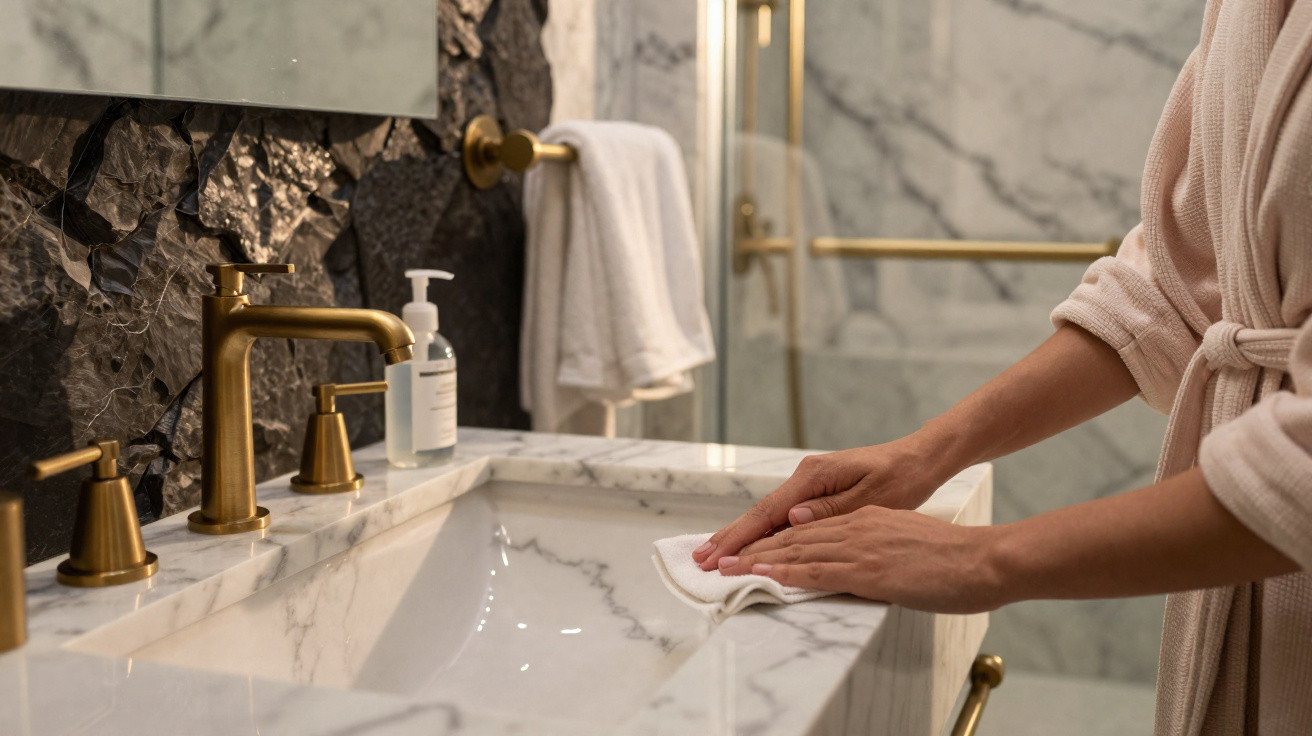
Planning a new bathroom or refurbishing an old one often leads to the same design shift: away from the cool, standard look of ceramic tiles and towards expansive surfaces finished in marble. This natural-stone aesthetic appears in interiors magazines, across Instagram and in show homes-prompting many people to rethink tiles as the default choice.
Why bathroom tiles are losing their lustre
For decades, tiles felt like the obvious option: affordable, practical and easy to maintain. Today, that very “standard” quality has become the drawback. Many bathrooms end up looking interchangeable, closer to a clinic than a relaxing retreat.
- Grout lines discolour quickly and can look dirty.
- Sizes and patterns are often generic, with little individuality.
- The typical “bathroom tile look” no longer sits comfortably with modern home design.
At the same time, the bathroom has evolved from a purely functional space into a personal wellbeing zone. If you’re investing serious money in a renovation, you’re unlikely to want an off-the-shelf finish-you want a look that feels more like a boutique hotel or spa. This is where marble stands out.
Marble in the bathroom: a luxury classic that fits the moment
Marble is anything but new. Palaces, historic bathhouses and museum floors have featured it for centuries. What’s interesting now is how the material is moving beyond the luxury segment and into everyday private homes.
Interior research suggests that upcoming living trends are strongly influenced by the 1950s and 1960s: curved forms, refined materials and warm metals. Marble slots neatly into this blend of retro character and pared-back design.
Marble feels like a made-to-measure outfit for the bathroom: every slab is unique, and no veining is ever the same.
Choosing marble for a bathroom is not just selecting a material-it’s creating a stage. Basins, walls and shelves become visual surfaces that make the entire room feel more exclusive almost automatically.
More than looks: how marble changes the feel of a space
Marble shapes the experience of a room on several levels. The first thing many people notice is the tactile quality: the surface feels cool, smooth and weighty. That sense of solidity and calm is very different from the lightweight, glossy feel of many tiles.
Light also plays a major part. Depending on the finish and the colour, marble reflects light softly-sometimes with a gentle sheen, sometimes more of a satin effect. Paired with indirect lighting, it can create bathrooms that feel closer to a hotel spa than a purely functional wet area.
- Cool surface-ideal in hot summers; with underfloor heating it’s also comfortable in winter.
- Natural veining-breaks up large areas visually without looking busy.
- More premium sound-even footsteps on natural stone feel different to hollow-sounding tiles.
There’s also the matter of longevity. With proper care, a marble floor can last for several decades. That durability helps put the higher upfront cost into perspective and turns marble into an investment for many homeowners rather than a passing design whim.
How designers use marble in bathrooms today
Where marble used to appear mainly as a single vanity top, the trend now goes much further. Designers are using the stone across larger surfaces and pairing it more boldly than they did a few years ago.
Strong contrasts with dark tones
A particularly popular pairing is light marble with black accents. A white marble wall alongside a matt-black shower fitting and a dark vanity unit creates a graphic, modern and crisp look.
Warm metal accents instead of clinical chrome
A striking approach is to use brass or copper for taps, mirror frames and lighting. These warmer metals soften the stone’s severity. In smaller bathrooms especially, the result can feel more homely-almost like a living space rather than a purely practical room.
Soft pastels for a hotel-spa feel
For a gentler scheme, light marble works well with pastel tones. Blush pink, sage green or a very pale blue-on walls or in textiles-can make the room feel calm and understated. The bathroom reads as a private retreat rather than a wet room.
Trend for 2026: marble surfaces are increasingly being used wall-to-wall-not merely as an accent, but as a continuous design element from the floor right through to the shower.
What marble in the bathroom really needs: care and protection
For all its appeal, marble remains a sensitive natural stone. It reacts to acids and can absorb liquids if it isn’t protected. If you choose marble in a bathroom, a few basics are essential.
A protective layer against water and toiletries
Professional sealing is non-negotiable. A good seal helps stop shower gel, soap, shampoo or limescale from penetrating deep into the stone. This treatment needs refreshing at regular intervals, much like maintaining a high-quality wooden floor.
Gentle cleaning rather than harsh chemicals
Strong bathroom cleaners containing citric acid or vinegar can damage the stone. Better options include:
- stone cleaners specifically labelled for natural stone,
- mild soap solutions,
- soft cloths or sponges.
Wiping up quickly and not leaving marks for days helps prevent dull patches and discolouration.
Preventing impact damage
Even though marble seems hard, concentrated pressure-such as a dropped glass bottle or heavy toiletry container-can chip edges or cause cracks. In practice that means storing glass bottles in cabinets or placing them on non-slip mats, and avoiding balancing heavy items on narrow shelves.
Expensive, but value-adding: what homeowners should plan for
Marble costs significantly more than standard tiles. On top of the material price, there’s usually more involved cutting and the need for expert installation by experienced tradespeople. Many homeowners accept these extra costs because they see the bathroom as a long-term investment.
When selling a property, a high-quality bathroom can noticeably influence the price. Estate agents repeatedly report that buyers respond particularly strongly to photos of natural-stone bathrooms. The impression of quality and durability feeds into the overall perception of the home.
Marble alternatives: when the budget is limited
Not everyone wants-or is able-to pay for real marble. That doesn’t mean you have to give up the look. Manufacturers now offer several alternatives:
- Porcelain stoneware with a marble effect: ceramic slabs with convincingly realistic veining, durable and much easier to maintain.
- Quartz composite: engineered stone with a natural-stone content, more uniform and often more resistant to staining.
- Solid-surface minerals: especially popular for basins because they can be formed seamlessly while still resembling natural stone.
These options suit families with children, or rental properties where durability matters more than absolute authenticity.
What people often forget when planning a marble bathroom
If you opt for marble, it’s worth thinking about the whole design early on-not just the floor and walls.
- How does the material look in daylight versus purely artificial lighting?
- How slip-resistant is the floor when it’s wet?
- Do existing furniture and towels work with the new look, or will everything else suddenly feel dated?
Designers recommend viewing colour samples and stone pieces inside the actual room. Only then can you judge whether a strongly veined stone might feel too dominant, or whether a very pale stone could end up looking too cool.
If you also consider details like slip-resistant finishes, sufficient shelf space and well-planned lighting, the result won’t just look impressive-it will work well day to day. That combination of aesthetics and practicality is exactly why many tiled bathrooms are starting to look dated, and why marble in the bathroom is becoming the new standard for those with higher expectations.



Comments
No comments yet. Be the first to comment!
Leave a Comment