
At street level in Paris, everything shimmers. Horns blare, the tarmac radiates heat, and the air tastes of fumes. Climb two more flights, reach a metal door, give it a shove - and the scene changes instantly.
Beneath your shoes: springy, moss-like mats, blooming sedum, and bees zigzagging as though the roar below didn’t exist. Up here the air feels cooler and gentler. A light breeze drags in the distant hiss of scooters and the wail of sirens, yet it all lands like someone else’s background noise.
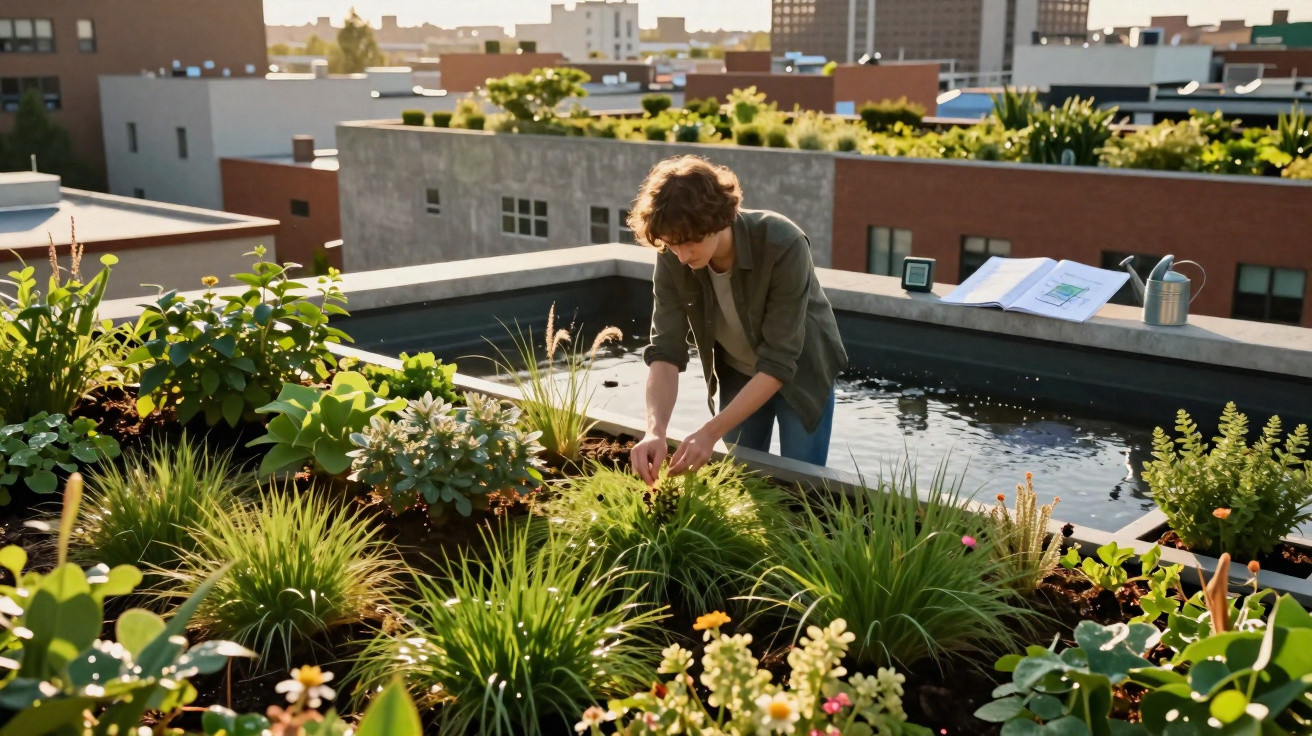
A maintenance worker crouches at the edge of a narrow strip of wildflowers, inspecting a tucked-away irrigation line. Nearby, solar panels catch the light between the plantings. He mops his brow, glances down at the boulevard, and smiles with the weary, faintly proud look of someone who makes things that are meant to endure.
There are now more than 75,000 rooftops like this - and, quietly, they’re changing how city life works.
When rooftops start acting like parks
On a hot summer day, a green roof feels alive in a way bare concrete never does. Walk from an exposed terrace onto a planted one and you’ll notice the temperature drop by a couple of degrees. The harsh glare eases. Even the wind seems richer, carrying more moisture - as if the city has gained a small extra lung.
Designers label it a “microclimate”, but standing up there it simply feels like respite. Birds slice across the skyline instead of swerving around traffic. Butterflies hover near antennas. A pigeon touches down, pecks among the sedum, then lifts off again - no longer only a street scavenger, but a participant in a delicate, unlikely ecosystem.
That same change is repeating itself again and again. From Toronto to Tokyo, from Basel to Bogotá, flat roofs that once baked in full sun are being turned into living layers of soil and plants. Without much fanfare, these roofs are helping chip away at the urban heat that can make late July feel nearly unliveable.
Consider New York City. In lower Manhattan on a 35°C day, heat rises from the pavement like an oven door left open. A standard black-tar roof can hit 70°C or more. But on a relatively small 500-square-metre green roof in Brooklyn, sensor readings have shown surface temperatures up to 40°C lower.
Engineers also measured what that meant indoors. On the top floor, rooms beneath the green roof remained 2 to 4°C cooler than comparable rooms under a bare roof nearby. Fewer air conditioners needed to run, fewer compressors groaned, electricity bills fell - and comfort improved in a quieter, less obvious way.
Across the world, the footprint is growing. Berlin has recorded more than 4 million square metres of green roofs. Singapore reports thousands of vegetated rooftops and sky gardens. In France, the law requires new commercial buildings to include green roofs or solar panels, pushing numbers up rapidly. Put those surfaces together and they begin to resemble a broken-up, elevated park network stitched through the most densely built districts.
The reason they work is almost disarmingly straightforward. Instead of soaking up heat and throwing it back out like a hotplate, green roofs cool via water. Plants pull moisture from the substrate and release it into the air through evapotranspiration - a cooling effect similar to sweat on skin.
Meanwhile, the soil layer behaves like a sponge. In heavy downpours, it stores water that would otherwise slam into gutters and overwhelm streets. On many roofs, the first 20 to 40 millimetres of rain never reaches the sewers at all: it’s absorbed, filtered, then returned gradually to the atmosphere.
In cities where stormwater can easily overload ageing pipework, this is a genuine shift. There’s less flash flooding, fewer combined sewer overflows, and fewer days when rivers turn the colour of what should have stayed underground. These plants don’t just cool places down; they cushion, delay, and dull the force of extreme weather.
How to turn a dead roof into a living one
On paper, the green-roof recipe is neat and simple: a waterproof layer, a root barrier, drainage, a growing medium, and plants. In practice, the first job is usually the unglamorous one - confirming the building can take the extra load. Waterlogged soil weighs more than most people assume, and nobody wants biodiversity dropping into the foyer.
Engineers assess the roof’s load capacity, then planners typically choose between “extensive” systems (thin, lightweight, low-maintenance planting such as sedum) and “intensive” systems (deeper soil with shrubs and even small trees). For most urban buildings, the lighter approach is the practical choice. The build-up can be surprisingly slim - sometimes only 8 to 15 centimetres.
From there, the routes rainwater takes are redesigned. Instead of rushing straight to a drain, water meets stems, leaves, and grains of substrate. Its speed changes: some is held, some moves sideways, some evaporates off the surface. Gradually, a space once governed by runoff and gravity becomes a place where water pauses.
The most common error is to treat green roofs as a decorative add-on. They are not a rooftop Instagram filter. They’re a living system that responds quickly to neglect. Plants can die back in a heatwave, drains can choke with fallen leaves, and wind can dry the substrate faster than anticipated.
A municipal building in Madrid found that out the hard way. In the visualisations, the roof looked lush and untamed. Two summers later, half the sedum had browned because the irrigation had been set up and then forgotten. The system itself wasn’t the issue; the timetable was.
Most people recognise the moment when a houseplant keels over and you realise it’s been watered only twice in six months. Scale that up to 800 square metres and you get the quiet misery of a green roof in trouble. The remedy is rarely dramatic: seasonal inspections, clearing outlets, and adjusting irrigation to real conditions rather than idealised charts. Consistent small actions beat last-minute heroics every time.
The emotional shift may be the most overlooked element. The strongest green roofs aren’t only designed and installed; they’re “adopted” by the people in the building. An office team starts taking lunch on the roof once a week. A class at a school counts pollinators every spring. A hospital plans patient walks along the planted edge.
Let’s be honest: hardly anyone truly does that every day. But doing it a few times a month is enough to form a thin, stubborn thread between people and those few centimetres of soil above their heads.
“We used to think of the roof as wasted space,” admits Léa, a facility manager in Lyon. “Now staff argue over who gets the meeting room with access to the terrace. When the first wild poppies appeared on their own, people sent photos like newborn announcements.”
That attachment affects how a building is managed. When budgets tighten, the places people value tend to be protected. Roofs nobody visits can decline quietly. The roofs people talk about, share, and look after usually get the care they need to keep thriving.
- Start small: a pilot roof on one building often wins over sceptics faster than a 50-page strategy.
- Track stories as well as data: photos of butterflies and shade at 3 p.m. can be as persuasive as kilowatt-hours saved.
- Invite users early: if people help choose plants or layout, they’re more likely to defend budgets later.
What 75,000 green roofs are really telling us
Pull up a satellite view of any major city during a heat spell and it’s obvious: blocks of grey and black with only scattered green interruptions - street trees, a central park, the occasional courtyard. Now picture those maps a decade from today, with tens of thousands more pixel-sized bursts of rooftop vegetation threaded through the grid.
On its own, the figure - more than 75,000 green roofs - is striking. What it signals may be even more radical: a slow, roof-by-roof choice that urban areas don’t have to be hostile by default. That a supermarket roof in Chicago and a school in Seoul can both support bees that, in a strange global sense, belong to the same unfolding story.
This is not wishful thinking. Insurers are calculating the impact of reduced flood damage. Energy providers quietly benefit when cooling demand peaks are smoothed. Urban planners are seeing small but measurable declines in heat-related hospital admissions where vegetation density increases. Turtles will not cross a motorway to reach these tiny habitats, but pollinators will - and so will wind-borne seeds, overheated office workers, and children who have never looked closely at a ladybird.
The rooftop future taking shape is mixed and imperfect: solar panels sharing space with wildflowers; sensors buried under humus; office chairs pulled into the shade of a dwarf tree at 4 p.m. on an overly bright Tuesday. Green roofs won’t “fix” cities on their own - no single idea can - but they keep appearing in place after place because they manage three jobs at once: they cool, they capture, and they reconnect.
Next time you’re walking down a busy avenue and the heat clings to your skin, look up. Above the bus fumes and glass facades, a thin layer of soil might be holding last night’s rain, feeding a patch of thyme, and offering a blackbird somewhere to land. That quiet roof is part of a network that didn’t exist a generation ago.
Whether you’re a tenant, a planner, an owner, or simply someone tired of breathing hot dust every August, the question almost writes itself: what story is your city’s skyline going to tell?
| Key point | Detail | Why it matters to you |
|---|---|---|
| Cool buildings | Vegetation and substrate lower surface temperature and reduce air-conditioning use | Lower energy bills, better summer comfort |
| Manage rainwater | Green roofs store and slow runoff during heavy rainfall | Lower risk of local flooding and sewer overflows |
| Bring nature back into the city | Micro-habitats for insects, birds and self-seeding plants | Improved quality of life, visible biodiversity from home or work |
FAQs:
- What exactly is a green roof? A green roof is a rooftop covered with layers that support plant life: waterproofing, drainage, growing medium, and vegetation, turning a hard surface into a thin, living landscape.
- Are green roofs only for new buildings? No. Many are retrofitted onto existing structures, as long as engineers confirm the roof can carry the added weight and the waterproofing is upgraded.
- Do green roofs require a lot of maintenance? Extensive systems need relatively low care once established: periodic inspections, occasional weeding, and irrigation adjustments in heatwaves.
- How much can a green roof really cool a building? Case studies show temperature drops of 2–4°C in top-floor rooms, with roof surface temperatures up to 40°C lower than bare black-tar roofs in summer.
- Are green roofs expensive to install? Initial costs are higher than a standard roof, but they can extend roof lifespan, cut energy bills, and reduce stormwater fees, which helps balance the budget over time.


Comments
No comments yet. Be the first to comment!
Leave a Comment