
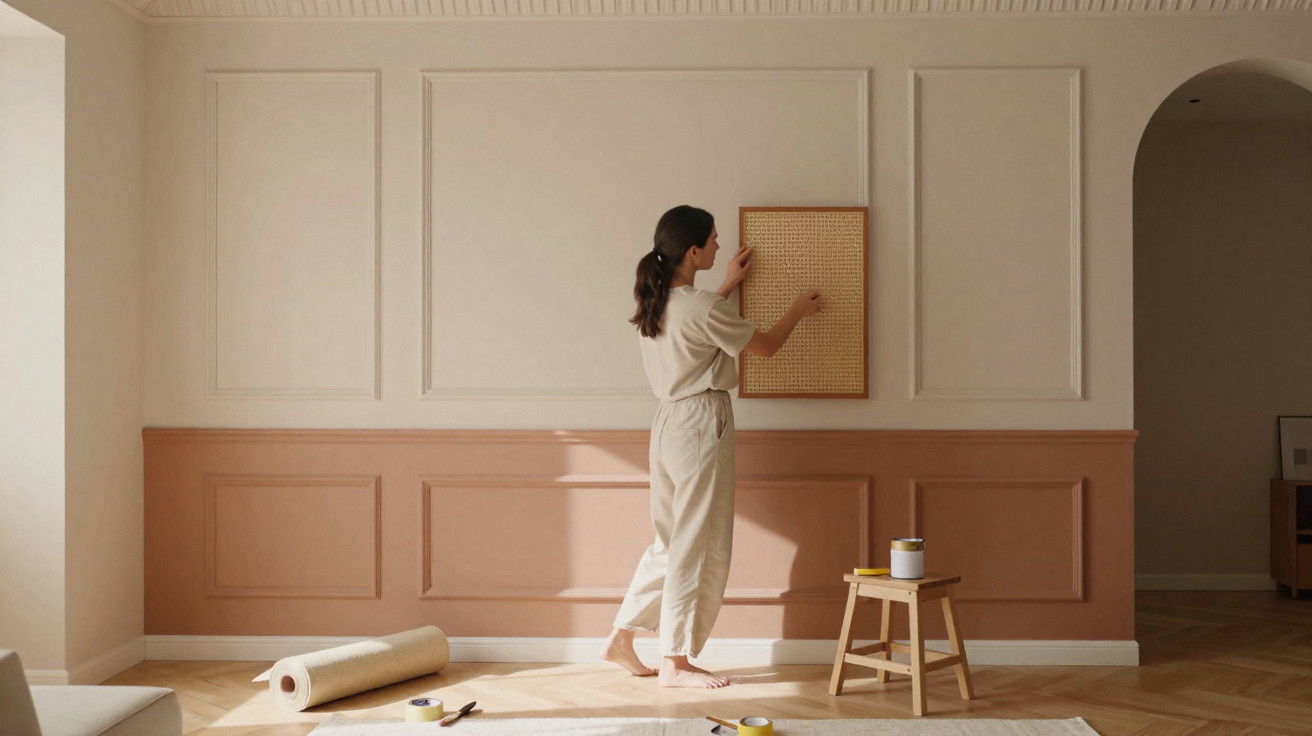
Across Europe and North America, the vertical timber slats that recently signalled a “smart renovation” are beginning to feel visually heavy and a little too familiar. Interior designers are gradually moving on, swapping strict linear panelling for a softer combination of woven cane and ultra-slim wall mouldings that add dimension without making spaces feel darker.
Goodbye wall battens, hello woven cane and discreet mouldings
For a long stretch, the recipe barely changed: wall battens set vertically, one feature wall, then a deep, moody paint colour. It photographed well, but in real homes it often made compact rooms read narrower and more shadowy. By early 2026, decorators are noting a definite swing towards brighter, more tactile finishes that give walls more “air”.
"Instead of thick timber slats, 2026 is all about natural cane webbing and slim, painted-on mouldings that almost disappear into the wall."
At the heart of this shift is classic cane webbing, most often rattan, woven into a perforated grid. It’s the same craft associated with vintage café seating and mid-century cupboards and sideboards. When used on walls and on furniture fronts, it tends to diffuse light rather than shut it out, which is especially appealing through northern winters and in smaller city flats.
Cane on its own can veer into “conservatory at grandma’s house”. To avoid that, designers are increasingly combining it with very fine mouldings painted precisely the same colour as the wall. These trims create frames, suggest gentle geometry and introduce a measured architectural cadence to plain plaster-without demanding attention.
The overall effect is a cleaner, lighter kind of vintage: natural and tactile with a hint of nostalgia, yet contemporary enough to suit a new-build flat or a quick refresh in a rental.
Why this softer duo works where battens fail
Wall battens initially felt crisp and modern, but they bring compromises. They stand proud of the wall, throw strong shadows, collect dust in each channel and can soak up available light-particularly when stained dark. In rooms that already include heavy curtains, substantial sofas or thick rugs, the result can feel overly dense.
Cane tends to achieve the reverse. Because the weave is open, daylight can pass through; glare softens, and you get a delicate pattern rather than bold, high-contrast striping. Used on wardrobe fronts, sliding doors or as part of a headboard, it adds interest without the weight of solid timber.
"Cane dresses the wall, yet still feels airy, while tone-on-tone mouldings add depth through shadow rather than colour contrast."
Those near-invisible mouldings do a lot of the work. When wall and mouldings are painted the same shade, the detail shows through tiny shifts in relief and shadow instead of colour. As the light changes during the day, the lines quietly appear and recede, keeping the space serene rather than flat. In a neutral bedroom or living room, that extra refinement stops “beige” from tipping into “bland”.
It also aligns neatly with so-called slow decorating: buying fewer items, choosing better materials, and valuing texture as much as appearance. The slightly rough cane beside smooth, painted moulding creates a restrained contrast that feels comforting-not flashy.
Costs: from “Instagram project” to realistic weekend upgrade
The wall battens boom was fuelled in part by DIY content, yet the cost of solid oak and made-to-measure joinery rose quickly. Woven cane and light mouldings, on the other hand, can sit comfortably within a post-Christmas, post-renovation budget.
| Element | Typical use | Approximate cost |
|---|---|---|
| Cane webbing | Doors, headboards, wall panels | £15–£35 / €15–€40 per panel or metre |
| Wall mouldings | Panels, dado lines, framing | £5–£12 / €5–€15 per metre |
Cane webbing is usually sold in rolls or as pre-cut sheets. One piece may be enough for a cupboard door, or to form the central section of a simple headboard. Fixing methods include a staple gun, fine nails or a high-grab adhesive. Lightweight mouldings-pine, polyurethane or polystyrene-can be trimmed with a basic mitre saw and bonded directly to the wall.
"A living room can move from “builder basic” to magazine-ready in one afternoon, with no need to demolish walls or hire a carpenter."
In 2026, with energy costs and mortgage payments climbing, that manageable “weekend project” scale is a major draw. The materials fit in a small car, tools can be borrowed or hired, and any slip-ups are straightforward to correct with filler and sandpaper.
How designers are using the trend in real rooms
In the living room
Rather than cladding an entire wall in cane, decorators are choosing targeted areas. Common approaches include:
- Fitting cane panels into the doors of a low TV unit or sideboard.
- Using slim wall mouldings to frame two or three large panels on the main wall, then painting everything in the same warm neutral.
- Running a thin horizontal moulding at chair-rail height to separate a deeper colour on the lower third of the wall.
Done this way, your eye keeps moving without the visual noise of open shelving or a busy gallery wall. The space feels intentionally styled, yet still relaxed enough for everyday use.
In the bedroom
The headboard has become the focal point. Instead of a chunky wall battens backdrop, decorators are opting for a lightweight timber frame infilled with cane, sometimes extending wider than the bed for a hotel-like look. Behind it, tone-on-tone wall mouldings may form a large rectangle to visually “anchor” the bed.
Soft greens, clay beiges and powdery blues show up frequently. These colours reinforce the cane’s natural character and sit comfortably with linen, wool and cotton textiles that many homes already have.
In small city flats
In tight layouts and rented homes, cane’s visual lightness is particularly useful. Replacing solid wardrobe doors with cane panels can make a narrow hall feel less boxed-in straight away. In kitchens, partial cane inserts on cabinet doors can help cupboards breathe while reducing that wall-of-doors feel.
Landlords often accept these small changes because they don’t alter the structure and can be reversed. In some homes, existing wall battens are even left in place-thin boards are fixed over them and then framed with mouldings, updating the look without major disruption.
Key terms and practical tips
If you’re new to this look, these definitions make it easier to plan:
- Cane webbing: The woven sheet-often hexagonal or square-made from the outer bark of rattan. It’s typically sold flat and needs a gentle soak so it becomes flexible before being stretched over a frame.
- Mouldings: Slim decorative strips, traditionally carved from timber and now often produced in lightweight materials. They’re used to frame panels, disguise joints and add structure to a wall.
- Ton-on-ton paint: A French-origin term widely used by decorators, meaning the mouldings and the wall are painted exactly the same colour.
In practical terms, a simple order of work helps. Start by measuring, sketching your panel layout, and cutting the wall mouldings. Fit the mouldings first, then paint the wall and trims together so the detailing reads as one. Only after that should cane be introduced-either on furniture fronts or within framed sections-usually left in its natural straw tone to provide contrast.
Risks, combinations and how not to overdo it
Like wall battens before it, any look becomes tiresome if it’s applied everywhere. Too much cane can slip into kitsch, and heavy use of mouldings in very small rooms may appear fussy. Designers generally recommend using cane as an accent rather than a default finish.
"The sweet spot is one or two cane surfaces per room, supported by quiet architectural lines in paint-matched mouldings."
Pairing the cane-and-mouldings combination with other finishes also helps it last. Stone, terrazzo or simply painted floors prevent the room feeling like a 1970s throwback. A handful of modern items-a streamlined metal floor lamp, a graphic print, a plain sofa-keeps the balance tipped towards current rather than overly nostalgic.
If you’re already planning larger updates, the trend can also layer over what you have. Existing wall battens can be painted out and partly concealed with moulded panels, while cane fronts can revive tired Ikea units on a modest budget. And if preferences change again, these additions are generally easier to remove or repaint than an entire wall of timber slats screwed in place.
As 2026 gets underway, the move away from wall battens towards woven cane and subtle wall mouldings reflects a wider attitude: people still want character, just with less visual noise and less waste. These newer wall treatments can quieten a room, reduce bulk, and keep that sought-after “warm, lived-in” feeling-without repeating the same attention-grabbing look everyone has already seen.




Comments
No comments yet. Be the first to comment!
Leave a Comment