
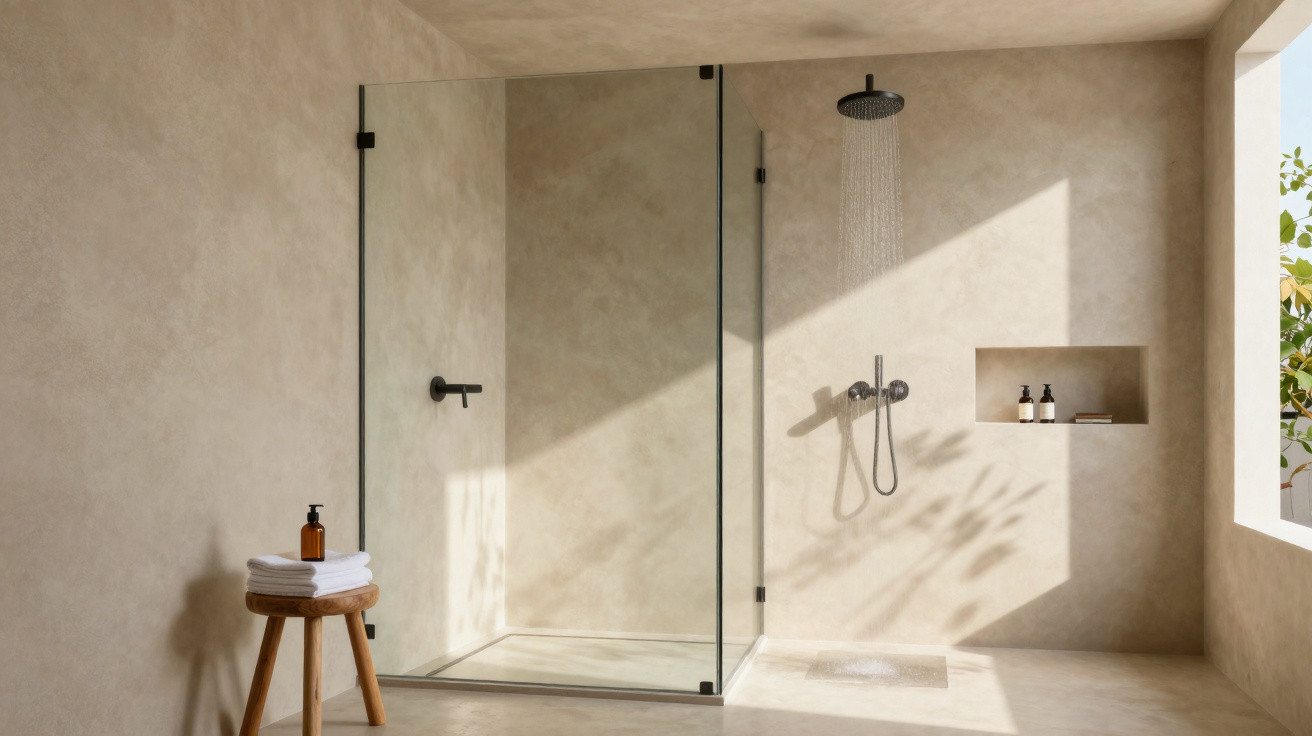
The traditional shower enclosure is being specified less often in 2026 refurbishments because many people want fewer tracks, fewer grimy rubber seals and a stronger sense of space. Sliding doors and corner-heavy frames are giving way to open shower layouts, seamless finishes and fixed panels that make everyday cleaning far simpler.
Why is the traditional shower enclosure being reconsidered?
A shower enclosure still suits plenty of bathrooms, but its weaknesses show up in day-to-day use. Bottom rails tend to collect mildew, rollers trap soap residue, and the sealing strips often darken as moisture builds up. In smaller bathrooms, the door can also make moving around the room more awkward.
This shift does not mean every bathroom must ditch glass completely. The trend is more about designs that remove obstacles, improve water run-off and make the shower zone feel visually connected to the rest of the room.
How does a walk-in shower change the shower area?
An open shower, also known as a walk-in, avoids moving doors and keeps the entrance to the wet zone clearer. It performs best when the floor has the right fall, the drain is well positioned and there is enough space to stop water travelling into the dry area.
- Removes hard-to-clean bottom tracks.
- Improves movement in narrow bathrooms.
- Cuts down the feeling of a visual barrier in the room.
- Makes access easier for older people and anyone with reduced mobility.
- Works particularly well with overhead rain showers or well-positioned showerheads.
The key requirement is proper plumbing and floor planning. Without the correct slope, an open shower can soak bathmats, cabinetry and doors. That is why the idea looks great, but needs to be designed before the work starts-rather than improvised after the flooring is already installed.
Why is microcement appearing among the 2026 trends?
Microcement is gaining momentum because it creates a continuous surface, with fewer grout lines and fewer visual breaks across floors and walls. In bathrooms, that means fewer places for dirt to cling-especially around the old enclosure area, the drain and the shower zone.
It also delivers a cleaner, calmer look. With no small tiles chopping up the finish, the bathroom can feel larger. For it to work properly, however, microcement must be applied correctly, waterproofed thoroughly and sealed with products suitable for wet areas.
When should you use a fixed panel or textured glass?
A fixed panel sits between a fully enclosed shower and a completely open layout. It suits anyone who wants to move away from a conventional shower enclosure but still needs to limit splashes. Instead of closing the whole shower area with doors, it provides a partial screen that is easier to maintain and uses less hardware.
- Textured glass helps disguise water marks.
- A fixed panel reduces the number of moving parts.
- A design without a bottom track makes cleaning the floor easier.
- Fluted options increase privacy without making the bathroom darker.
- Slim profiles pair well with black, chrome or brushed metal finishes.
This approach works particularly well in medium-sized bathrooms, where there is room to keep a comfortable opening. In very small spaces, the panel needs careful sizing, because a screen that is too short can allow water to escape into the dry zone.
The best design is the one that balances water control, cleaning and circulation
These three trends are not just about creating a magazine-ready bathroom. A walk-in shower, continuous finishes and a fixed panel solve practical issues when they reduce gaps, improve movement and cut down the weekly job of scrubbing damp corners.
Before you say goodbye to the traditional shower enclosure, it is worth checking the bathroom’s size, ventilation, shower position, drain type and the household’s routine. When those details are planned properly, the room feels lighter, stays easier to clean and offers a more comfortable shower area for everyday use.




Comments
No comments yet. Be the first to comment!
Leave a Comment