
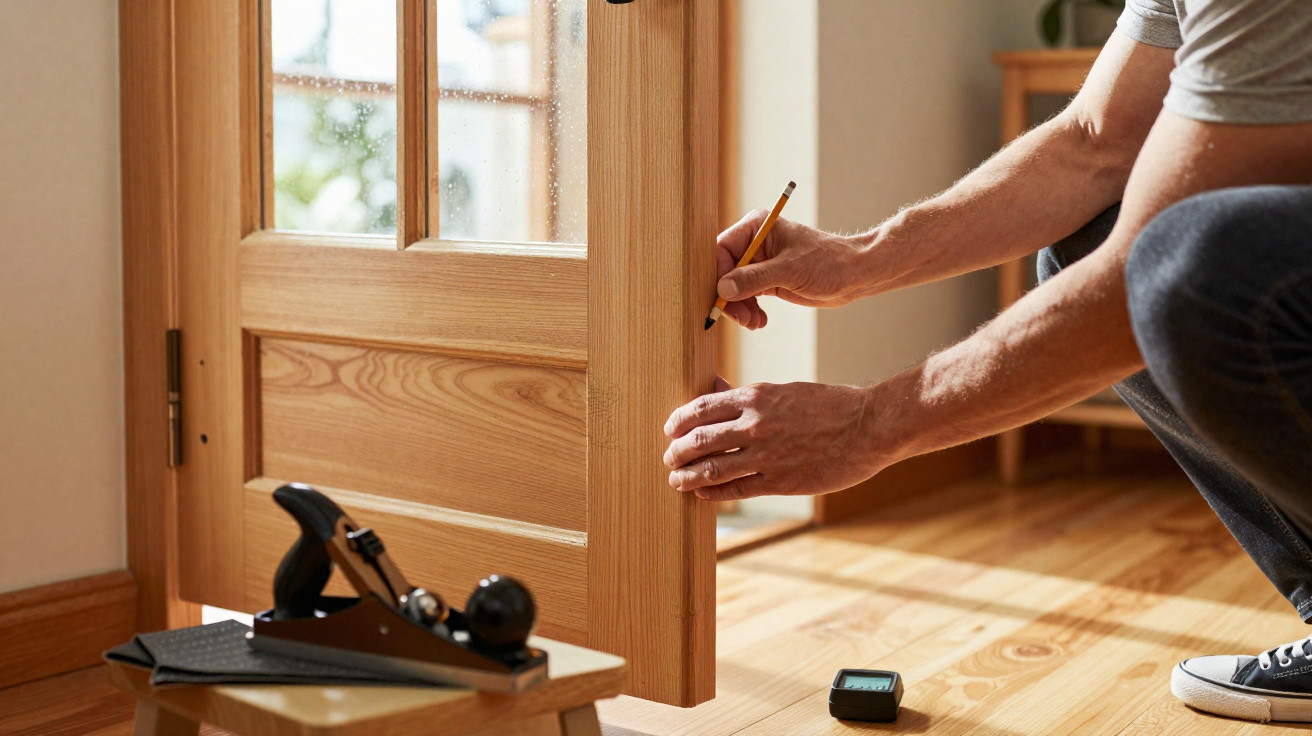
A swollen wooden door usually sticks because the timber absorbs moisture from the air, expands, and loses the clearance that should exist between the door leaf and the frame. Before you start sanding or trimming, work out whether the cause is swelling, loose hinges, built-up paint, or poor sealing around the edges.
Why does wood swell with humidity?
Timber is hygroscopic, meaning it takes in and releases moisture as indoor and outdoor conditions change. During wet spells, in poorly ventilated bathrooms, in damp kitchens, or with external doors that are not properly sealed, the door leaf can expand enough to scrape on the frame or the floor.
This movement is often seasonal. If the door only sticks on humid days and returns to normal when it is dry, it is usually better to tackle the moisture and improve the sealing first, rather than removing wood without pinpointing the exact rubbing point.
How do you identify where the door is sticking?
Close the door slowly and watch where it touches first. Shiny rub marks, scuffed paint, fine wood dust, a localised squeak, and resistance near the handle can all help you locate the area that no longer has enough clearance.
- Top edge of the door: can suggest swelling or the frame being out of alignment.
- Lock side: often appears when the wood has expanded in width.
- Bottom edge: may be the door dropping due to a loose hinge, or contact with a damp floor.
- Hinge side: usually calls for adjusting screws before reaching for sandpaper.
- Marked frame: can show the rubbing point more accurately than the door leaf itself.
What is the simplest fix before sanding the wood?
Start with the hinges. Tighten the screws, check the door leaf has not dropped, and see whether there is play in the frame. A slightly misaligned door can look like a swollen one, yet close properly again after a quick adjustment.
If it is only light rubbing, clean the edge and apply a thin layer of clear wax or dry soap to the contact point. This will not cure significant swelling, but it can reduce sticking temporarily while the timber dries and you decide whether material really needs to be removed.
When should you sand or plane a swollen door?
Only sand once you have clearly marked the contact area and confirmed the door still sticks even after improving drying conditions and tightening the hinges. Taking off too much timber will leave gaps when the drier season arrives.
- Mark the rubbing point with a pencil before taking the door off.
- Use medium-grit sandpaper only on the tight area, always following the grain.
- Remove a small amount at a time and test the fit before continuing.
- For severe sticking, keep planing to the absolute minimum and control it carefully.
- After sanding, seal any exposed timber with varnish, paint, or a sealer/primer.
A door only stops swelling when the wood is protected
A lasting fix does not end with sanding. Any edge you expose needs a proper finish, especially the top and bottom of the door-areas that are often left without varnish and can absorb moisture quickly.
To stop the issue returning, keep damp rooms well ventilated, deal with leaks or damp ingress, fit suitable weather seals on external doors, and reapply varnish or paint when the finish wears. With the clearance set correctly, hinges tightened, and the timber sealed, the door is far less likely to stick with each change of season.





Comments
No comments yet. Be the first to comment!
Leave a Comment