
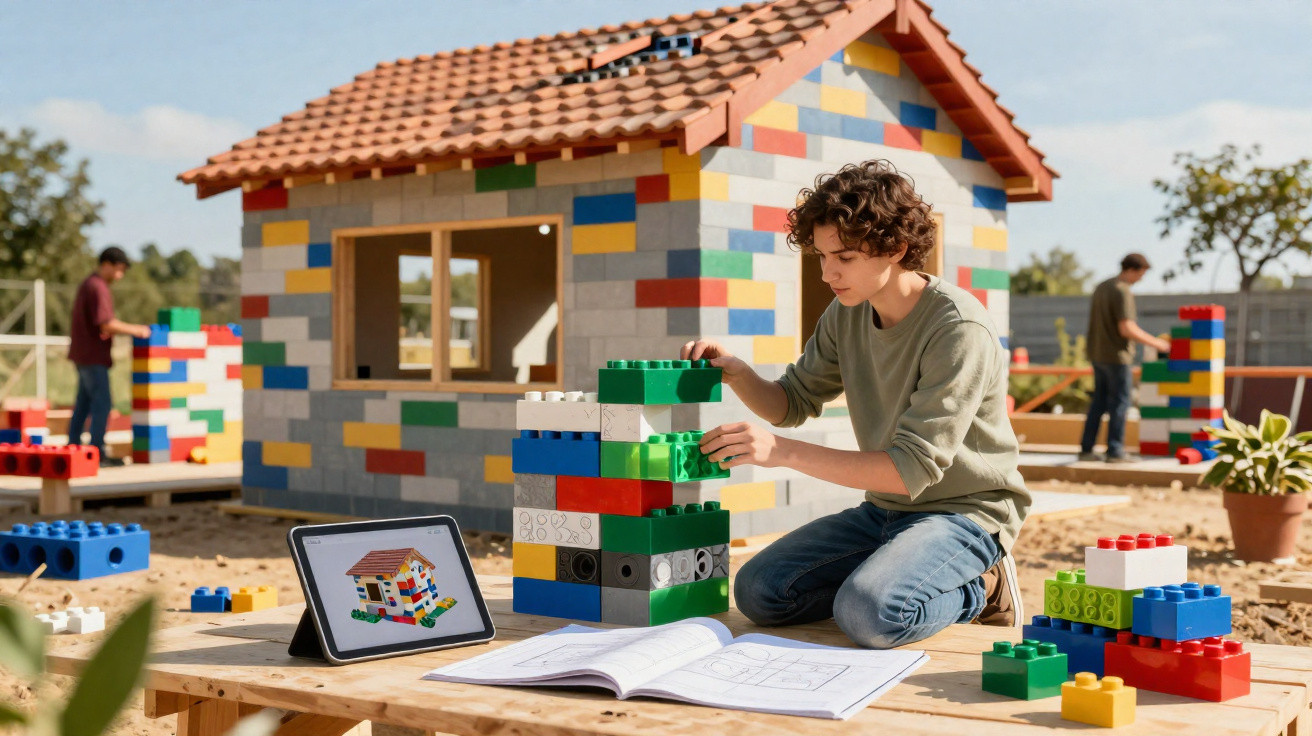
Recycled plastic blocks are emerging as a fast alternative for putting up homes without traditional bricks and without relying on dry construction systems. The idea is to use interlocking modular pieces made from plastic waste to shorten build times, reuse discarded material and assemble homes in just a few days.
How does building with recycled blocks work?
The process starts with plastic collected from urban and industrial waste streams. After sorting, the material is processed, melted down and formed into structural blocks with interlocking joints, similar to construction toys.
On site, the blocks arrive ready to be assembled. Instead of building walls with mortar, bricks and lengthy curing times, the team fits the pieces together according to the design, creating walls, partitions and enclosures with less mess and far fewer wet-stage steps.
Why can a house be ready in five days?
The speed comes from industrialisation. Much of the heavy work happens before construction begins, during the manufacture of the modules. Once the pieces reach the plot, the build becomes an assembly job.
- The blocks arrive standardised and ready to interlock.
- The build uses less mortar, less water and needs less drying time.
- Assembly can be done with a smaller team than conventional masonry.
- Walls go up quickly because each piece covers a larger area than a traditional brick.
What advantages does this method offer?
The key benefit is combining speed with the reuse of plastic. Waste that might otherwise take centuries to break down can become a building component, suitable for homes, schools, community modules and emergency housing solutions.
The system can also reduce site waste. Because the parts are manufactured to set dimensions, there is less rubble, less ad-hoc cutting and fewer stages of moving heavy materials back and forth.
What needs assessing before using these blocks?
Building quickly does not remove the need for proper design. A home still must comply with local standards, have suitable foundations, ventilation, electrical and plumbing installations, thermal insulation, fire resistance and predictable structural behaviour over time.
- Check whether the system has technical certification for residential use.
- Confirm mechanical strength, stability and long-term durability of the blocks.
- Plan the roof, foundations and waterproofing with a qualified professional.
- Assess thermal and acoustic performance in line with the local climate.
- Review council rules before starting any construction.
A fast option that still relies on a well-made design
Recycled plastic blocks attract attention because they tackle two issues at once: the slow pace of conventional building and the volume of discarded plastic. In social housing, rapid rebuilding or modular expansion, the technology can shorten timelines without turning the site into a labour-heavy process.
The promise of putting up a house in five days works best when fast assembly is paired with engineering, permissions and quality control. The material changes how you build, but safety still depends on calculations, good workmanship and proper maintenance over the years.

Comments
No comments yet. Be the first to comment!
Leave a Comment