
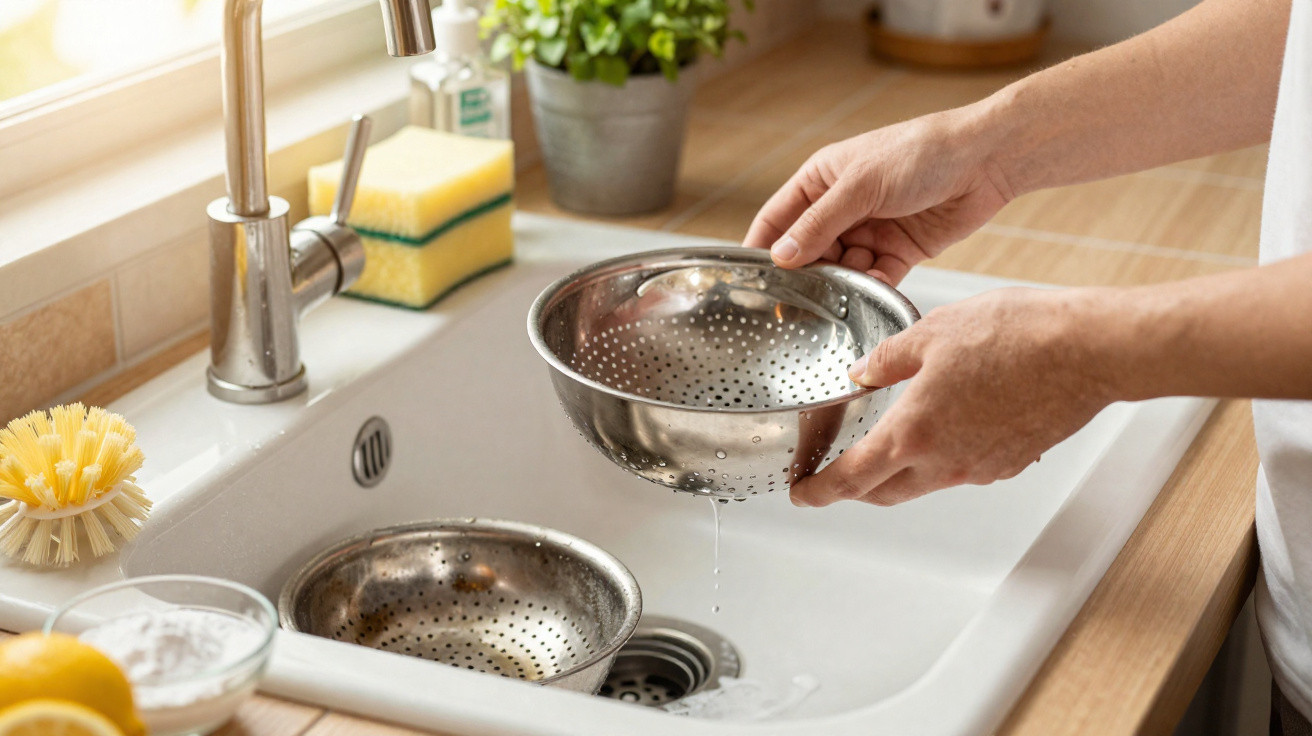
Day-to-day life in the kitchen often conceals small details that make a big difference to household hygiene. One of them is the sink strainer: it catches food scraps and helps prevent blockages, but it can also build up grease, organic residue and micro-organisms. When it is not looked after properly, that build-up can affect its appearance and smell, and may even attract insects.
Why does a sink strainer go dark and start to smell?
When a sink strainer discolours, it is usually because grease and organic residue have collected on the surface and in the tiny gaps. With every wash-up, bits of food, frying oil, sauces and drinks settle there-even if you scrape most leftovers into the bin.
Over time, this mixture oxidises and turns into a dark, sticky film, made worse by constant damp. In those conditions, bacteria and fungi multiply and generate unpleasant odours, which can be stronger in hot weather or when the strainer is left wet all the time.
When should you replace a sink strainer, and what signs should you look for?
How often you should replace it depends on the material, how much it is used and how well it is cleaned. In a typical home kitchen with moderate use, replacement is often recommended every 3 to 6 months. In households where large amounts of food are prepared, that interval may drop to 1 or 2 months.
More important than counting the months is watching for signs that cleaning is no longer enough. These indicate the material is already compromised and will start trapping dirt and odour more and more quickly.
- A lingering smell even after washing with washing-up liquid and disinfectant.
- Dark marks that will not lift, suggesting stubborn build-up or early corrosion.
- Cracks, warping or broken sections that hold onto more residue.
- A roughened surface, which makes it easier for grease and slime to cling.
- A slimy layer forming repeatedly after only a short time in use.
How do you clean a sink strainer properly day to day?
A straightforward cleaning routine helps slow discolouration and bad smells, while also reducing micro-organisms. Ideally, remove debris right after use and add a more thorough clean during the week.
As well as washing-up liquid and disinfectant, products such as bicarbonate of soda and vinegar can help tackle odours-provided they are used sparingly so the material is not damaged. The basic habits below help extend the strainer’s lifespan:
- Remove food scraps after each use and put them in the bin.
- Wash with mild washing-up liquid, scrubbing with a sponge or small brush.
- Use a firm-bristled brush to clean gaps and holes thoroughly.
- Apply disinfectant or a bleach-and-water solution weekly, following the label directions.
- Rinse well and leave to dry on a clean cloth or draining rack.
Which sink strainer material is best for domestic use?
The material directly affects how easy it is to clean and how long it lasts. Generally, stainless-steel models resist corrosion better and have a smoother surface, which makes it harder for grease and food residue to cling-so they tend to look better for longer when cleaned properly.
Plastic strainers are light and inexpensive, but they scratch easily and often absorb pigments and odours. Aluminium versions can stain and oxidise when used with stronger products. For these reasons, stainless steel is usually the most practical and durable choice, provided it is paired with correct waste disposal, frequent cleaning and keeping an eye on wear over time.





Comments
No comments yet. Be the first to comment!
Leave a Comment