
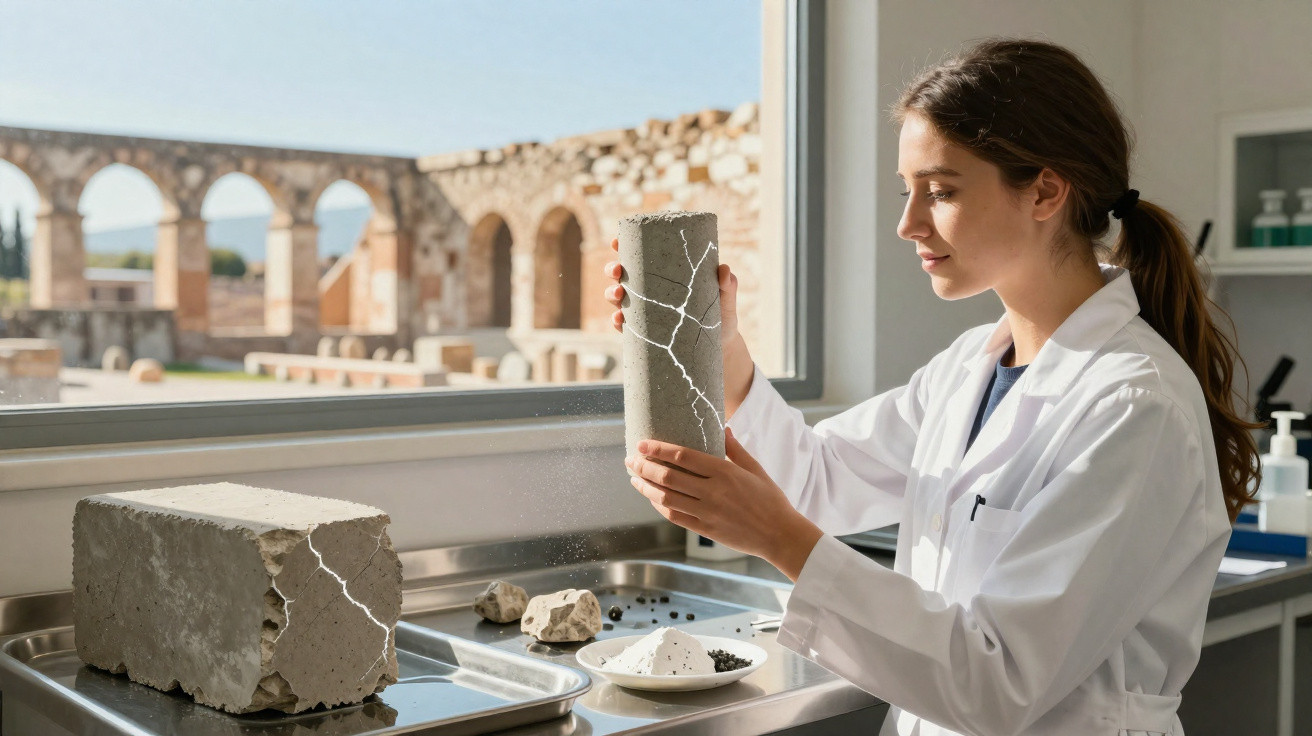
Roman concrete remains one of the biggest puzzles in ancient engineering. While plenty of modern structures develop cracks after only a few decades, buildings put up around 2,000 years ago still astonish researchers with their strength and durability.
Why does Roman concrete last so long?
For years, scientists have tried to work out why landmarks such as the Pantheon in Rome have stayed almost intact for two millennia. The explanation turned out to be hidden in the ingredients the ancient builders chose.
Recent studies indicate that mixing volcanic ash, lime and other minerals produced a concrete that could interact with its surroundings, gradually becoming even tougher as the centuries passed.
How does water help to repair cracks?
Unlike modern concrete-which often loses performance once fissures appear-Roman concrete has a natural self-healing process. When water comes into contact with it, chemical reactions are triggered that can close up small cracks.
As water seeps into the material, it dissolves particles of lime within the mix. New crystals then form and seal the fissures, significantly extending the working life of the structure.
What sets modern concrete apart from Roman concrete?
Many buildings today rely on Portland cement, designed to speed up construction. Even though it is efficient, this material can deteriorate due to moisture, temperature swings and corrosion.
Roman concrete, by contrast, was made to change over time. Instead of weakening after minor cracking, its composition encourages new mineral bonds to form, boosting strength as the years go by.
Which ingredients made this mix so special?
The precise recipe remained a mystery for centuries, but modern research has identified several core components that explain the remarkable resilience of this historic material.
The key elements highlighted by researchers include:
- Volcanic ash, rich in reactive minerals;
- Quicklime, which plays a role in the self-healing process;
- Pieces of volcanic rock;
- Water, including sea water, which intensifies certain chemical reactions.
Could this technology reshape the construction industry?
Specialists argue that fully understanding the Roman formula could lead to concrete that is far more durable and sustainable. Beyond lower maintenance costs, it could also reduce material consumption over the decades.
Researchers are still developing modern versions inspired by this age-old technique. If trials continue to progress, future projects may blend contemporary technology with knowledge preserved since the time of the Roman Empire.
The Romans’ legacy continues to inspire science
Historic monuments show that some older solutions can still outperform more recent technologies in specific ways. Roman concrete demonstrates how careful observation of nature and a deep understanding of materials can produce exceptional results.
As new findings emerge, expectations are growing that this approach could influence the construction of tougher buildings, bridges and coastal infrastructure-structures able to endure for centuries, much like the Roman works that still stand today.






Comments
No comments yet. Be the first to comment!
Leave a Comment