
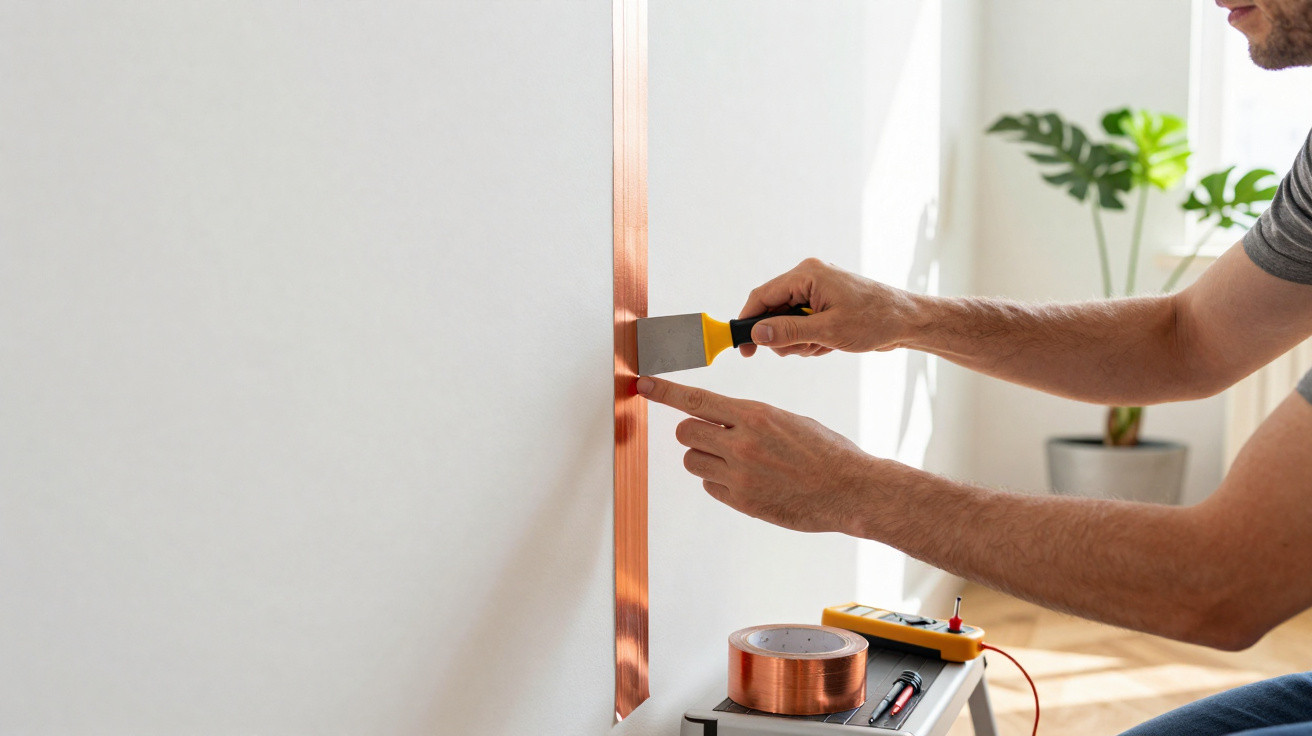
Copper tape has started turning up on the walls of homes, clinics and offices, drawing attention because of the metallic strip that runs around skirting boards, door frames or particular points. It is not just a decorative detail: it is a technical solution used to tackle electrical interference, improve earthing and, in some situations, support moisture and mould control in problem areas by creating a clearly defined conductive route where electrical charges and noise were previously dispersing.
What is copper tape applied on the wall used for?
The most common reason for using copper tape on the wall is to guide and manage electrical fields in spaces packed with cables, extension leads and power supplies. When the strip is correctly connected to earth, it works as a “preferred path” for dissipating interference, helping to reduce buzzing, minor shocks and freezing issues in computers, sound systems and networking equipment.
It is also used in areas with persistent damp, where copper can help organise the movement of electrical charges in walls affected by moisture ingress-always alongside mortars and appropriate base treatments. In these situations, it acts as an additional conductor that may help reduce staining and flaking paint, but it does not replace proper structural repairs or well-executed waterproofing.
Watch a video on the YouTube channel Let’s Evandro covering how copper adhesive tape is applied in residential projects, including its conductivity and barrier functions:
https://www.youtube.com/watch?v=X2mB_7V9_kI
How does copper tape work and which walls is it suitable for?
For copper tape for wall applications to do its job, you need to plan the route all the way to a connection point on the building’s earthing system. In areas with a high density of devices, the tape may be run around the zone behind worktops or TV panels, creating a kind of “protective ring” that helps cut localised electrical noise.
Copper’s combination of conductivity and mechanical strength sets it apart from aluminium tape or plastic materials, which oxidise faster or simply do not conduct. On internal masonry, adhesion is usually better; on plasterboard, the tape is often integrated with the metal frame; and on external walls or very damp surfaces, extra protection and a prior assessment of the wall condition are essential.
How to apply copper tape on the wall step by step
Correct installation starts with surface preparation: the wall must be dry, sound and clean, with no dust, loose paint or grease. If the surface is very uneven, it is advisable to level small defects with filler or do a light sand so you do not end up with bubbles and lifting that interrupt the copper’s continuity.
Once the area is ready, fitting copper adhesive tape follows a few straightforward steps designed to preserve electrical performance and keep it durable over time:
- Plan the route: set the exact path, avoiding tight bends and too many joints.
- Clean the area: remove dust with a dry cloth or a slightly damp one, then wait until it is completely dry.
- Apply the tape: peel back the liner gradually, sticking and pressing firmly-ideally using a plastic spreader.
- Maintain electrical continuity: overlap joints by a few centimetres and, if needed, use suitable solder.
- Connect to earth: link the end to the earthing system using terminals and following technical standards.
What results can copper tape on the wall deliver in practice?
In homes and small offices, tradespeople report reduced interference on sensitive equipment and more consistent earthing at critical points. Where lots of cables are present, creating an organised return path for electrical charges tends to cut noise, lock-ups and minor shocks from nearby metal surfaces.
When included as part of a refurbishment or a planned installation, copper tape on walls stops being a quick “patch” and becomes part of an electrical protection approach and overall building infrastructure care. Used alongside good installation practice, preventative maintenance and the right damp treatments, it is a discreet, relatively affordable option that can bring noticeable improvements in comfort and day-to-day stability in occupied spaces.





Comments
No comments yet. Be the first to comment!
Leave a Comment