
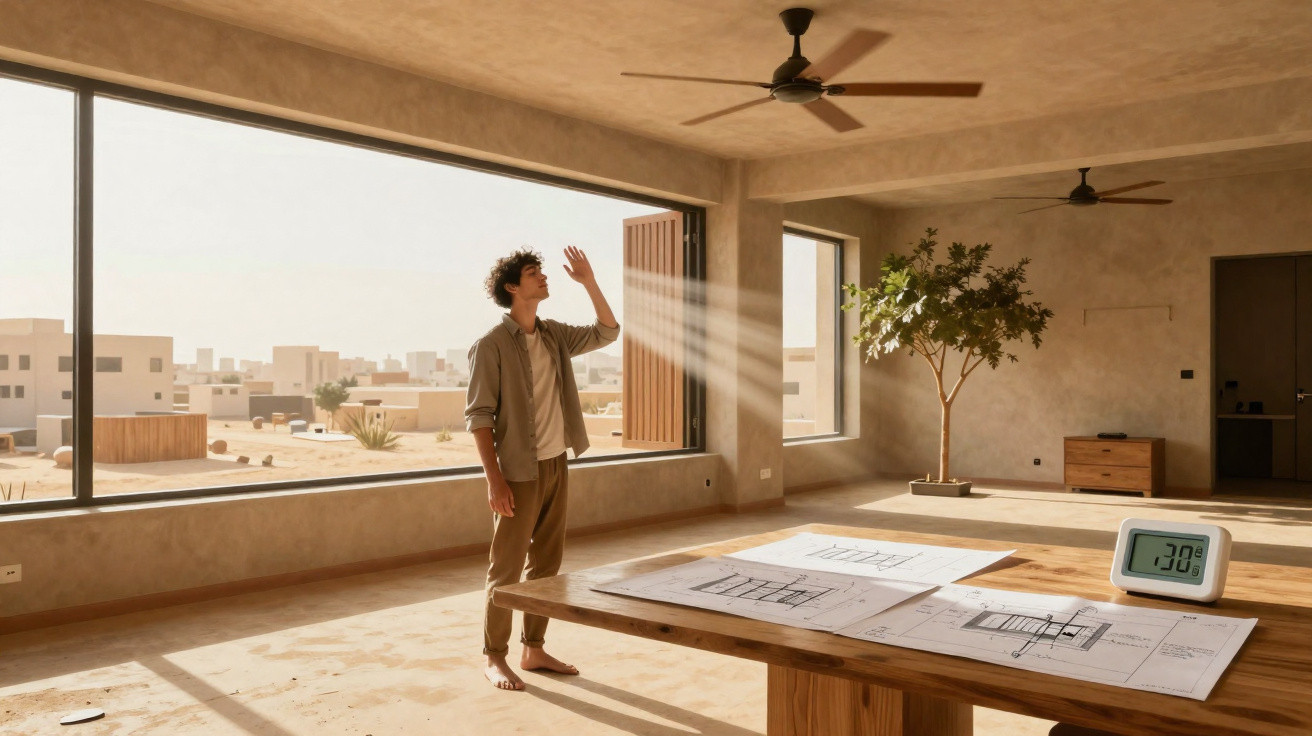
Most people don’t think of buildings as systems that keep us alive. Yet that’s precisely the role they play. We sleep in them, earn a living in them, hide from storms in them, and escape into them when the outdoors feels like standing in a furnace.
Humans spend around 90% of their lives indoors, with walls, roofs, and windows operating like a protective ‘third skin’ against the weather.
Now that “third skin” is being put under strain. Weather patterns are becoming more volatile than they once were, and many homes and offices were never designed for the intensity of heatwaves and cold storms that are appearing more frequently.
That matters because a building that can’t keep occupants within safe temperatures isn’t merely unpleasant to be in. It can put health at risk.
When buildings stop working
A large share of houses and workplaces are not built to cope with the extreme swings in weather that we are ever more likely to face in a warming world.
You notice it when certain properties warm up quickly and remain stifling long after sunset. Or when a room turns bitterly cold the moment a cold front arrives.
In Adaptive Thermal Comfort: At the Extremes, Susan Roaf, Fergus Nicol, and Michael Humphreys are blunt about what they see happening.
“In reality, many modern buildings, and particularly homes, are already failing in various ways. During extreme weather events, they overheat. During power outages, some buildings do not even remain habitable,” they noted.
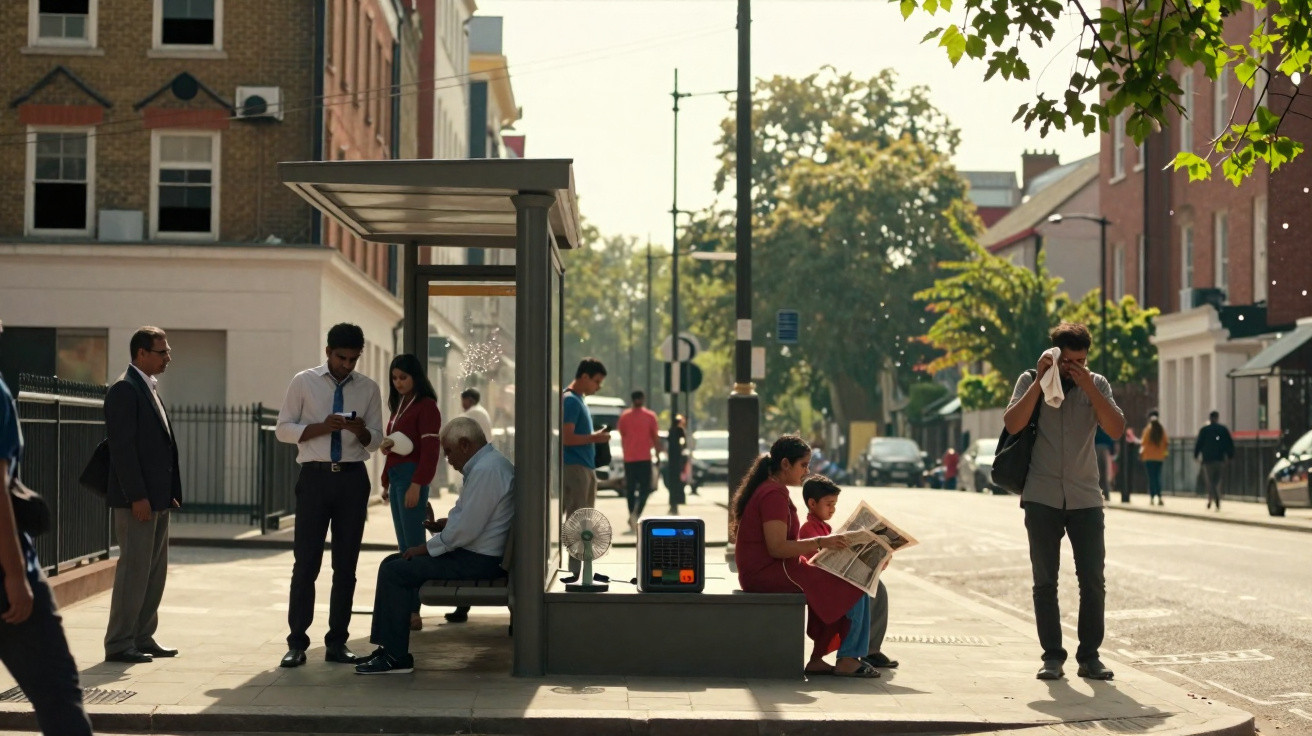
Blackouts during heatwaves or winter storms are no longer unusual. When power fails, many contemporary buildings don’t just become less comfortable; they can lose their baseline level of safety.
The price of staying comfortable
“Even many in the middle classes in developed economies are finding it increasingly hard to afford the energy needed to keep their homes thermally safe, let alone comfortable, even before the onset of the evermore extreme weather events we will all face in the future,” wrote the authors.
The issue isn’t solely financial. It’s also about the trade-offs people are pushed into making. Do you leave the air conditioning running through the night and deal with the bill later, or do you endure the heat and hope it doesn’t lead to illness?
This is where building design stops being abstract and becomes personal. Design choices influence who can feel secure, who can sleep properly, and who has to simply endure the season.
Why modern design often makes it worse
Many popular design fashions look impressive in photographs but perform poorly when the weather turns. Common problems include the risk of overheating in single-aspect flats with inadequate ventilation, as well as buildings in dense urban areas that hold on to elevated temperatures both day and night during hot spells.
Then there is the glass issue. A great many newer homes feature large open-plan layouts and expansive glass walls, often without curtains or external shading.
With so much unprotected glazing, heat can pour in or leak out rapidly. Rooms can swing quickly from too hot to too cold, undermining both comfort and health for the people living there.
The book’s authors argue that this situation developed gradually.
They explain that, during the twentieth century, the Western world promoted a narrow definition of “thermal comfort” in architecture. As a result, lightweight, glass-fronted, air-conditioned buildings spread worldwide-often with windows that do not open.
These buildings are not only energy-hungry to operate-and will become even more demanding as climates grow more extreme-but many are also super-polluters that significantly contribute to climate change.
So the same building style that struggles during extreme weather can also intensify the very conditions it can’t cope with. It’s a feedback loop that is difficult to dismiss.
Rethinking how we design buildings
The authors argue that we must stop assuming machines are the only solution.
“The way we currently measure and design buildings for the climate is not working. It is leading us to a dead-end generation of unadaptable and thermally dangerous buildings that require so much energy to remain habitable, that only the very wealthiest will be able to afford to occupy them,” they warned.
They describe a fork in the road. One path continues the trend of creating buildings that are sealed off from their surroundings, relying on efficient systems to condition the indoor environment.
“The other direction points to the seemingly revolutionary idea that we urgently need to reconnect indoor climates to those outside them to create buildings in which people are enabled to use local, natural, renewable energy from sun, wind and planting to stay comfortable indoors for as much of the year as possible, free of cost to themselves and with minimal impacts on the planet.”
If you grew up equating comfort with airtight rooms and powerful cooling, that “reconnect” idea can sound unfamiliar. Yet it also reflects how people lived for centuries: by creating buildings that worked with local conditions rather than constantly battling them.
Making extreme climates habitable
The team emphasises that people have long adapted to their environments across an enormous range of climates, using locally developed building traditions to make those places liveable.
They argue that the next step is to relearn from the knowledge of traditional builders worldwide who have long designed for already extreme conditions.
The book draws insights ranging from Mongolian yurts to Māori thinking about human well-being.
It also highlights Sweden, where community support can help people remain safer during severe conditions, and points to architects in South East Asia who create comfort by using local, natural resources rather than depending entirely on constant air conditioning.
This change also reshapes whose expertise is valued. Instead of treating “Western” design as the standard, the book argues that deep, practical knowledge already exists in regions that have dealt with heat, humidity, and sharp weather swings for generations.
What the new builders are doing differently
Susan Roaf, professor of architectural engineering at Heriot Watt University, argues for a fundamental rethink.
“We need radical new thinking. We need completely new thinking that enables buildings to run on local energy, using natural ventilation, solar gain in winter, and time cooling in summer, so profoundly reducing energy use in, and carbon emissions from buildings. More efficient machines are not the solution,” said Professor Roaf.
“What’s really exciting is the new generation of pioneering architects who design beautiful, comfortable, naturally-ventilated buildings that keep people cool.
“It’s time we in the North start listening to others. It’s time for architects in South East Asia, for instance, who are creating wonderful buildings, to export their wisdom back to teach the West how to design responsible climate-friendly homes and workplaces.”
“This is the message: we need hybrid or mixed-mode buildings that can be run for as much of the year as possible on local, free, natural energy, and only heated or cooled when necessary.”
That “hybrid” approach matches what many engineers increasingly advocate in practice: buildings kept stable through careful orientation, effective shading, insulation, airflow, and thermal mass-while mechanical heating or cooling serves as a back-up rather than the primary strategy.
The full study was published in the journal Adaptive Thermal Comfort.



Comments
No comments yet. Be the first to comment!
Leave a Comment