
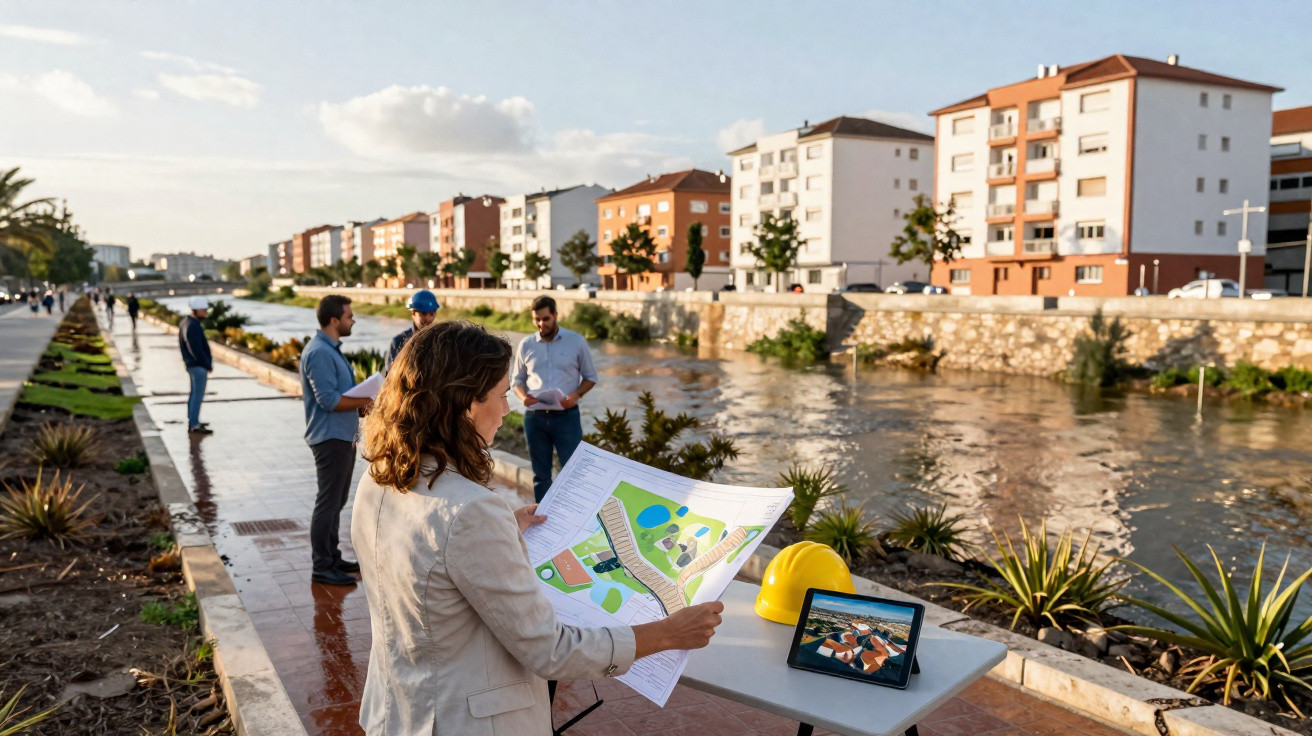
The Recovery and Resilience Plan (PRR) represented the biggest cycle of public investment Portugal has seen in recent decades. It also served as a stress test for how central government and local government work together, showing genuine advances while also exposing gaps in coordination between the two.
PRR: the largest investment cycle and its importance for municipalities
For municipalities, the PRR proved pivotal. Without this funding, many schemes that are now finished would still be on hold due to a lack of resources. The programme made it possible to deliver improvements across education, health, housing, mobility and public space, raising residents’ quality of life.
Loures and PRR delivery: schools, health, housing and mobility
Loures illustrates that impact clearly. The municipality was able to use the funds to fast-track long-awaited projects-from refurbishing schools to building new family health units-alongside interventions in housing and mobility.
Constraints and pressure on municipal capacity under the PRR
The process, however, was far from straightforward. Local authorities had to shoulder substantial co-financing costs at a time when inflation pushed up construction prices and forced projects to be reviewed. A shortage of skilled labour slowed works, while technical and bureaucratic complexity-combined with very tight deadlines-put intense strain on municipal teams that were often small.
These elements help explain why not every investment progressed at the desired pace and why many municipalities remain under significant financial pressure. Even so, municipalities accounted for around 40% of public investment.
From PRR to PTRR: Portugal Transformation, Recovery and Resilience after the 2026 climate disaster
With this cycle now complete, mayors are looking ahead to the PTRR - Portugal Transformation, Recovery and Resilience - with expectations shaped by the experience gained.
Unlike the PRR, the PTRR is designed to respond to the climate catastrophe that struck the country between late January and mid-February 2026, focusing on repairing damage, strengthening territorial resilience and delivering long-term structural transformation.
For Loures, which was also affected by flooding and severe weather, the objective is straightforward: the PTRR should not be limited to emergency response, but should also tackle structural problems such as upgrading wastewater networks, reducing water losses and delivering integrated drainage solutions. To achieve this, municipalities must be recognised as strategic partners in setting territorial priorities, not merely as implementers of centralised decisions.
Even so, key questions remain: what degree of autonomy will local authorities have, what share of the funding will be allocated to them, and how can a repeat of co-financing requirements be avoided if these would again undermine municipal budgets that are already under heavy pressure?
The PTRR’s success will depend on the ability to combine recovery, resilience and transformation, equipping municipalities with the means they need to build territories that are better prepared, sustainable and fairer for future generations.





Comments
No comments yet. Be the first to comment!
Leave a Comment