
There’s a very specific sort of guilt that arrives only after you’ve paid a small fortune for gorgeous hardwood floors.
You’ll recognise it: the first few days you pad around in socks, barking “shoes off!” at anyone bold enough to cross the threshold in boots. You treat every plank like a brand-new car. Then normal life returns-toast crumbs, dog-hair tumbleweeds, and that faint, sandy grit from outdoors working its way underfoot.
So you reach for the vacuum with a sense of moral superiority. You’re not scraping chairs across the room or dropping pans-you’re cleaning. You’re doing the sensible thing. Which is why it feels almost insulting to learn that a very common vacuum setting-the one many of us use on autopilot-is quietly scuffing and scratching the wood you’re trying to protect. Odds are, you’ve used it this week.
The setting experts say is quietly wrecking your wood floors
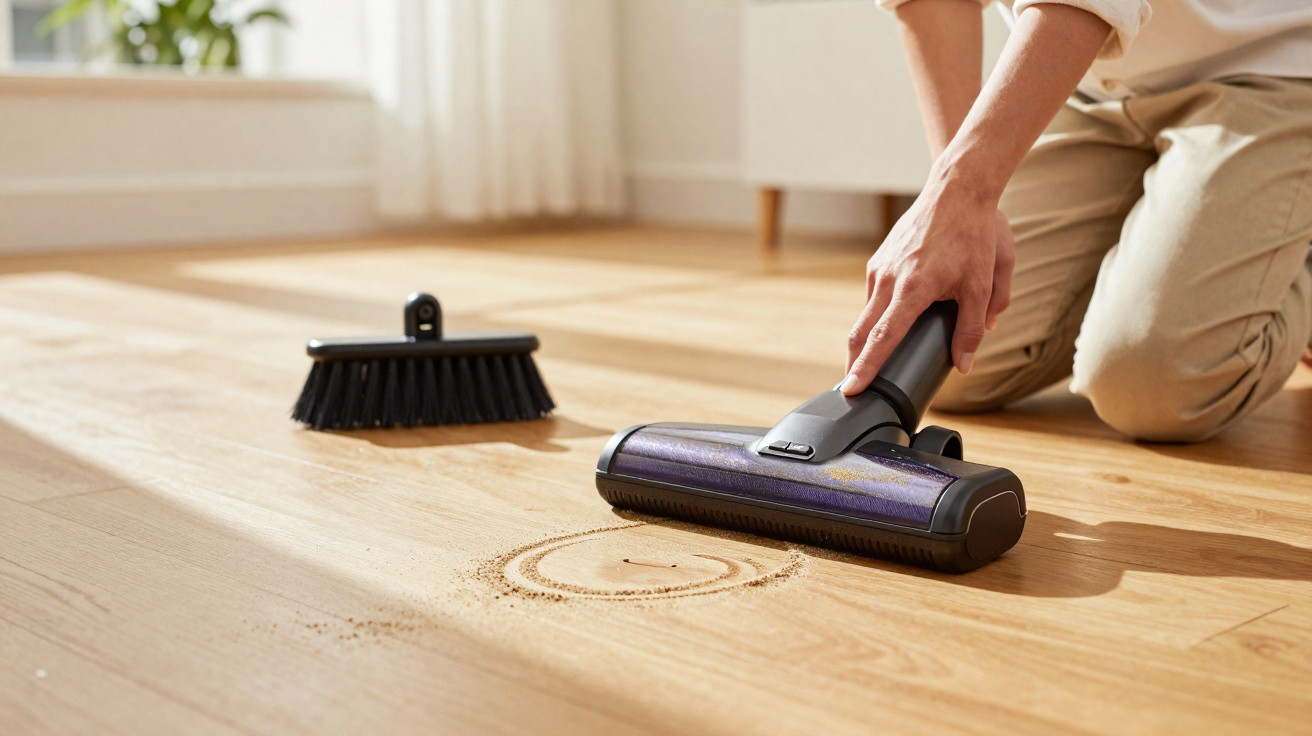
Ask a flooring specialist which vacuum habit makes them wince, and you’ll hear the same answer: the rotating brush or beater bar setting. It’s the mode that sounds like a low helicopter when it hits carpet. On rugs, those bristled rollers are fantastic-they comb into fibres and drag dirt up where the suction can grab it. On hardwood, that same action turns into lots of tiny, rapid scratches.
What makes it worse is how often we go straight from carpet to wood without changing anything. The reassuring roar kicks in, the vacuum glides over the boards, and it feels like a proper deep clean. Years later, when experts are called in, they often find dulled tracks along the busiest routes through the home-little arcs and swirls where the brush has skated over microscopic dust and grit, grinding it into the finish like moving sandpaper.
A London-based floor restorer described it to me as “death by a thousand micro-scratches”. Each pass is barely noticeable. But over time the shine fades. Those crisp reflections you get in late-afternoon light start to look milky. Then the homeowner is left wondering why their “low-traffic, well-cared-for” oak now resembles a supermarket aisle.
Why that whirring brush is the enemy of smooth wood
How the beater bar actually behaves on hardwood
On carpet, the rotating brush is the star of the show. It beats and flicks debris up so suction can pull it away. Hard floors don’t play by the same rules. With nothing soft to sink into, the bristles skate across the surface and shove grit and tiny stones along like a plough. Every little crunch as you roll over a gritty bit on bare boards is, effectively, a warning.
If you’ve ever watched sunlight reveal fine scratches on a wooden table, you already know the type of marks this creates. Most modern hardwood comes with a factory finish-lacquer or oil. That finish is the layer you actually walk on, not the raw timber. The rotating brush doesn’t simply nudge dust aside; it repeatedly scuffs that protective coating. Once it becomes thin and hazy, grime clings more readily, and cleaning feels pointless because the glow never fully returns.
Some machines include “multi-surface” heads that claim they’re safe for wood. Flooring technicians tend to be doubtful. Their view is that if something bristled is spinning against boards, there’s always a chance of damage. “It’s not about one dramatic scratch,” one expert told me, “it’s about what your floor looks like after five years of the wrong setting.”
The grit you can’t see is doing the real damage
Most of us fear the obvious culprits: stiletto heels, a dropped mug, someone yanking a chair across the room. But the everyday troublemaker is usually the tiny, forgettable grit that blows in through an open window or arrives on school shoes. Once it’s on the floor, it sits there until a rotating brush comes along and pushes it across the surface with pressure.
Vacuum engineers will tell you hard floors can be deceptive. From standing height they look clean, so we don’t always handle them gently. You might notice a faint scrape as the bar catches a stray grain and dismiss it. That exact moment-against the quiet of the room-is when the protective finish takes a hit. You won’t see the line straight away, but it’s there: hair-thin and lasting.
The slightly cruel twist is that the setting we link with “proper cleaning” is the one that gradually drains the life from your wood.
The setting you should be using instead
What experts actually do in their own homes
Ask an installer or refinisher what they use on hardwood in their own place and the answer is almost comically simple: bare floor or hard floor mode, with the brush roller switched off. The most suitable heads either have soft rubber wheels and a smooth underside, or a dedicated hard-floor attachment with gentle bristles that don’t rotate. The heavy lifting is done by suction, not aggressive brushing.
Here’s the reality check: plenty of people have never swapped a vacuum head, let alone searched for a tiny “brush off” symbol on the handle. Let’s be honest-almost nobody does this daily. You want to plug it in, remove the crumbs, then flop onto the sofa. Still, that one small change-from brush to bare floor-can be the difference between a full sanding in eight years or in fifteen.
If your vacuum doesn’t advertise a hard-floor mode, there’s usually a hint. Look for a small slider that opens a vent on the handle (often to reduce suction for delicate rugs) or a button showing a carpet icon versus a plank icon. The plank, unsurprisingly, is what your wood wants. Flooring pros say that if a new owner changes just one habit, it should be this.
The underrated power of a simple attachment
In many vacuum boxes there’s a small, flat tool with short, soft bristles. It doesn’t look as impressive as the main floor head, but wood-floor specialists rate it highly. Used with moderate suction, it lifts dust without pressing it into the finish. The action is closer to dusting with a bit of vacuum assistance than scrubbing.
Some people will understandably scoff at the idea of swapping tools between rooms. Fair enough-life is busy, and floors rarely feel urgent. But if you’ve just spent thousands on engineered oak or solid walnut, it’s a bit mad to rely on a setting designed for shag pile. One expert put it bluntly: “You wouldn’t wash a silk shirt on the heavy-duty cycle and hope for the best.”
The emotional hit of finding tiny scratches
There’s something oddly personal about spotting fresh marks on hardwood. It’s not like a chipped plate or a scuffed trainer you can shove in a cupboard. The floor is everywhere. You notice it when you stumble out for a morning coffee, and again when evening light stretches across the living room and suddenly every imperfection is lit up.
Most of us have had the moment where, at just the right angle, you see faint spirals and scratches that you’re sure weren’t there last year. Your stomach sinks. You start mentally retracing what changed, and “I’ve been vacuuming more because the dog’s shedding” stops sounding quite so virtuous. You didn’t drag furniture or drop anything heavy-yet there it is, circling the sofa and under the dining table.
Floor repair specialists say this is often when people first get in touch. Not because the floor is destroyed, but because it no longer “sparks joy”, to borrow Marie Kondo’s line. Structurally, the wood is fine. It just doesn’t feel special anymore. And that’s the sting: the wear is light but widespread-not dramatic enough for an insurance claim, but enough to make the whole space feel tired.
How often should you really vacuum hardwood?
The industry advice vs real life
Put the question to an expert and they’ll often suggest sweeping or vacuuming wood floors several times a week-sometimes daily in busy homes. The aim is to stop grit building up and to protect the finish. In theory, it’s perfectly reasonable. In practice, many of us manage once a week at best, usually in a frantic rush before guests arrive-then we light a candle as if the house always smells like that.
Those same experts will admit they don’t follow their own textbook rules flawlessly. Life gets in the way: kids spill things, pets shed, a pram gets wheeled through the front door. The more usable guidance they give clients is this-clean often enough that the floor never feels gritty under bare feet, and always do it with the brush roller off. If you’ve fallen behind, they’d still rather you did one careful, brush-free pass than three heavy-handed ones on the wrong setting.
There’s something liberating about that approach. You don’t have to become the person who buffs floorboards every evening. You simply need to stop going at them with a tool built for fluffier terrain.
Simple tweaks that keep your floor looking new
As well as turning off the rotating brush, flooring experts quietly recommend a few small habits that pay off. Use doormats properly-don’t just treat them as décor. Put felt pads under chair legs, especially that one dining chair everyone drags back half a metre. When you spot stones or big bits of grit, pick them up rather than enthusiastically vacuuming them like it’s a challenge.
A dry microfibre mop once or twice a week can catch fine dust your eyes miss, leaving less for the vacuum to deal with. If you love that just-cleaned shine, some pros suggest alternating: one day a careful vacuum in bare floor mode, the next day a quick pass with a soft mop. None of it is glamorous, but it slows the visible ageing in high-traffic areas-hallways, kitchen zones, and the strip in front of the sofa where people naturally stand or pace during phone calls.
And then there are shoes. The sigh you hear from a wood-floor installer when you mention indoor trainers says it all. They know the tread hangs on to grit, which then meets either the brush bar or your full body weight. If banning shoes feels unrealistic, even a “mostly socks” approach massively reduces the constant sandpaper effect.
What if your floor already has those tell-tale swirls?
If you’re reading this while replaying years of enthusiastic hoovering on carpet mode, you’re in good company. One expert from a Manchester refinishing company said nearly every client opens with the same confession: “I’ve probably been using the wrong thing for years, haven’t I?” Then they point to a section of hallway that always looks grey and dull no matter what they try.
The encouraging news is that light, surface-level wear from a beater bar can often be improved without sanding right back to bare timber. Some floors respond well to a professional clean and recoat-essentially a deep clean followed by a fresh top layer of finish. Deep gouges or areas worn through to bare wood are harder and more expensive, which is why specialists focus so much on preventing the slow damage caused by everyday habits.
The most valuable step, though, is also the simplest: change how you vacuum from this point on. Even if the last few years weren’t ideal, floors are long-term investments. What you do this year will show in how they look when someone visits in five years and says, “Wow, your floors still look amazing.”
The tiny click that saves your floor
It’s oddly satisfying that such a minor adjustment can make such a noticeable difference. One small button-one click from “carpet” to “hard floor”-and you’re no longer the accidental villain in your floor’s story. You’re the person who learned the trick, changed course, and quietly protected something you worked hard to buy.
Next time you vacuum and that familiar hum fills the room, stop for a moment. Find the brush symbol, the floorboard icon, the slider you normally ignore. That split second is what decides whether your hardwood gradually greys and scuffs, or keeps the warm, gentle glow that made you fall for it in the first place. And it all comes down to one choice: don’t let that spinning brush anywhere near your boards again.



Comments
No comments yet. Be the first to comment!
Leave a Comment