
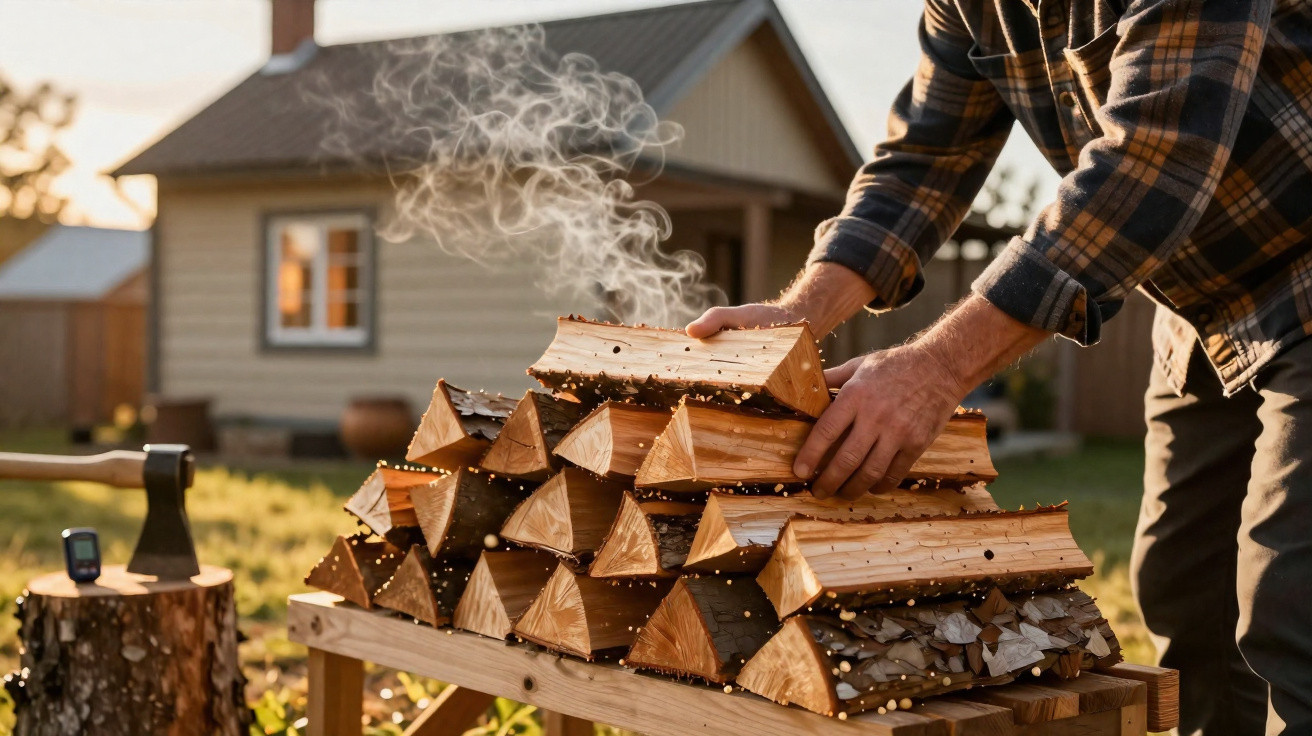
Across France and throughout much of Europe, homeowners have been swapping a straightforward approach they say can almost double the heat you get from each log - not by splashing out on a new stove, but by altering how the wood is split, dried and stored.
Why wet logs can wreck your heating plans
Many people choose firewood based on cost and how much they get for their money. What really makes the difference is moisture content. Newly felled timber can hold 50% water or more, and if it goes into the stove before it has dried, a large slice of the energy is spent driving off that water rather than heating your home.
Dry logs with less than 20% moisture can deliver up to twice as much usable heat as freshly cut wood of the same volume.
Green or damp logs burn poorly, smoulder in the stove and throw out lots of smoke. As that smoke cools in the flue it can condense and leave creosote - a tar-like build-up that may ignite inside the chimney. Fire services across Europe routinely warn that badly seasoned wood is a major cause of chimney fires each winter.
There are other downsides too: damp fuel quickly dirties stove glass, blocks air inlets with soot and makes you burn more wood to achieve the same comfort. So the much-talked-about “trick” is not a gadget at all - it’s simply getting your wood properly dry, then letting the stove run as intended.
How to know if your logs are truly ready to burn
It’s common to assume that wood that has “been outside for a while” must be usable. In practice, that guess is often wrong. Firewood sellers may label loads as “seasoned” without stating an exact moisture reading.
- Look: Properly dry wood often fades to a greyer tone rather than looking freshly yellow or reddish. The ends typically develop small cracks.
- Weight: Two logs of similar size can feel miles apart. The lighter one is usually drier and easier to handle.
- Sound: Bang two pieces together. Dry wood tends to make a sharper, more ringing knock, while wet wood gives a dull thud.
- Smell: Fresh-cut timber can smell strongly of sap or resin. Well-dried wood has only a faint scent, or none at all.
The most dependable option is still a moisture meter. Push the probes into a freshly split face of the log. For most modern stoves, readings below about 20% are generally treated as suitable.
A £15 moisture meter can save you hundreds in wasted wood and poor performance over a single heating season.
The drying “hack” users say changed their winter
The tip that keeps cropping up when people say, “I’ve seen a real difference since this week”, is remarkably simple: split sooner, stack with intention, and rely on air and sunshine to do the heavy lifting. When done well, it can almost cut drying time in half and lift heat output noticeably.
Split the wood quickly and smaller than you think
Log burners and firewood professionals tend to agree on a basic rule: don’t leave large rounds sitting unsplit. Break them down as soon as you can after cutting, because every split increases surface area and speeds evaporation.
The other part is sizing. Rather than big, chunky logs, many people report hotter, cleaner fires with smaller pieces - around 30 to 50 cm long and not overly thick.
- Smaller logs season more quickly.
- They ignite with less effort.
- They make it easier to manage the burn rate and temperature.
It does mean more work at the start with an axe or splitter, but the reward is a stove that gives off clearly more heat from the same stack of wood.
Let air circulate around every log
How you stack the pile is the next major factor. If wood is heaped tightly into a dense mound, moisture gets trapped. Instead, lift the stack off the ground using pallets or a simple timber base so air can move underneath and carry dampness away.
Keep small gaps between rows and resist cramming pieces together. Many experienced burners suggest alternating the direction of each layer to form natural airflow paths. The pile may look looser, but that openness is what helps dry the heart of each log.
Use sun and wind, not plastic
Where you put the stack matters just as much as how you build it. A bright, breezy spot - ideally facing south or west - will dry wood faster. Wind clears away humid air around the logs, while sunshine warms the outer layers and helps moisture migrate from the centre to the surface.
A simple rule: shield your wood from rain above, but leave the sides as open as possible to air and light.
A common mistake is wrapping the entire stack in plastic. That can trap condensation and keep the wood damp for months. A better approach is covering only the top with a rigid sheet or tarpaulin while leaving the sides exposed.
How long does good seasoning really take?
Even with best practice, seasoning takes time. For many widely used hardwoods, a realistic target is still about two years between cutting and burning - quicker in dry, windy areas and slower where the climate is damp.
| Wood type | Typical drying time* | Heat and burn profile |
|---|---|---|
| Softwoods (pine, spruce, fir) | 6–12 months | Dry quickly, light easily, burn fast with bright flames |
| Medium hardwoods (birch, ash) | 12–18 months | Balanced drying time, good steady heat |
| Hardwoods (oak, beech, hornbeam) | 18–24+ months | Slow to dry, high heat output, long-lasting embers |
*Figures assume well-split, well-ventilated stacking in a suitable climate.
Why some logs seem to heat twice as much
When someone says “this technique doubles the heat”, they are usually comparing poorly seasoned, damp logs from a tight, shaded stack with properly split, well-seasoned wood that has dried in a ventilated, sunny position.
The physics is straightforward: the energy released by burning wood has two competing jobs - drying the fuel and heating the room. Every extra percentage point of moisture diverts part of that energy away from warmth.
Moving from 35–40% moisture to under 20% can roughly double the useful heat you actually feel from each log.
In everyday terms, that can mean fewer trips to the log store, less ash, cleaner glass and a stove that responds more predictably. Many users also find that once their fuel is genuinely dry, secondary combustion systems in modern stoves start performing as promised: flames appear at the top of the firebox and there is far less visible smoke.
Protecting your precious dry wood from winter weather
Getting wood dry enough is only part of the task. When winter storms arrive, months of progress can be undone quickly. If seasoned logs are left sitting in snow or under dripping gutters, they can soak up moisture again through the ends and bark.
A good winter arrangement keeps logs in a sheltered, ventilated store near the house. The top and back are protected from driving rain, the stack sits off the ground, and at least one side remains open so air can keep moving through.
Practical scenarios: what difference can you expect at home?
Consider a small home that uses around 5 cubic metres of wood each year. If that supply is still too wet, the occupants may feel the house never quite warms up and end up burning more - perhaps 7 or 8 cubic metres - just to stay comfortable. With properly seasoned, correctly split fuel, the same household may reach the same comfort level with significantly less wood.
Picture two identical stoves, each running for six hours a day. One is loaded with wet fuel, smouldering and coating the glass with soot. The other is fed well-seasoned hardwood. The second home feels warmer, needs fewer reloads and carries a much lower risk of chimney deposits and fire - purely because the fuel was prepared properly.
Key terms worth knowing before you light up
Moisture content is the proportion of water in a log, expressed as a percentage of the log’s total weight. Firewood sold as “ready to burn” should usually be below about 20%.
Creosote is the dark, sticky material that builds up inside chimneys when smoke cools and condenses. If deposits become heavy, they can ignite and trigger chimney fires. Using dry wood and burning at the correct temperature reduces creosote sharply.
Seasoning is the natural air-drying of wood, rather than kiln-drying in an industrial setting. Effective seasoning needs time, space and careful stacking.
Combining this method with safer, cleaner burning
If you’re relying on a stove this winter, pairing well-seasoned wood with good lighting habits can make a noticeable difference. Start with smaller, very dry pieces, then add medium-sized logs once the appliance is properly hot. Keep air inlets more open at the beginning to avoid smoky, low-temperature burning.
Some households also blend a small amount of quick-drying softwood for kindling with dense hardwood for the main burn. Used together, this can give easier lighting, strong early flames and long-lasting embers later on - as long as the wood has been split, stacked and seasoned with the simple approach that many users say has transformed their heating since they began using it this week.






Comments
No comments yet. Be the first to comment!
Leave a Comment