
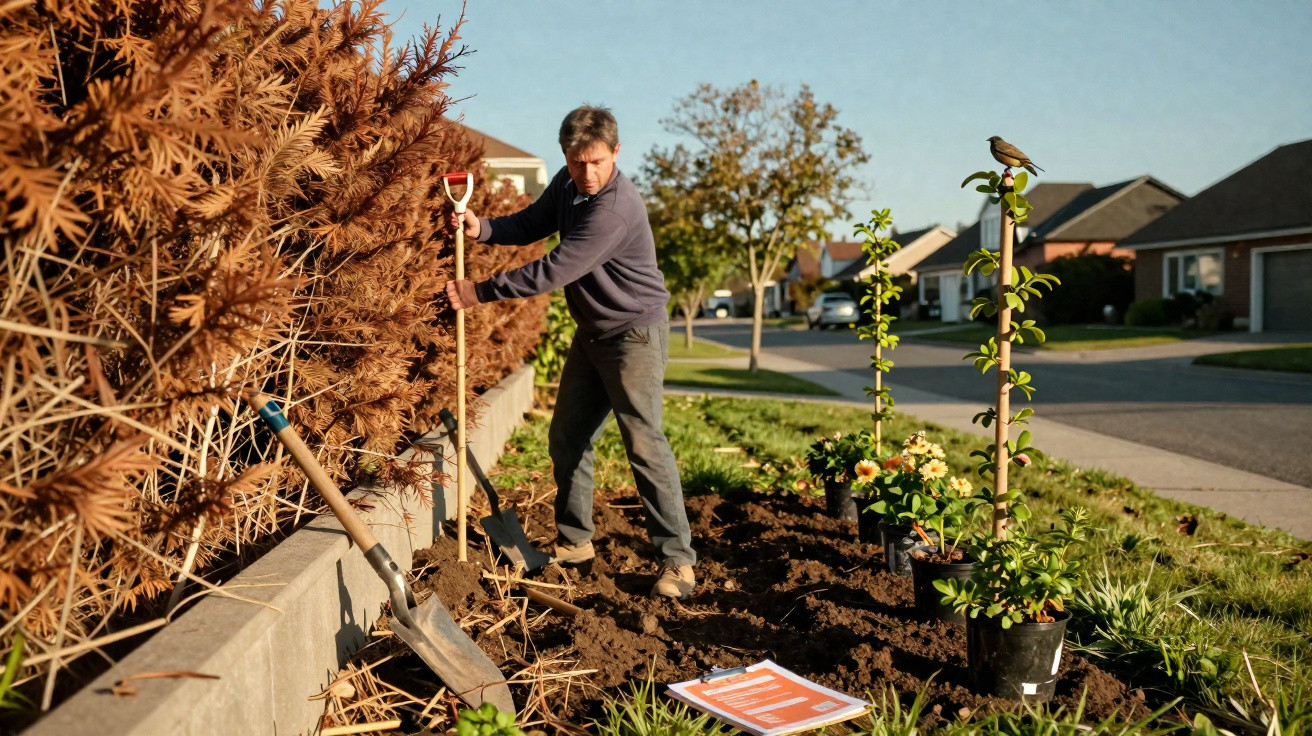
Anyone who asks the planning office today whether they can plant a dense, evergreen hedge along their boundary is increasingly met with a firm “no” - at least when it comes to Thuja. What was once the default hedge in suburban single-family neighbourhoods is now under serious pressure: councils are removing it from local development rules, conservationists dismiss it as “green concrete”, and fire safety professionals warn it is a ticking time bomb. What is driving this shift - and what does it mean in practical terms for your garden?
Municipalities versus Thuja: what is behind the new bans
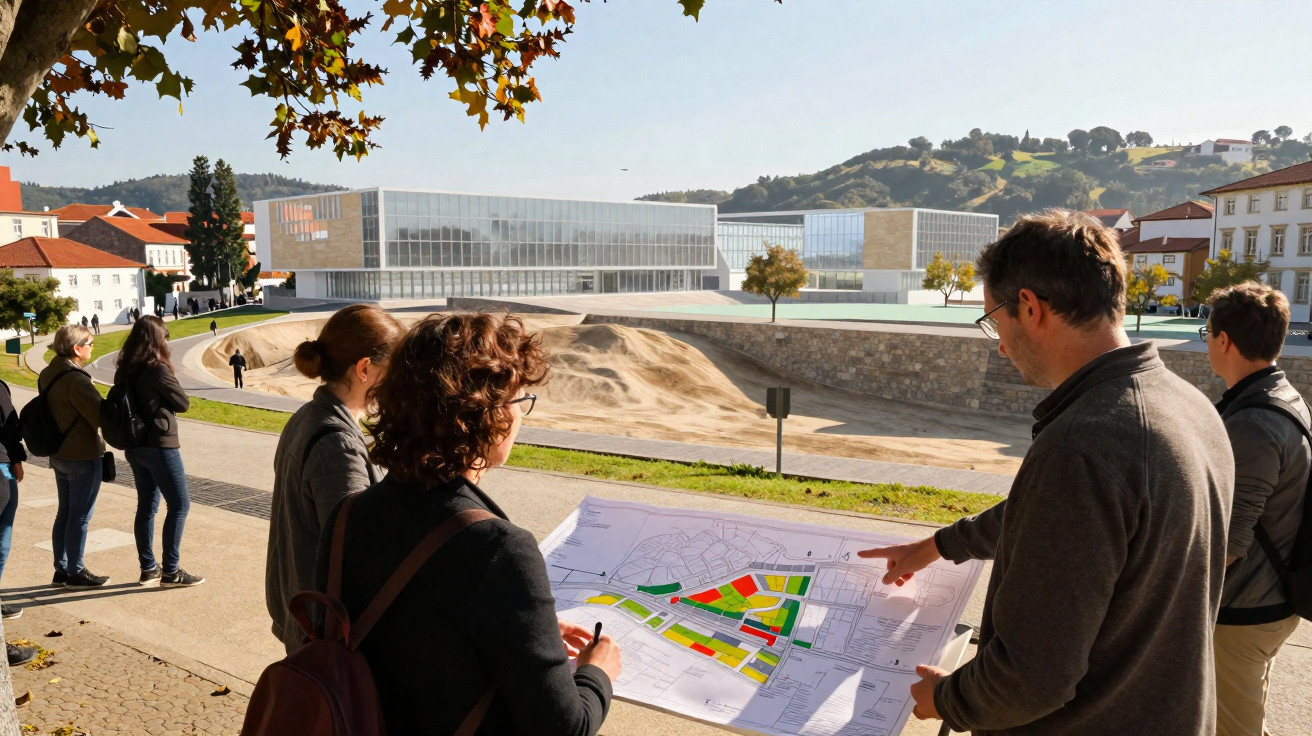
From a strictly legal standpoint, France - much like Germany - does not have a nationwide law that bans Thuja in private gardens. The real leverage sits with local authorities and their development or design codes. These documents allow town and parish councils to define which tree and shrub species may be planted along street frontages, in new-build areas, or within sensitive zones.
This is exactly where Thuja is increasingly being placed on the “not allowed” list. In many municipalities, uniform, monoculture Thuja hedges are now considered undesirable. If you are building a new home or significantly redesigning a plot, you are expected to follow these rules. Approval bodies tend to focus particularly on:
- fire risk along roads and between houses
- impacts on soil life and biodiversity
- the visual character of whole residential areas
Anyone who plants a prohibited hedge despite clear local requirements may trigger enforcement action. A council can require removal and impose fines. In France, penalties of up to €1,500 are possible; similarly high sums are conceivable in German-speaking countries where municipalities put comparable rules in place.
Thuja is moving from former default to problem species: ecologically poor, highly flammable, often diseased - and therefore firmly on the authorities’ radar.
Thuja as “green concrete”: why biologists are sounding the alarm
Many homeowners view Thuja chiefly as an easy fix for privacy. Conservation groups judge it far more harshly. Organisations focused on birds and biodiversity describe it as a “green concrete block”: dense, sterile and close to worthless for many animals.
The central criticism is that Thuja creates an ecological no-man’s-land. Its scale-like foliage contains compounds that, as they break down, can push soil pH sharply downward - often to values below 5. In such acidic ground, earthworms, many fungi and beneficial microorganisms struggle to survive. Where Thuja has dominated for decades, the soil along that strip of garden can be degraded into a long-term problem area.
By contrast, mixed hedges made up of native shrubs can provide an impressive habitat base. Specialists point to:
- up to 35 mammal species finding food or shelter in a diverse hedge
- around 8 bat species hunting there
- more than 100 insect species using flowers, leaves, bark or deadwood
- up to 80 bird species locating nesting spots and berries
Given that roughly a third of native breeding birds are already considered at risk, the verdict on the Thuja hedge is stark: it offers little food, few nesting opportunities, and changes the soil so strongly that even beneath the hedge, little may want to grow.
Fire risk in the front garden: when a hedge becomes a fuse
Alongside biodiversity, another argument is driving new restrictions: preventative fire safety. Particularly after hot, prolonged summers, plants with high oil and resin content are receiving greater scrutiny.
Thuja contains essential oils such as thujone, which are highly flammable. During dry spells, a single spark can be enough for a long, dense hedge to ignite within seconds. Experts report that flames can race up a dried Thuja “wall” in under three seconds - at temperatures well above 800 °C.
In tightly built-up neighbourhoods, a hedge like this can act as a green fuse between a carport, a shed and the main home. A minor incident - from a barbecue, fireworks or a carelessly discarded cigarette - can spread along the hedge with astonishing speed. Fire services are familiar with these patterns, and for mayors and councils this has become a powerful reason to exclude the plant from sensitive locations.
Many Thuja hedges are reaching the end of their life cycle
There is also a practical, age-related factor: the major Thuja boom dates back to the 1970s and 1980s. As a result, many estates now have near-identical, similarly aged plants - often set just 70 to 80 centimetres apart and clipped hard right to the boundary.
After around 40 years, such hedges commonly hit their biological limit. The interior turns brown, the screen loses density, and the plants become more vulnerable to drought and disease. In France, studies indicate that a large share of older Thujas are already heavily affected by fungal infections, including Coryneum species that cause shoots to die back.
This leads to two outcomes: the hedge looks worse, and it offers even less habitat. At the same time, dead sections can burn like tinder. This combination of age, disease and drought stress is one reason many municipalities want to gradually reduce the blanket Thuja belt.
What to do if your own Thuja hedge comes under scrutiny
If you already have a substantial Thuja hedge, there is no need to panic. Local bans typically apply first to new planting schemes or major garden alterations. Even so, a sensible question remains: is it worth phasing it out?
For old, weakened hedges, professionals often recommend a decisive approach: remove it completely and start again with a species-rich hedge. That can sound drastic, but it brings clear benefits - a better-looking boundary, more wildlife in the garden, less fire load, and often lower maintenance in the long run.
Removing Thuja properly: how to protect your soil
If you decide to take the hedge out, a structured method helps. A practical sequence is:
- Mechanical removal: Lift old trunks and roots using a spade, a root spade or an excavator, depending on the hedge’s length and thickness.
- Loosen the soil: Break up compacted ground deeply and remove as many thick root remnants as possible.
- Rebalance pH: Work in about 50 litres of mature compost per linear metre and, if the soil is strongly acidified, add garden lime as well.
- Dispose of the material: Avoid using twigs and needles as mulch, as the terpenes they contain can inhibit new plants from germinating. Use a green-waste collection site instead, or compost for a long period with plenty of nitrogen-rich material.
The real job starts in the soil: if you acidify, you must neutralise again - otherwise the strip beneath a former Thuja hedge can remain a growth desert.
Alternatives: which hedge species municipalities like to see
Many towns and councils actively promote so-called “field-edge hedges” or “nature conservation hedges”. These are rows made up of several native shrubs that provide flowers, fruit and varied structure. Such plantings are often held up as a showcase project for improving biodiversity within built-up areas.
Typically, guidance favours a mix of at least four to five native species. Commonly recommended options include:
- hornbeam
- hawthorn (red or white)
- hazel
- dogwood species
- blackthorn or wild roses
These shrubs do not grow as perfectly “ruler-straight” as a tightly clipped Thuja hedge, but in return they offer a full buffet of blossoms, berries and hiding places. If privacy is essential, you can plant taller species more densely towards the rear and incorporate more flower-rich shrubs along the street side.
Care guidance: when it is acceptable to use the shears
One key issue for gardeners is bird protection. In many countries, there is either a time-limited ban during the breeding season or, at the very least, strong advice to keep hedge work gentle. Major reductions are best left to late autumn or early winter - roughly November to December.
At that time, nesting birds are no longer being disturbed, and plants can recover well the following spring. If you trim regularly without cutting back too severely, you retain shape while encouraging a dense, healthy structure.
Grants and practical tips for redesigning
In France, some regions already support a switch from conifer hedges to native mixed hedges, sometimes via grants per shrub planted. Similar schemes exist in parts of Germany, Austria and Switzerland, often under headings such as “climate-adapted green”, “habitat connectivity” or “living gardens”.
If you want to replace an ageing Thuja hedge, it is therefore worth asking your local council first whether there are grants or free advice through environmental departments. In some places, municipalities contribute fixed amounts per linear metre of hedge or organise discounted group orders for native woody plants.
Planning becomes straightforward if you think in layers: lower, flowering shrubs at the front; taller species behind for privacy and structure. Individual trees - such as field maple or rowan - can break up the look and provide additional habitat.
What garden owners should do now
If you are planning a new build or major changes to your front garden, check the local rules early at the town hall. Many disputes can be avoided by agreeing the proposed hedge species with the planning office in advance.
Owners of older Thuja hedges can take time to assess how vigorous the plants still are and whether a switch makes sense. Visible fungal damage, heavy browning on the inside and repeated drought stress all point towards a planned replacement. Those who do take that step gain not only a more attractive, more lively plot in the medium term - they also reduce fire risk and make the garden better suited to a hotter, drier summer routine.


Comments
No comments yet. Be the first to comment!
Leave a Comment