
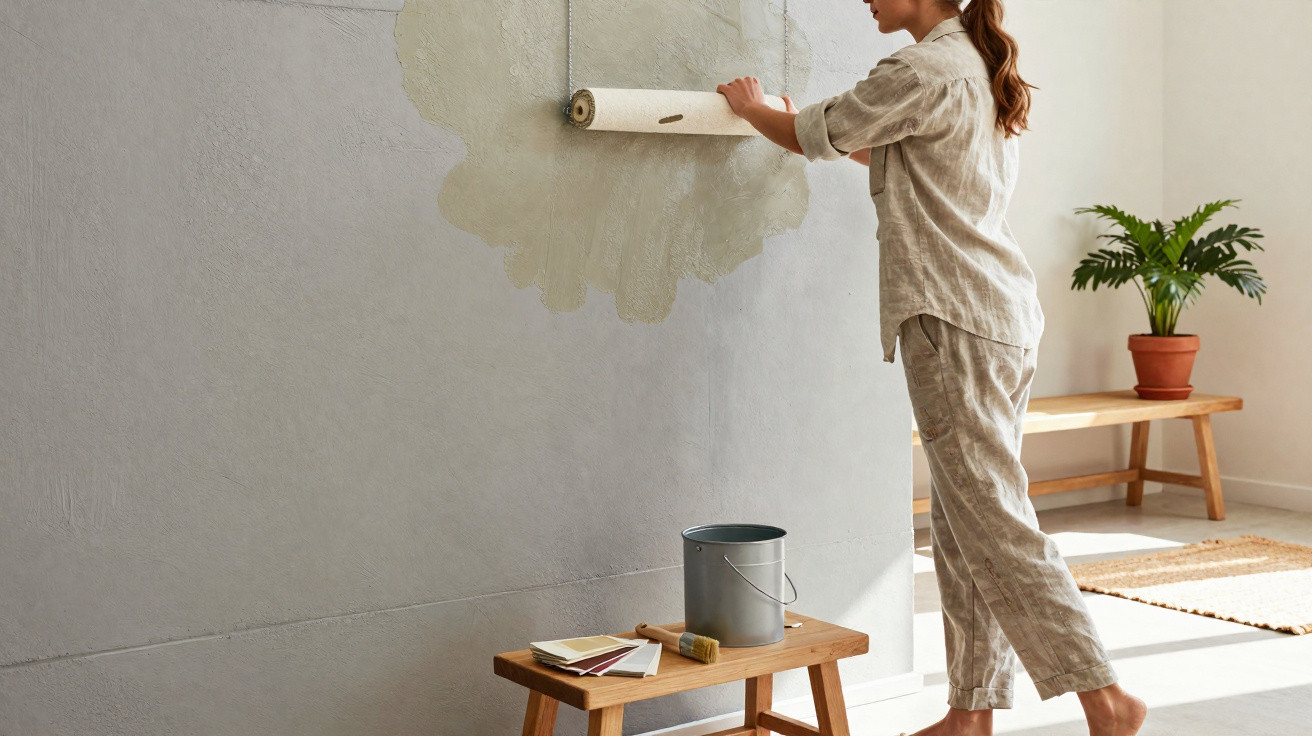
Trends move quickly. This summer, characterful surfaces are edging out ultra-sleek finishes, and the overall feeling is noticeably warmer.
For close to ten years, polished concrete dominated Instagram-worthy kitchens, spa-inspired bathrooms and pared-back living spaces. By 2025, that dominance is easing. Designers, retailers and DIYers are increasingly choosing a natural-looking finish that feels brighter, gentler and more soothing in hot weather, yet still reads as polished.
Why polished concrete is fading in 2025
Visual fatigue has set in
A few years back, polished concrete’s grey, uninterrupted gloss felt fresh. But overexposure has dulled the impact. Social feeds recycle the same neutral expanses, and interiors begin to look interchangeable. What people now want is variation, hand-made texture and a softer, calmer shine.
Real-world upkeep can grind you down
On smooth, mid-grey surfaces, scuffs and scratches tend to show sooner than you’d like. Sealed microcement can also pick up stains from coffee, turmeric or hair dye if spills aren’t dealt with quickly. Where the base moves, fine cracks can appear. Resealing brings added expense, odour and time out of action. And under bare feet in summer, it can feel cool-sometimes even a touch severe.
Homes are chasing warmth and authenticity
After years of sharp lines and hard finishes, 2025 is leaning into touchable, human spaces. The aim is visual softness without creating clutter. Homeowners are also looking for breathable finishes that won’t trap moisture in older walls. A hand-applied surface communicates time and craft in a way machine-smooth finishes often can’t.
"Lived-in texture with breathable chemistry is replacing high-gloss minimalism. The mood is calm, dimensional and quietly sunny."
The natural alternative taking over: lime in all its forms
What lime actually brings to a room
Limewash paint and lime plaster rely on mineral binders that set by absorbing carbon dioxide, forming a thin, stone-like skin. The result spreads light, softens shadow lines and adds depth via gentle tonal variation. In bright midday light the walls can look quietly luminous; by evening they feel more enveloping.
Breathable by design
Classic lime finishes are vapour-permeable, allowing walls to dry after muggy spells. That can help limit condensation and reduce musty odours. In period properties, this permeability can be particularly valuable, because moisture can escape through the wall rather than being trapped behind plastic-based paint.
"Limewash and lime plaster regulate moisture, reduce glare and deliver movement you can read from the doorway."
More than one look
Limewash is ideal for matte, softly clouded walls. Lime plaster creates a thicker, velvety texture. Venetian-style lime plaster adds a gentle sheen. Tadelakt-a Moroccan lime finish polished with soap-can produce water-resistant surfaces for showers and splash areas when it’s executed properly.
| Feature | Polished concrete/microcement | Limewash/lime plaster |
|---|---|---|
| Look | Flat, uniform, industrial | Layered, tonal, hand-worked |
| Feel under hand | Cool, hard, smooth | Soft-matte, dry, mineral |
| Breathability | Low to medium (sealed) | High (vapour-permeable) |
| Maintenance | Periodic reseal; stain vigilance | Gentle clean; easy touch-ups |
| Best zones | Floors, worktops, hard-wear areas | Walls, niches, furniture, headboards |
| DIY difficulty | Medium–high | Low–medium; pro for tadelakt |
Where and how to use it at home
Start small, aim for impact
- Choose a single feature wall in the living room to soften a TV area.
- Form a curved lime plaster headboard, then frame it with low-level lamps.
- Update a tired console or bedside table using limewash, finished with a wax topcoat.
- Build a textured niche for candles or books to break up long corridors.
Colour families that flatter summer light
Warm whites, biscuit, oatmeal and pale clay shades lift daylight without throwing glare. Soft sage and almond green can take the edge off overheated rooms. Terracotta is effective in north-facing spaces that need extra warmth. Darker colours can look dramatic at night, but they require thoughtful lighting so the finish doesn’t appear patchy.
Mistakes to avoid
- Steer clear of doing everything in the same finish. One or two limeworked details keep it feeling current.
- Work with your window light rather than against it. Lime finishes look best where angled sun can graze the texture.
- Match with honest materials: pale oak, rattan, jute, linen and clear glass maintain an airy feel.
- Avoid over-accessorising. The surface should be the star, not layers of objects placed in front of it.
Application tips for a weekend project
Preparation makes or breaks the finish
Start with a small test patch. If the wall is coated in shiny acrylic, lightly sand it or apply a mineral primer intended for lime. Repair hairline cracks and allow them to dry completely. Remove dust thoroughly so you don’t drag grit through the finish.
Simple process that rewards patience
- Stir limewash to a yoghurt-like consistency, then let it sit briefly so bubbles can dissipate.
- Apply in thin, criss-cross passes using a wide, natural-bristle brush.
- Maintain a “wet edge” to avoid tide marks. Two to three coats typically create the depth.
- Keep the room well ventilated as it cures. Prevent splashes on metal fittings-lime is alkaline.
Indicative pricing depends on region and manufacturer. Limewash: around £30–£70 per 5 L, typically enough for a feature wall. Lime plaster kits: roughly £2–£4 per square foot for materials (about £22–£43 per m²). Skilled tadelakt is a specialist, artisanal finish and is priced accordingly; expect to pay for professional labour.
Care, durability and safety
Everyday cleaning is straightforward
Use a dry cloth to remove dust. For marks, wipe gently with a damp sponge and mild soap. Avoid bleach and abrasive scourers. Over time, a soft patina is normal-and it reads as character, not damage.
Moist rooms need the right system
In bathrooms, choose breathable plasters away from direct spray, or opt for tadelakt with soap sealing in shower areas. Strong ventilation benefits any finish. Consider sealing shelves and window sills where mugs, glasses and plant pots tend to sit.
Health and handling
Before it has set, lime is alkaline. Wear gloves and eye protection while applying it. Once cured, most mineral finishes are low-odour and low-VOC, which can be a sensible option for households with children and pets.
"Apply it with care, and lime finishes can outlast trends while staying easy to refresh in a single afternoon."
Trends to watch this year
Soft skies and coastal neutrals
Washed-out blues, dune-like beiges and chalky whites reference seaside palettes without feeling themed. They work as well in compact flats as they do in large, sun-filled rooms.
Graphic gestures on calm bases
Hand-drawn stripes or arches in a slightly deeper limewash can add personality to rental-friendly white walls. The key is gentle contrast rather than bold outlines.
Material mixing with finesse
Pairing lime walls with ribbed glass, unglazed ceramics and bleached oak creates an easy, understated rhythm. This approach is also more forgiving of everyday “stuff” than high-gloss schemes.
Responsible sourcing
More brands are sharing mineral content, recycled packaging details and VOC figures. Where you can, prioritise natural pigments and binders over synthetic fillers.
Extra ideas that add real value
Choosing the right lime for your space
Limewash is well suited to big areas and quick makeovers. Lime plaster makes sense for high-contact walls and curved features. Venetian-style lime plaster brings a restrained shimmer to entrance halls. In wet areas, either budget for tadelakt or keep lime above splash height and tile below.
A quick test before you commit
Fix a 50 cm square sample board to the wall and check it throughout the day. Morning light reveals the undertone; midday makes the texture more obvious; evening lighting shows up any patchiness. Adjust the shade or application method before opening the main tub.
Moisture and substrate checks
If damp is a possibility, tape a thin plastic sheet to the wall overnight. Moisture forming behind it suggests a problem that needs solving before any decorative finish goes on. Lime helps walls breathe, but it won’t fix a leak.
Small upgrades with big payoffs
- Limewash the inside of shelving niches to frame books and glassware.
- Give worn kitchen stools a stone-matte update using lime paint and hard wax.
- Add a plastered arch over a doorway to soften a long corridor.
Done well, moving from polished concrete to lime does more than follow fashion. It reduces glare, quietens a room acoustically, and can simplify upkeep. Try one surface first, observe the mood shift, then expand if it suits your home.




Comments
No comments yet. Be the first to comment!
Leave a Comment