
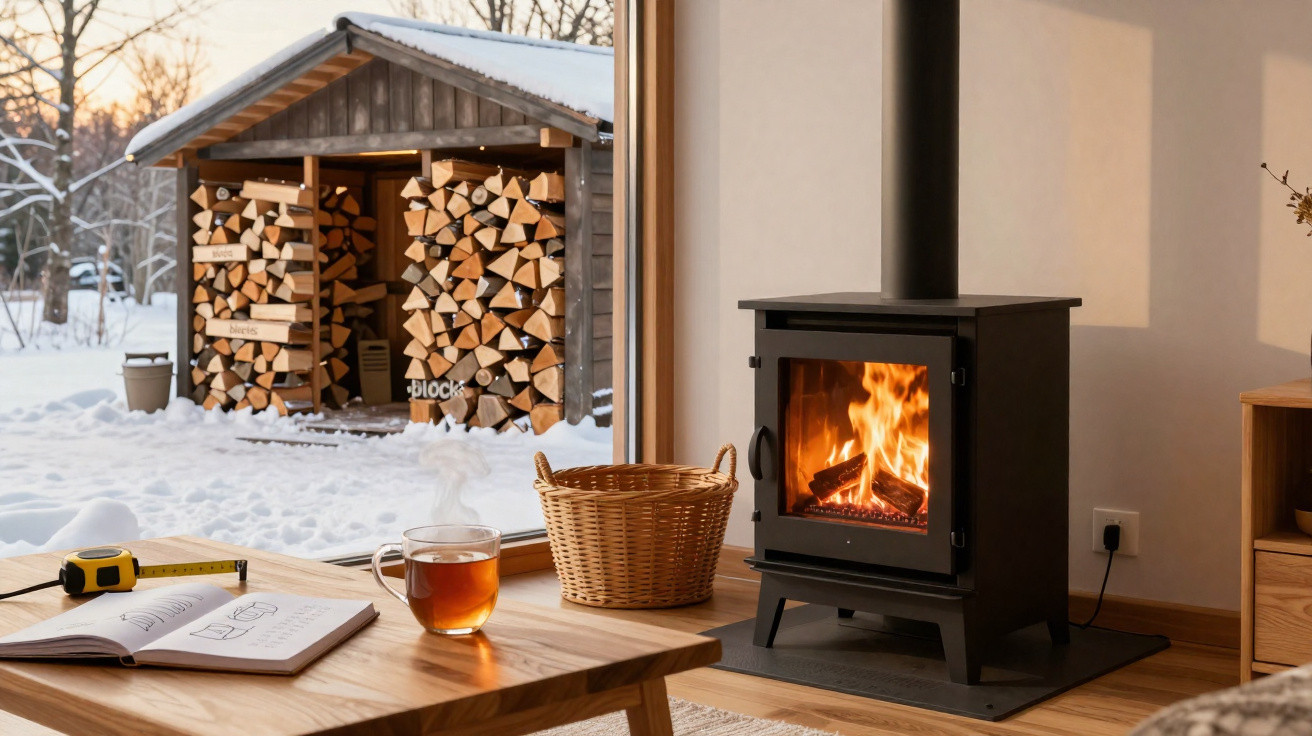
When the temperature drops, plenty of people rush to buy firewood - but very few are genuinely sure how much they’ll actually get through.
Working out your firewood supply has become a sticking point for anyone who relies on a wood-burning range or a stove insert in the fireplace. Get the calculation wrong and you could be short in January, or end up with unused logs sitting in the garden, tying up both space and money. The key question is straightforward: how many stères do you need to make it through winter without any nasty surprises?
What a stère of firewood actually means
From a seller’s point of view, it can sound self-explanatory. In reality, a lot of confusion starts with the unit itself. The stère comes from French usage and, in theory, equals 1 cubic metre of stacked firewood made up of logs that are 1 metre long.
In day-to-day buying, however, that neat definition shifts depending on how the wood is cut.
"A stère is 1 cubic metre of stacked firewood, but the true volume of wood varies with the length and shape of the logs."
When logs are cut to 50 cm, 40 cm or 30 cm to fit a range or a stove insert, the stack sits tighter, with fewer air gaps. The outcome is that the same “stère” can contain more actual wood - even though the pile may look more compact.
This is where many buyers get caught out: they order “5 stères” without confirming whether the supplier is quoting for 1 m lengths or shorter pieces. That difference changes the effective amount of firewood you receive, the price you’re really paying, and how much storage space you’ll need.
Why this changes your winter calculation
If you only compare the number of stères, it can look as though you’re paying more than someone else - or being delivered less. In practice, what matters is the amount of wood (and its heat output), not simply the apparent stacked volume.
On larger orders, a 10% to 20% swing in real wood content per stère can translate into several extra weeks of heating - or several weeks less.
The factors that most affect how much firewood you’ll use
There isn’t one universal, magic number of stères for everyone. Consumption depends on a combination of factors that together determine whether your home is a “heat-hungry” building or a more efficient one.
Floor area and internal volume
Two homes of 100 m² can have completely different heating needs. A compact single-storey home with a standard ceiling height will typically need far less firewood than an older property with high ceilings and long corridors.
Broadly speaking, the larger the internal volume (cubic metres of air) you’re trying to heat, the bigger the firewood stack you’ll need to face winter.
Thermal insulation: walls, windows and roof
Well-insulated homes - with double glazing and proper attention to the roof and walls - can cut firewood use by 30% to 50% compared with older, draughty buildings.
"In practice, every investment in insulation directly reduces the number of stères needed each winter."
People living in older homes tend to feel this immediately: the firewood disappears quickly, the rooms take longer to warm up, and the heat fades fast.
Appliance type: range, insert or open fireplace
The efficiency of your appliance is another decisive factor. Modern wood-burning ranges and closed inserts commonly achieve 75% to 80% efficiency, meaning they capture most of the energy stored in the wood.
Open fireplaces, by contrast, can lose up to 70% of the heat straight up the chimney. In that situation, comfort often comes more from the sight of the flames than from meaningful heating of the house.
Wood species: hardwood or resinous softwood
Not all firewood produces the same heat. As a rule, wood tends to fall into two groups:
- Hardwoods (such as oak, beech and other dense native species): burn more slowly, release heat steadily and leave long-lasting embers.
- Resinous softwoods (pine, young eucalyptus and conifers in general): ignite quickly and give a strong burst of heat, but for a shorter time, so you’ll be topping up more often.
For a whole winter, many people choose a mix: hardwoods to keep a stable bed of heat, plus a few resinous pieces to relight easily and raise the temperature quickly.
Local climate and how you use the stove
A harsh winter with many days below 0°C calls for a near-continuous fire. Milder areas, meanwhile, allow long daytime periods with the appliance off. Daily operating hours can matter as much as the quality of the wood.
How many stères you need depending on your usage
Based on the experience of wood-heating users and technicians, there are typical consumption ranges that can guide your planning.
| Type of use | Usage profile | Average per winter |
|---|---|---|
| Occasional | Weekends, sporadic evenings | 1 to 3 stères |
| Regular support | Backup to central heating on cold days | 3 to 6 stères |
| Main source | Wood is the dominant home heating | 5 to 12 stères |
Occasional use: firewood for enjoyment, not necessity
If you only light the fire on a handful of cold days - or mainly to create atmosphere when friends are round - 1 to 3 stères is usually enough. The bigger risk in this case is overbuying and leaving firewood sitting unused for years.
Supplementary heating: sharing the load with another system
In homes heated by electricity, gas or oil, a wood-burning range can help cut bills and add comfort on specific days. Households that run the stove on most cold evenings often land between 3 and 6 stères per season.
Main heating source: when firewood does the heavy lifting
If you rely largely on firewood, a typical range is 5 to 12 stères per winter. A well-insulated property with an efficient appliance may stay comfortable near the lower end. Large, older and colder houses can push towards - or even exceed - the upper end.
"Before placing an order with a supplier, it’s worth running a quick check: floor area, insulation quality, appliance output and how much time the household spends at home."
Adjustments that can shrink your firewood stack
Seasoning and wood quality
Wet firewood is a clear enemy of domestic heating. Moisture above 20% reduces the heat you get, creates more smoke, encourages creosote build-up in the chimney, and increases the risk of a flue fire.
- Choose wood that was cut at least a year in advance.
- Avoid very green pieces or logs with a strong, sappy smell.
- If you can, use a moisture meter to check your stock.
Maintaining the range or stove insert
A dirty appliance won’t perform well. Excess ash, grime on the glass and greasy deposits in the flue all make the wood burn poorly. The chimney should be professionally swept at least once a year - and insurers often require it.
Incremental insulation improvements at home
A full renovation isn’t always realistic. Still, smaller steps - sealing draughts, upgrading to thermal curtains, and insulating the loft/roof lining - can reduce the daily need for a strong, constant burn.
Storage: where and how to keep several stères
Having enough firewood is only part of the job; storing it properly matters just as much. The best option is a well-ventilated spot, protected from direct rain and kept off the ground.
- Put the stack on bearers or pallets so the wood isn’t touching the soil.
- Cover the top with a tarpaulin or roofing sheet, while leaving the sides open for airflow.
- Don’t stack tight against the house wall to avoid damp and pests.
"Good storage turns firewood bought today into a better fuel in a few months’ time, with lower moisture and higher efficiency."
Practical examples to avoid buying the wrong amount
Picture a 90 m² house with decent insulation, a moderately cold winter climate, a modern insert, and evening use every day. Typical consumption sits around 4 to 5 stères. Put that same home in a mountainous area with intense cold and near-continuous use, and the figure could rise to 7 or 8 stères.
Now consider an older 140 m² house with poor insulation, heated almost entirely by firewood, using a closed fireplace with average efficiency. That household can easily burn through 8 to 10 stères - especially if people spend many hours at home, such as when working from home.
Terms worth knowing
Two ideas come up repeatedly with wood heating:
- Calorific value: the amount of energy released when a given mass of firewood is burned. Denser woods usually offer more energy per unit of volume.
- Appliance efficiency: the percentage of the wood’s energy that becomes useful heat inside the home. The higher this figure, the fewer stères you need.
Understanding these points makes it easier to negotiate with suppliers, compare offers and - most importantly - set realistic expectations: sometimes it’s worth paying a bit more for better-quality firewood and burning less over the winter.
If you’re just starting out with a wood-burning range or a stove insert, a sensible approach is to buy slightly above your first-year estimate, track what you actually use month by month, and then adjust for the following seasons. This kind of “real-world calibration” tends to prevent shocks - both in the cold and in your bank balance.



Comments
No comments yet. Be the first to comment!
Leave a Comment