
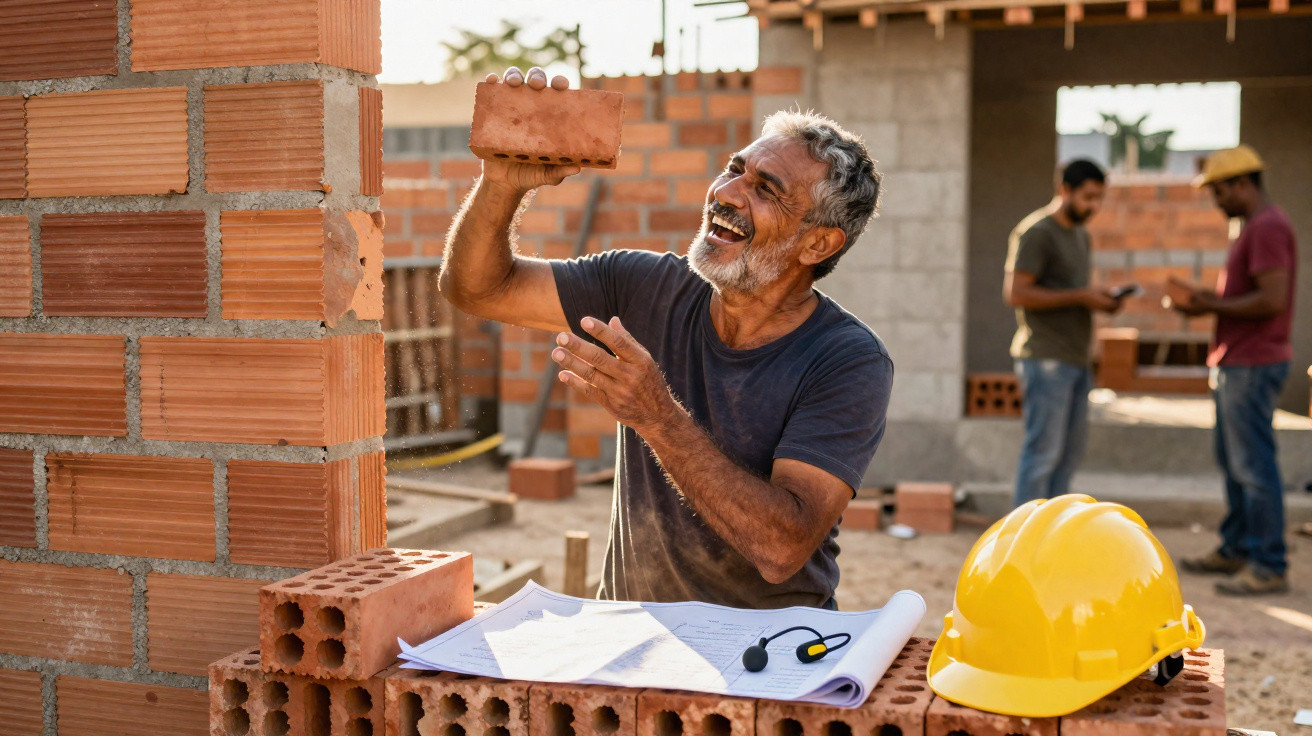
Teams are stretched, programmes are tighter than ever, and a dozen tongues drift across the scaffolding like vapour. Someone cracks that the bricks still haven’t got the message. He gives a half-smile and shoots back, “I didn’t know I had to speak English to the bricks.” The whole gang laughs. The tightness in his chest stays put.
It’s a soaked morning in Barking. The air carries dust and diesel - the sort that clings to your throat and settles into the fine lines carved by years on the tools. José hoists, taps, checks level, then starts again; that steady cadence has carried him from Murcia to Manchester, through busy spells and stop‑start work, through last‑minute agency calls. The rain drags everything out, except time itself.
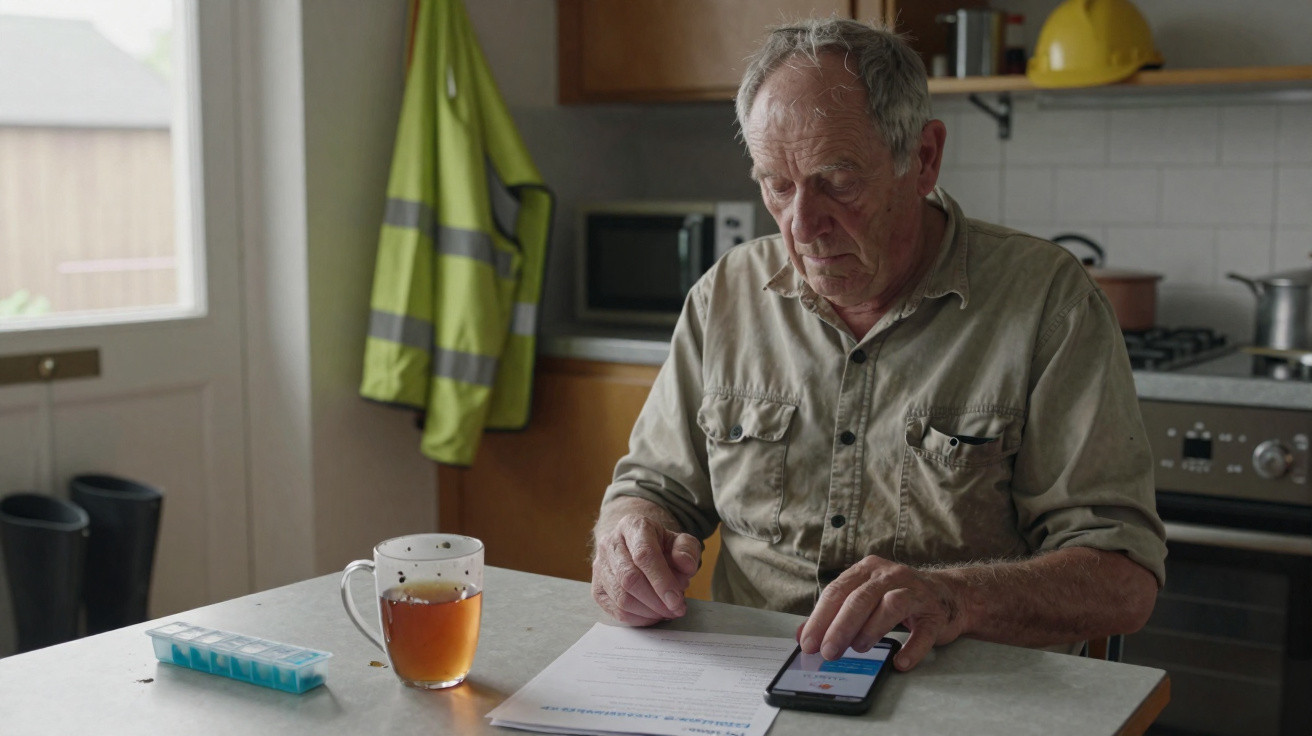
The foreman wants the app: the induction code, the QR pass, the screen that won’t load because the signal on level three is barely there. The wall keeps climbing while the deadline creeps nearer. His phone won’t speak in his language. The bricks never need to.
The wall isn’t the only thing that needs bonding
On any major British site right now, the pattern is familiar: cranes overhead, too few boots on the ground, and instructions that snag between accents, apps and assumptions. The shortage is not just about how many people are on the books; it’s about whether people can understand one another quickly when the wind is up and the bandsaw is screaming. José gets six courses down while a younger labourer wrestles with an online safety module he can’t access without a password - one that was sent to an email address he can’t even remember. The plasterboard sits idle. The lorry driver sits idle. Everything is stalled by language.
Forecasters in the industry estimate construction will require roughly a quarter of a million additional workers by 2028. That figure feels theoretical until you’re faced with an empty hoist and a mixer that isn’t turning. Day rates rise in certain areas - bricklayers in outer London murmur about £230 - yet gangs are still short because the on‑boarding process is fragile and the “simple instructions” come as 10 pages of jargon. One site manager in Slough showed me what actually works for him: WhatsApp voice notes with photos, plus arrows scribbled on top, sent to the crew before 7am. No fuss, just something everyone can act on.
When you strip it down, the gap is often translation: from drawings to what’s physically in front of you; from policy to what happens on the deck; from a 63‑year‑old who can set out by eye to a younger supervisor who lives on a dashboard. Confusion turns into unnecessary steps, then wasted hours, then wasted money - and soon the rumour starts that “this site’s chaos”. Productivity isn’t a rousing speech; it’s removing a dozen small points of friction. The brick doesn’t mind who lays it, but it will expose muddle every time.
Making the construction site speak: small moves that change the day
Ten minutes at the start of a shift can buy back an hour before lunch - not through a grand briefing, but through practical clarity. Do it in the work area. Hold up the materials. Point to where they go. Speak slowly. Show it once, then ask someone else to show it back. Put people into buddy pairs, matching fluent English with fluent craft, and alternate who leads the brief every other day. Keep a pocket card of common site words - metre, lintel, course, level, tie, mix ratio - with phonetic prompts. It looks almost too basic. It only pays off when it’s done every day.
Most problems aren’t caused by bad intent. Raising your voice doesn’t make meaning arrive sooner, slang can turn a straightforward task into a riddle, and paperwork written like a legal thriller is useless when your gloves are caked in mud. Plenty of experienced hands feel silly admitting they’re stuck with an app, so they nod along and hope for the best - which is entirely human. If we’re honest, nobody executes every digital step perfectly, every day. Offer inductions in smaller sections, allow offline downloads, and make buttons and touchpoints large enough for thick fingers and a cracked screen.
You can hear the change in José’s voice when the site actually pauses to listen.
“Give me the picture and I’ll build what’s in the picture. If the phone says one thing and the foreman says another, I follow the spirit level.”
- Choose pictures over paragraphs: one photo with arrows can beat a full page of text.
- Say the three highest‑risk steps out loud: lifting, cutting, fixing.
- Assign a go‑to person for each area to handle questions, then rotate weekly.
- Translate only what’s essential and keep the rest visual.
- Praise a mistake caught early; it teaches more than any poster.
What stays when the mortar dries
Everyone knows the feeling of reaching for the right words and coming up empty - and having to let your hands explain instead. On site, pride shows up in straight runs and crisp corners, and respect is what brings people back tomorrow. If Britain wants homes, schools and hospitals to appear where the drawings say they should, language has to be treated as a tool rather than a barrier - and age as an advantage, not a problem. José isn’t asking for fanfare; he wants the half‑hour window where knowledge can travel from one pair of hands to another. That exchange is where the wall lives - and where the programme, the budget, and the stories people take home are decided, including whether this industry still knows how to look after its own.
| Key point | Detail | Why it matters to the reader |
|---|---|---|
| Make briefings visual | Use photos, arrows and a two‑minute show‑and‑repeat | Fewer mistakes, quicker starts, safer tasks |
| Pair skills, not just roles | Buddy an English‑fluent worker with a craft‑fluent veteran | Knowledge moves both ways, morale improves |
| Cut digital friction | Offline inductions, big buttons, translators for key terms | More time laying, less time loading |
FAQ:
- Is the language gap really that big on UK sites? On many large projects, teams are multilingual and instructions have to survive noise, wind and time pressure. Small gains in clarity - photos, repetition, buddying - can make a clear, practical difference.
- Won’t translation apps solve it? They’re useful for key terms, but the work still depends on gestures, drawings and a shared tempo. A quick demonstration with a repeat‑back often beats a flawless paragraph on a screen.
- Are older trades slowing projects? Age isn’t the problem; poorly matched tools are. With clear briefings and sensible digital steps, experienced workers often lead on quality and avoiding rework.
- What about safety rules - can they be simplified? Yes, without weakening standards. Pull out the three riskiest steps, show them visually, and revisit them daily. The full documents remain available, but day‑to‑day needs plain English.
- Is paying more the answer to shortages? Higher pay attracts people, but good structure keeps them. People stay for strong teams, fair shifts, respect for experience, and confidence their work won’t be undone by unclear instructions.




Comments
No comments yet. Be the first to comment!
Leave a Comment