
The solution is often faster than you expect.
All over the UK, sinks and showers tend to develop the same chalky white build-up. It gathers around tap bases, blocks aerators and dulls the finish. People who clean for a living often rely on one simple method that avoids kitchen acids and cuts down on hard scrubbing.
Why limescale clings to taps
Limescale is mostly calcium carbonate. As water dries on metal, the minerals crystallise and stick to the surface. Every splash leaves behind a paper-thin layer. Build-up accelerates around the spout and base because water lingers there for longer. In the aerator, deposits clog the mesh and reduce flow. Over time, tap handles can feel stiff and the spray can start to misbehave.
"Hard water never takes a day off. Interrupting its crust before it sets is the whole game."
The pro trick that skips vinegar and lemon
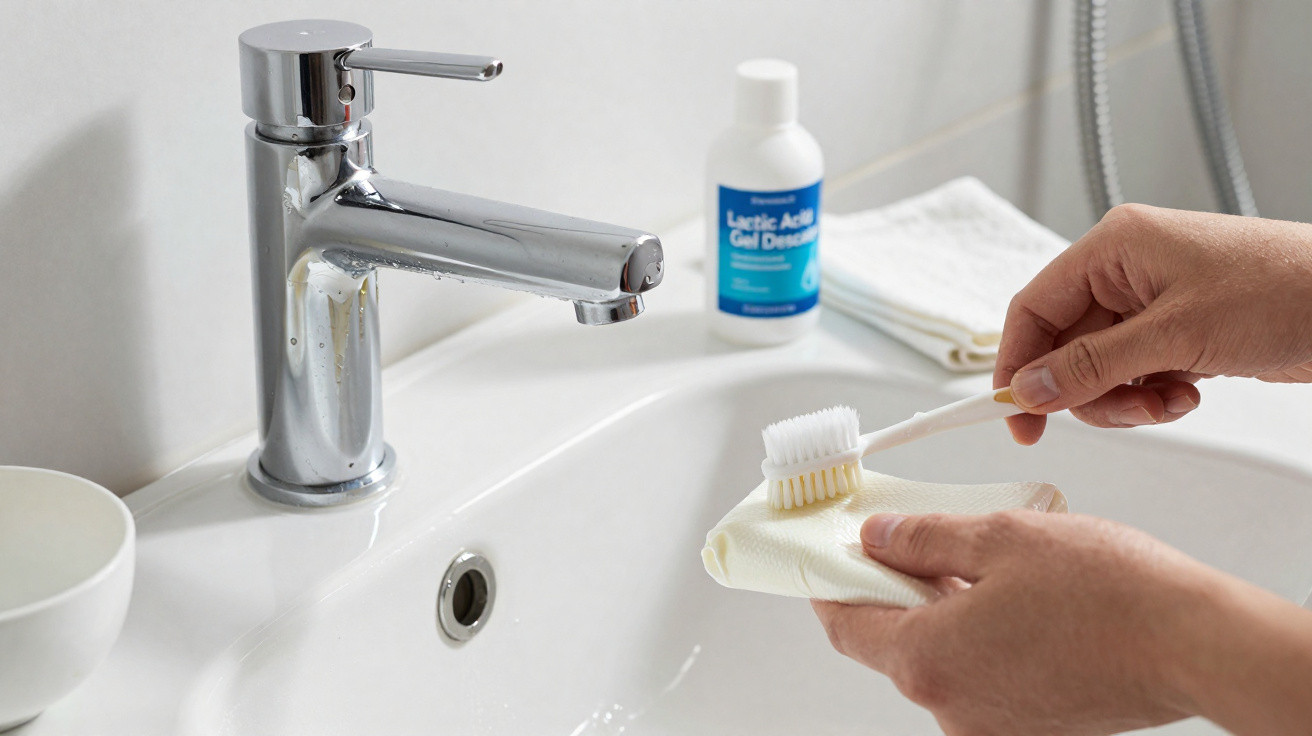
A lot of cleaners now favour a gel descaler made with lactic acid or sulfamic acid. It is not an aggressive bleach. The gel grips vertical chrome, breaks down mineral deposits quickly and rinses away neatly. Because it is thick, it stays exactly where the scale is.
What you need
- Gel descaler labelled with lactic acid or sulfamic acid
- Microfibre cloth and a soft toothbrush
- Cling film or kitchen paper
- Disposable gloves
- Small bowl of warm water for rinsing
How to do it in five minutes
- Put on gloves. Dry the tap first so the gel does not get watered down immediately.
- Apply a thin, even coat of gel to the crusty patches. Cover the base ring, the spout tip and the gaps around the handles.
- Lay a strip of cling film over the gel and press it on. This keeps the product damp and working.
- Leave it for 3–5 minutes. If the build-up is heavy, allow 10.
- Peel off the film. Gently work the area with a toothbrush. The limescale should soften and feel chalky.
- Rinse thoroughly with warm water, then buff dry with a microfibre cloth until it squeaks.
"Use a gel, keep it wet, give it a few minutes, then rinse and dry. That’s the whole trick."
Why it beats kitchen quick fixes
Vinegar and lemon rely on acidity too, but on curved chrome they can slide off before they have time to do much. A gel stays put, reaches bumps and creases and reduces the time you need to leave it on. Lactic and sulfamic acids are generally compatible with most modern finishes when you follow the label.
Tackle the hidden trouble spots
Strip and soak the aerator
- Unscrew the aerator from the end of the spout. If it is tight, wrap it in a cloth and use pliers carefully.
- Put the insert in a small saucer with a little descaler. In most cases, five minutes does the job.
- Rinse well and put it back together in the same order.
Lift scale from the base ring
Limescale often creeps beneath the ring at the bottom of the tap. Run a fine bead of gel along the seam. Wrap the area with a narrow strip of kitchen paper, push it into the gap, then add a little more gel to saturate the paper. After 10 minutes, pull the paper free and wipe everything clean.
Rescue shower handsets and mixers
- On a handheld shower, cover the face in gel, seal it with cling film and wait 10 minutes.
- With thermostatic mixers, concentrate on the spout tip and the diverter button rather than the cartridge body.
- Rinse all parts thoroughly and dry for a bright finish.
What works where: a quick guide
| Method | Best for | Contact time | Notes |
|---|---|---|---|
| Lactic acid gel | Chrome taps, shower heads | 3–10 min | Low odour, clings well, kind to most finishes |
| Sulfamic acid solution | Aerators, heavy crust | 5–15 min | Fast on thick deposits; avoid natural stone |
| Cola (phosphoric acid) | Quick soak for small parts | 10–20 min | Sticky and slow; rinse very well |
| Non-scratch cream cleaner | Light haze only | 1–2 min | May dull soft finishes if rubbed hard |
Keep it from coming back
Daily habits that make a difference
- After using the tap, shake off droplets and wipe it with a dry cloth. Ten seconds makes a big difference.
- Position the spout so any drips fall into the sink rather than running down the body.
- Open a bathroom window or use the extractor fan to reduce drying marks.
Weekly two-minute reset
- Spray the tap with a neutral bathroom cleaner, wipe, then dry.
- Deal with any new specks of scale by dabbing on gel for 60 seconds.
"Dry is the new clean. Water can’t leave scale when it has nothing to evaporate from."
Finish safety and surface checks
Always test first. Apply a small dot of gel behind the tap or underneath the spout, wait a minute, then rinse. If the finish looks the same, continue. Do not let acids touch marble, limestone or travertine, as they etch straight away. While you work, cover those worktops with a towel.
For unlacquered brass or so-called living finishes, use neutral cleaners and a soft cloth only. On matte black taps, steer clear of abrasive pads. If you are unsure, check the manufacturer’s care guide and choose the mildest approach.
Why the gel method feels instant
Calcium carbonate breaks down when hydrogen ions disrupt its bonds. A gel holds those ions against the limescale instead of running away. The cling film traps moisture and slows down neutralisation, so the acid keeps working for longer. That is why a light coating can outperform a puddle. Two or three minutes of steady contact often replaces fifteen minutes of scrubbing.
Hard water in the UK: what to expect
Much of the South East, East Anglia and parts of the Midlands fall into the hard-to-very-hard range. Kettles fur up quickly and taps are not far behind. In soft-water areas, you can still get marks around spray zones and bases, just at a slower pace. If your kettle scales up every month, plan on weekly tap care. If it only furs up each quarter, a fortnightly wipe is usually enough.
Costs, time and small upgrades
- A 500 ml gel descaler usually lasts for months because each clean uses, at most, a teaspoon.
- Aerator keys are inexpensive and save a lot of faff. Many are included with replacement aerators.
- Keeping a food-safe silicone squeegee by the sink makes it easier to leave surfaces dry.
Want to do more? A small inline filter fitted at the tap can reduce the mineral load. Magnetic devices claim dramatic improvements, but results are mixed. A proper water softener makes an obvious difference across the whole house, though it needs space, salt and routine checks.
Another upgrade many professionals rate: after cleaning, put a single drop of mineral oil on a microfibre cloth and lightly buff the fully dry tap. Water will bead and run off for a few days, which helps slow down fresh deposits. Use the smallest amount possible to avoid smears.




Comments
No comments yet. Be the first to comment!
Leave a Comment