
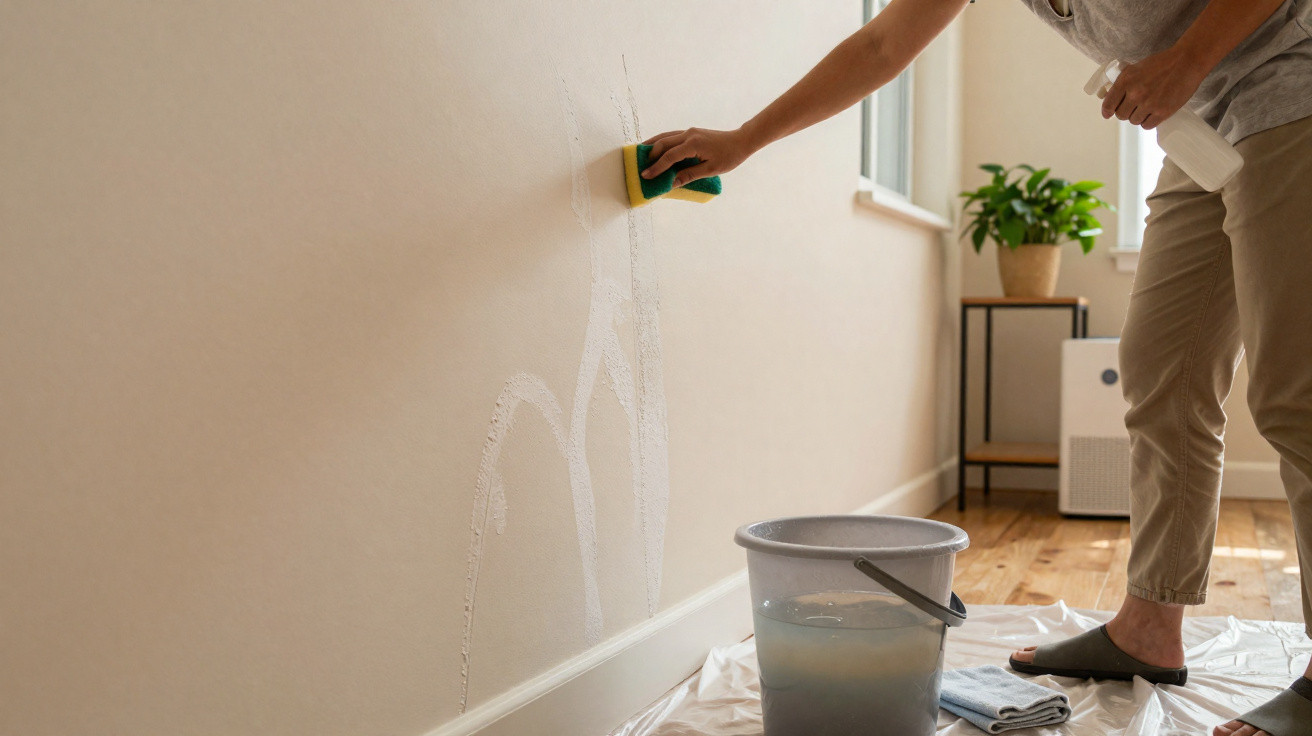
White, chalky marks appearing on internal and external walls are a familiar issue in many homes. This is typically saltpetre on walls, a problem closely tied to moisture and the way the building was constructed. Knowing how it develops-and what it does to paint and finishes-helps you plan repairs that last and avoid having to redo the same work repeatedly.
What is saltpetre on walls and why does it appear?
Saltpetre on walls forms when moisture meets soluble salts found in bricks, mortar and concrete. Water dissolves these salts, carries them through the tiny pores in the material and, as the moisture evaporates, leaves the salts behind on the surface. The result is the familiar white staining known as efflorescence.
Water can reach the inside of a wall by capillary action, rising up from the ground through the base of the structure. It can also come from leaks and ingress caused by damaged roofs, blocked gutters and leaking pipes. The more persistent the damp, the greater the likelihood of saltpetre returning-along with blistering paint, flaking and even associated mould.
How to identify saltpetre on walls in the home?
Before you try to remove saltpetre, it is worth recognising its typical signs so it is not mistaken for mould or everyday dirt. It most often shows up as a fine, powdery or crystalline white deposit on plaster, paint or ceramic coverings, usually alongside visible surface deterioration.
When checking rooms, look out for common clues that both confirm saltpetre and suggest an active moisture source within or behind the wall:
- White or greyish patches that reappear even after cleaning
- Paint that is loose, swollen or bubbling, especially near the floor
- Plaster that crumbles easily to the touch or sounds hollow
- A space that feels cooler and damper, with the characteristic smell of persistent moisture
How to remove saltpetre on walls step by step
Getting rid of saltpetre involves more than washing the surface: you need to clean it properly, allow it to dry thoroughly, and reduce the chance of fresh moisture travelling through the wall. In straightforward cases, good maintenance can restore the wall’s appearance and help paint last longer, but structural damp problems may require professional assessment.
Remove the surface build-up of saltpetre
Use a stiff-bristled brush or a scraper to carefully abrade the affected area, removing visible salts and any loose paint or crumbling plaster.Carry out a mild chemical clean
Mix equal parts water and white vinegar, or use a dedicated efflorescence remover. Apply with a cloth, sponge or brush and scrub the surface.Wait for complete drying
After cleaning, let the wall dry naturally. Improve airflow by opening doors and windows or using mechanical ventilation, and do not paint until the surface is fully dry.Fix the source of the moisture
Check for leaking pipework, failures in floor waterproofing, external cracks, or issues with drains, gutters and flat roofs/slabs, and repair them to prevent saltpetre from returning.Apply a sealer or waterproofing product
Once the surface is dry and sound, apply an acrylic sealer or a waterproofing treatment suitable for damp-prone walls to prepare the substrate for repainting.Repaint using a suitable paint
Finish with an anti-mould or anti-damp paint, following the manufacturer’s instructions for the number of coats and drying times.
If the plaster sounds hollow, is coming away in sheets, or is severely friable, it is usually necessary to redo the entire finish-from removing the failed layer through to new mortar/plaster and repainting. In these cases, a specialist can advise on the most appropriate waterproofing approach for the specific situation.
What care helps prevent saltpetre on walls?
Alongside correct removal, prevention relies on good practice both during construction and in day-to-day use of the home. For new builds, waterproofing the foundations, ground beams and ground-floor slabs is crucial to stop damp rising from the soil by capillary action and causing early defects.
In lived-in properties, the focus shifts to maintaining the roof and external walls, improving ventilation and keeping furniture slightly away from cold external walls. When you combine a clear diagnosis of the moisture source with proper cleaning and ongoing protection, walls are more likely to remain stable for longer-cutting down unnecessary repainting and helping preserve the structure of the building.




Comments
No comments yet. Be the first to comment!
Leave a Comment