
The plastic sacks looked innocent enough, slumped in the shade along the garage wall. A couple had split, and pellets were trickling out like sand across the concrete. The owner simply shrugged: “Leftovers from last winter. I’ll use them one day.”
What he couldn’t see was the steady seep of money, comfort and performance - disappearing grain by grain.
That same afternoon, as the boiler spluttered through yet another start-up, the evidence was right there in the flame. It was dull and uneven, with far too much ash. The heating system wasn’t old. The fuel was.
All over the country, forgotten stacks of old pellets sit quietly in sheds, garages and spare corners, seeming like a sensible reserve. In practice, they can be small time bombs for your budget - and almost nobody talks about it.
When “free heat” turns into a hidden bill
With ageing pellets, the first giveaway usually isn’t a smell or a colour change. It’s the behaviour of your boiler or stove. Ignitions drag on. The flame looks sluggish. The ash pan fills up faster than you remember.
It’s easy to blame the cold spell, the supplier, or chalk it up to “one of those days”. Then you tear open another dusty bag from that forgotten pallet in the corner - and the same symptoms appear again.
An installer I met in a small Austrian town shook his head, equal parts amused and worn out. Last winter, a customer rang in a rage: “Your boiler is garbage, it’s eating twice as many pellets as last year!”
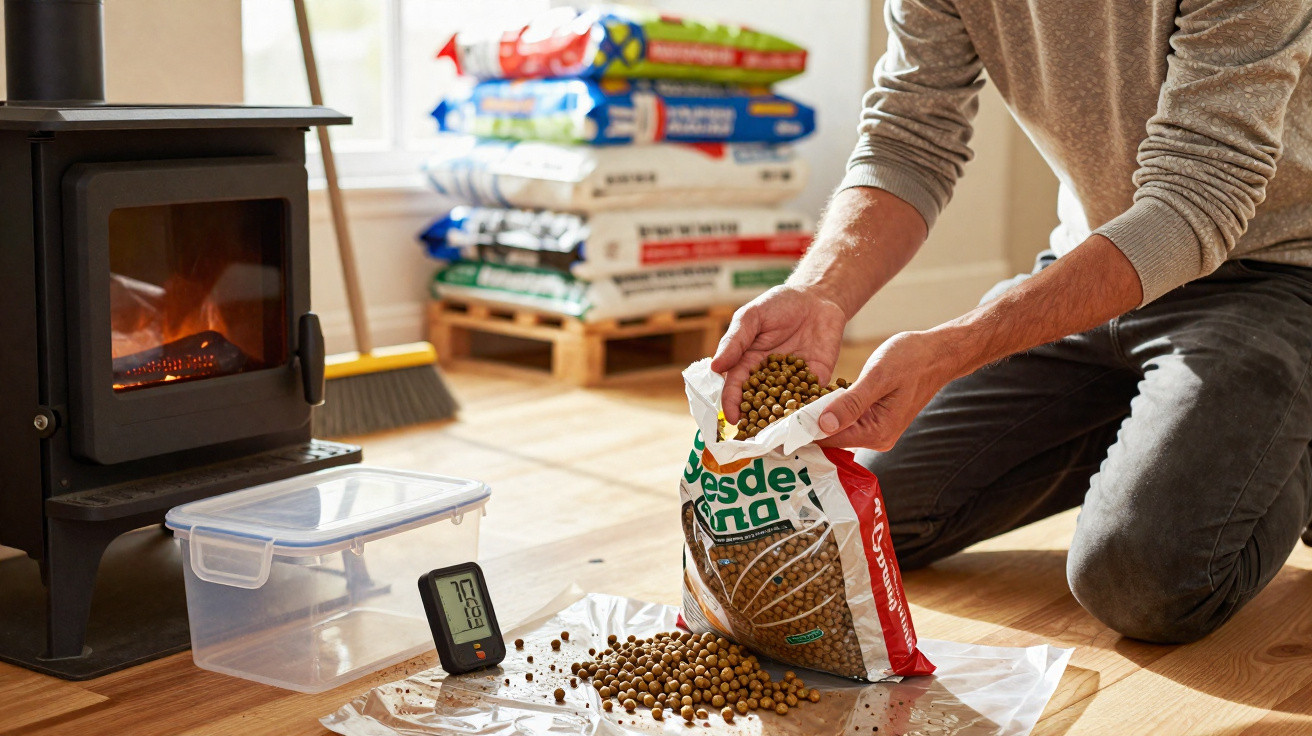
When he arrived, he found a garage piled with four-year-old bags - about half torn open - and pellets that felt soft and crumbly between his fingers. The moisture meter confirmed it: over the years, the pellets had been steadily absorbing humidity from the air.
They still burned. Just not properly. Fuel use went up, clinkers formed, and maintenance call-outs increased. That “bargain” stockpile had already cost the household several hundred euros.
Pellets don’t fail loudly; they deteriorate quietly. They take on moisture, swell, split, and generate more fines. As density drops, you get less energy per kilogram. As dust increases, feed issues and incomplete combustion become more likely.
Because the loss rarely appears on one obvious bill, it’s often ignored. You simply purchase “a bit more” fuel this winter. You book one extra technician visit. You find yourself cleaning the appliance more often.
Over three or four heating seasons, that slow drift can easily swallow the savings you thought you’d secured on the day you ordered too many bags.
How to stop your pellet corner from becoming a money sink
The most effective fix is painfully unglamorous: treat pellets like fresh food, not like bricks that last forever. Plan for one heating season, not three.
Aim to buy what you’re realistically going to burn within 12 to 18 months, and allow the stock to run down - even if you feel a little exposed in February. That emotional cushion of “just in case” bags is where waste often begins.
If you already have a large pile, start by using the oldest bags first, keeping the freshest for later in the winter when you most need strong, stable performance.
How you store pellets matters more than most brand arguments. Keep bags off the floor on pallets or boards, away from damp walls, and as far as practical from any source of water.
Don’t leave clear bags sitting in direct sunlight: heat and repeated humidity cycles act like a slow toxin. If you store pellets in a silo, inspect the seal, the roof, and anywhere condensation might form.
Let’s be honest: hardly anyone does this religiously. Even so, a quick seasonal check can be enough to prevent perfectly good pellets turning into spongy, unusable dust.
If the situation has already deteriorated, the most expensive habit is denial. Many people keep burning clearly degraded pellets out of guilt: “I paid for them, I have to finish them.”
Sometimes the sensible compromise is blending: mix 30–50% older pellets with a fresh batch - just enough to steady combustion and reduce fines. You recover some value without punishing your boiler.
As one technician told me with a shrug:
“I’d rather see a client throw out five ruined bags than kill a burner head worth 800 euros trying to burn them to the last grain.”
- Look out for warning signs: more ash, a darker flame, or repeated ignition failures often indicate ageing pellets.
- The touch test: if pellets crumble easily or feel slightly soft, their real cost has just gone up.
- Do the sums: a 5–10% efficiency drop over an entire winter is rarely cheaper than binning a few of the worst bags.
The quiet mindset shift that saves the most
There’s a stubborn myth that “having a big stock” automatically means you’re being financially sensible. In reality, the biggest savings often come from trusting a shorter cycle: buy, burn, repeat.
On a human level, hoarding pellets is often about control, not only price. The comfort of thinking you’re protected if the grid fails or prices jump overnight can be hard to give up.
Yet every year, thousands of households end up paying a slow, quiet premium for that sense of security - with a dirtier, weaker flame.
Most of us know the feeling of opening a cupboard and finding food we promised ourselves we’d eat “soon”. Pellets are the same story, just heavier.
You don’t need to obsess over every bag or log humidity in a spreadsheet. Start by taking an honest look at what you have and asking: “Will I genuinely burn all of this within one or two winters?”
The answer - the one you don’t say out loud - is usually clearer than any handbook.
Installers don’t always win friends by sharing these stories. Pointing out that old stockpiles quietly drain budgets means challenging habits, fears and pride.
But the logic is brutally simple: energy that burns poorly is energy you end up paying for twice. Once when you buy the bag. Then again when you over-consume fuel or repair stressed equipment.
That pile in the corner isn’t neutral. It’s either helping you or costing you. And each night, the flame delivers the verdict in plain sight.
| Key point | Detail | Why it matters to you |
|---|---|---|
| Limited storage life | Think “1 to 2 winters”, not “forever” | Cuts the energy and money lost as pellets age |
| Combustion quality | Moisture and fines increase as pellets get older | Fewer breakdowns, less servicing, better heat per bag |
| Rotation strategy | Burn the oldest bags first; mix if needed | Uses existing stock without sacrificing performance |
FAQ:
- How long can I realistically store wood pellets? In dry, covered storage, most experts suggest using bagged pellets within 12–24 months for best performance. After that, the risk of moisture absorption and degradation rises sharply.
- What are the obvious signs my pellets are “too old”? A crumbly texture, lots of dust in the bag, warped or swollen pellets, more ash than normal, a darker flame, and repeated ignition problems are all red flags.
- Can I dry old damp pellets and “save” them? Once moisture has been absorbed, the pellet structure is often compromised. Spreading them out may reduce surface dampness, but internal quality and energy density will still be lower.
- Is it dangerous to burn degraded pellets? Typically not in a direct safety sense, but it does strain the appliance: more soot, more clinkers, possible auger jams, fouled sensors, and reduced component life.
- Should I ever throw away pellets I paid for? If a few bags are clearly ruined and repeatedly trigger faults, binning them or repurposing them (for example, as animal bedding) can be cheaper than the extra fuel and repairs they cause.




Comments
No comments yet. Be the first to comment!
Leave a Comment