
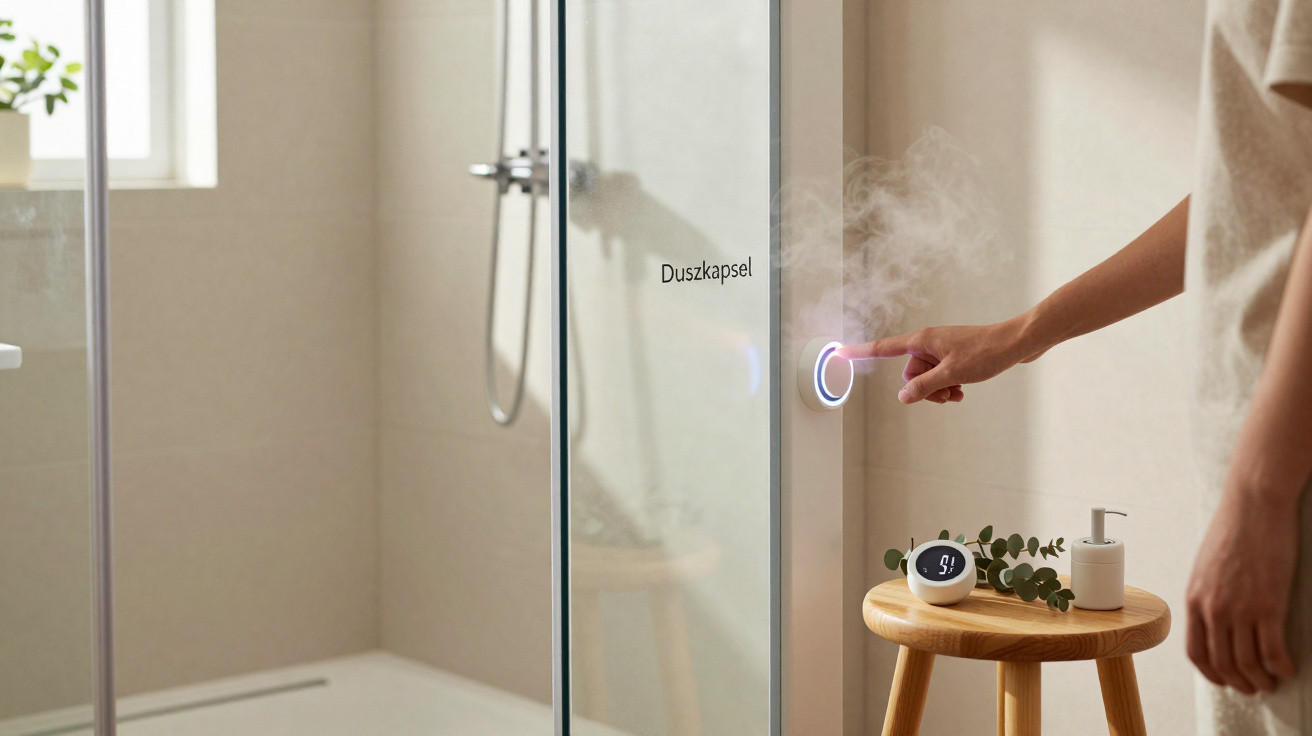
For roughly ten years, the walk-in shower dominated Instagram-worthy bathrooms and premium refits. That reign is beginning to fade as a new wave of high-tech shower “capsules” (also called shower “pods”) starts to redefine what people want from washing, switching off and resetting at home.
The end of an era: why the walk-in shower is losing its shine
For years, architects held up the walk-in, level-access shower as the benchmark: a flush tray, a broad sheet of glass, no step to climb, and a hotel-style feel at home. It read as spacious and pared back, and it photographed brilliantly for estate agents.
Over time, the practical drawbacks became hard to ignore. Big, open showers can look the part, yet homeowners repeatedly describe the same three frustrations: draughty cold air, water splashing across the room, and upkeep that is more fiddly than expected. With a larger open zone you also get more grout, more glass and more junctions where limescale and soap scum build up.
Efficiency is another sticking point. Open showers do a poor job of keeping warmth in. Heat drifts away, people nudge the temperature higher or linger longer under the water, and usage climbs. In smaller urban flats, that generous open footprint can feel like an indulgence that steals space from storage, laundry, or even a second loo.
"In a world of rising energy prices and shrinking floor plans, the open walk-in shower starts to look wasteful rather than chic."
Asking priorities have changed, too. Many clients now want to talk about water consumption, everyday comfort and running costs before they get into tile colours. That shift clears the runway for the next look: a shower that functions more like a smart, sensory capsule than an open wet room.
The rise of the shower capsule: the immersive 2026 bathroom trend
The new headline act is what many European brands are calling the “shower capsule” or “shower pod”. This is not the plasticky shower cabin associated with the 1990s. Instead, picture a compact, sealed mini-spa with integrated tech, deliberate lighting, and tight management of air and water.
Rather than shaping a whole corner of the bathroom around one pane of glass, the capsule comes as a clearly defined volume: framed, enclosed and feature-packed. The aim is less “open plan” and more “private cocoon” - a small, controllable setting where temperature, light and sound are designed to work together.
Technology built around personal wellbeing
Most newer capsules revolve around a straightforward digital control panel. From that single point, you can set the water temperature to an exact degree, fine-tune pressure, switch between spray patterns and activate different lighting scenes.
Some models add speakers that connect to a phone, letting a morning news update or a playlist play directly inside the pod. Others include pre-programmed “modes”, such as an energising cool mist paired with bright white light, or a warm, low-pressure shower with amber lighting for bedtime.
"The shower stops being “a place to get clean” and turns into a short, repeatable ritual that you can script for yourself."
Premium versions often go further with a steam option. With a single press, the capsule fills with warm vapour, delivering a compact hammam-style effect without committing to a full steam room. For people in small city flats, that can make the shower the home’s primary wellness space.
This kind of personalisation is well beyond what a typical walk-in can provide with a basic mixer and a rain head. The pod becomes a defined product, rather than an empty zone finished with tiles and glass.
Space and sustainability: why the capsule fits 2026 homes
The move towards shower capsules is not just a comfort story. It also matches two strong housing pressures across the UK, Europe and North America: smaller homes and sharper concern about resources.
Smaller footprint, more usable bathroom
Counter-intuitively, a good capsule can make a compact bathroom feel bigger. Fully framed with clear or lightly frosted panels, it sets out its footprint clearly while still allowing light to pass through. Because spray is contained, storage or a washing machine can sit alongside without being constantly drenched.
With water and steam kept inside, there is less need for heavy-duty extraction and less moisture settling on walls and mirrors. That reduces the chance of damage to joinery and paint - something many people underestimate when they pick an open shower in the name of “saving space”.
- Walk-in showers perform best in larger bathrooms with strong heating and ventilation.
- Capsules work in both small and large rooms because spray and warmth are contained.
- Enclosures cut airflow across the body, so you lose less heat.
- Clear panels keep a bright, minimal look without giving up the benefits of being enclosed.
"The new logic: a smaller, closed shower can make the whole room feel calmer and more practical."
Water and energy savings at the core
Capsules also speak to the push for reduced water use. Many systems build in flow regulation and aerated shower heads, which can cut consumption by a third or more compared with an unrestricted overhead shower.
Because the enclosed volume holds warm air closer to the body, users often feel comfortable with slightly cooler water and shorter shower times. Reduced heat loss means less energy required from boilers or electric heaters.
Brands commonly cite savings of up to 40% versus conventional showers. Results depend on household habits, but in a family home that can add up to thousands of litres a year, alongside noticeable drops in utility bills.
"By turning the shower into a controlled micro-environment, the capsule links wellbeing with clear, measurable resource savings."
Extreme customisation: from uniform walk-ins to tailored pods
The walk-in boom encouraged a familiar template: big tiles, one glass screen, black fittings, maybe a recessed niche. The capsule direction is the reverse, leaning on modular systems to unlock more variation.
Manufacturers are now producing pods in multiple base shapes, heights and door layouts. Inside, wall panels extend beyond ceramic, including reconstituted stone, compact laminates, treated wood veneers and recycled composites made from post-consumer plastics.
| Aspect | Walk-in shower | Shower capsule (2026 trend) |
|---|---|---|
| Space use | Needs generous footprint and clear area | Fits tight spaces and corners efficiently |
| Technology | Basic mixer and shower head | Digital control, lighting, sound, optional steam |
| Water and heat | More heat loss, higher flow rates | Controlled flow, better heat retention |
| Design scope | Tiles, glass, fixtures only | Panels, textures, colours, integrated features |
| User experience | Visually open, function-led | Immersive, ritual-driven, more private |
Some companies prioritise calm, spa-like styling with warm woods and subdued lighting. Others take a more futuristic route, using glossy white shells and colour-changing LEDs. That spread of personalities makes the shower feel closer to a furniture piece than a fixed part of the building.
For bathroom designers, it also reshapes the planning process. Rather than sketching a generic wet zone and specifying fittings later, they select a particular capsule model early and then plan storage, lighting and heating around it. The pod becomes the room’s anchor.
What this means if you plan a renovation from 2025 onwards
If you are currently weighing up a walk-in, the decision is clearer than it was: choose the visual openness that defined the past decade, or opt for an enclosed, feature-rich pod that may align better with 2026 expectations around comfort and sustainability.
Costs depend on specification. A capsule can look pricier upfront, particularly once tech is added, yet the comparison shifts when you include the waterproofing and tiling required for a fully built walk-in. A pod arrives with its own tray, walls and doors, which can reduce labour and lower the risk of leaks from badly executed wet rooms.
"In many small bathrooms, a mid-range capsule can rival the price of a fully tiled walk-in while beating it on heat and water performance."
For those thinking about ageing in place, capsules can bring additional benefits. Low-threshold access, fold-down seating and secure handholds can often be added or swapped later without ripping out walls. That modular approach offers more flexibility than a large open shower fixed into a single layout.
How to stress-test a shower capsule before buying
Because the capsule concentrates your daily routine into a tighter footprint, a quick showroom glance may not be enough. A handful of practical checks can prevent regret:
- Step in and shut the door to judge real shoulder room.
- Act out your normal routine: where would soap, a razor and a towel actually go?
- Ask about noise levels, as some fans and pumps hum more than others.
- See how panels open for cleaning and whether seals are replaceable.
- Examine the controls; over-complicated menus tend to date badly.
These may sound obvious, but many buyers get distracted by visualisations and lighting effects. Day-to-day usability is what decides whether the capsule becomes a valued ritual space or a gadget that grates once the novelty wears off.
Potential risks and trade-offs to keep in mind
No trend is without its compromises. With shower capsules, the key risks sit around technology, repairs and changing tastes. Digital controls can fail, and replacement parts may keep you tied to a single brand. If a manufacturer goes under or stops supporting a model, servicing can be harder than with a simple mechanical mixer.
There is a styling risk as well. A strongly defined pod colour or form might feel cutting-edge now but look dated in ten years. Choosing neutral shells with lighting and accessories you can upgrade later may be a safer long-term bet than bold, fixed statements.
Sustainability is not entirely one-sided either. Pods can reduce water use and help protect the building fabric, but they also rely on more factory-built components. When comparing options, it is worth checking panel recyclability and how repairable the brand claims the system will be.
For now, one point stands out: the walk-in shower is unlikely to disappear overnight, but the attention has shifted. The 2026 bathroom looks less like a chilly glass corner and more like a compact, controlled and personal capsule of warmth, sound and light.






Comments
No comments yet. Be the first to comment!
Leave a Comment