
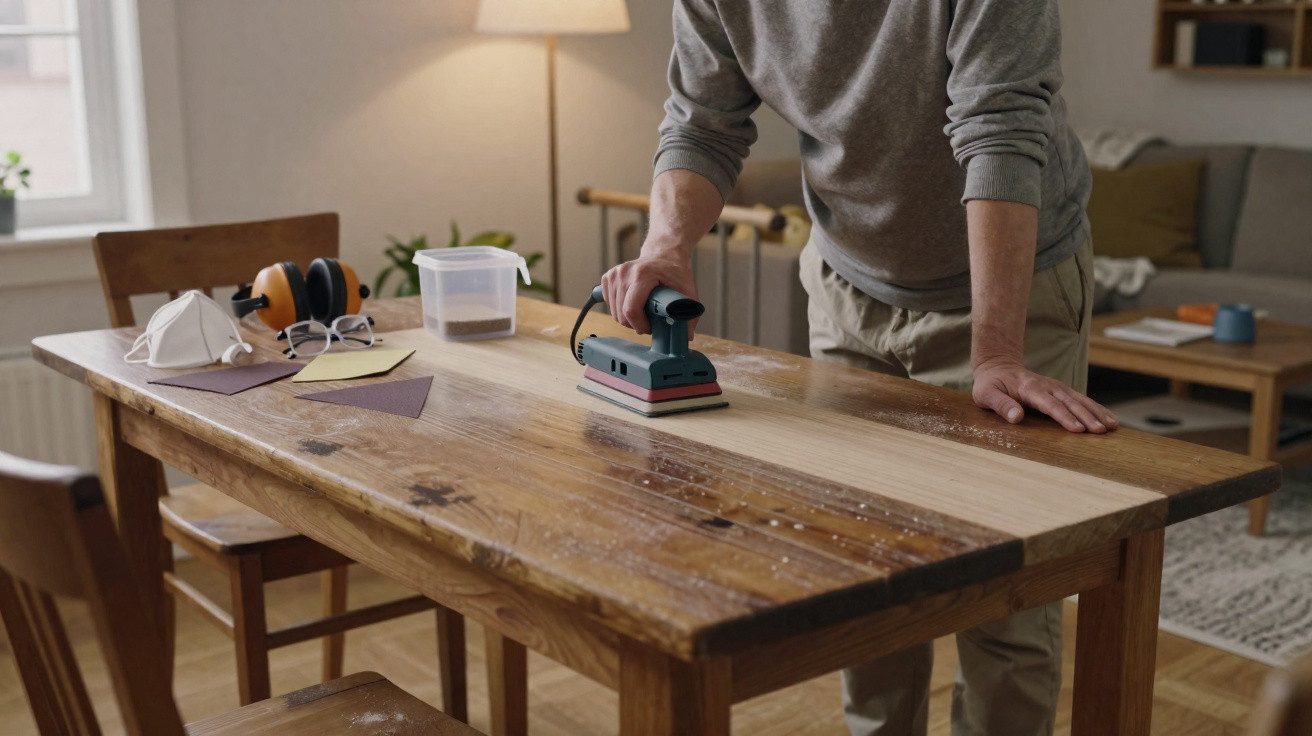
It began as the sort of small winter fix you’d pencil in for a wet Sunday afternoon.
Somehow, it escalated into an outright sanding obsession.
Spending more hours at home has a way of making every scuff on a tabletop and every worn chair impossible to ignore. A simple trial run with a compact sander on a beaten-up old table quietly shifted the mindset from “let’s fix this” to “what else can I transform?”
The table that changed the plan
It starts with a table most people would discreetly banish to the garage. It carried stains from children’s birthday parties, dents from homework disasters, and a finish so lifeless it barely caught the light. Even so, binning it felt wrong, because furniture like this often holds more memories than monetary worth.
The aim was deliberately modest: level the surface, take out the deep scratches, and perhaps refresh it with a new stain or oil. There was no fancy workshop, no joiner involved, and no big budget. Just a straightforward tool, some time, and plenty of curiosity.
This wasn’t a makeover show with a full team. It was a living room, a single sander, and one very tired table.
Meeting the multi-sander: small tool, big shift
The moment things changed was the arrival of a compact multi-sander - the Bosch PSM 100 A style of machine: a palm-sized tool with a triangular sanding pad and a set of abrasive sheets ranging from coarse to fine. The form factor matters more than any technical spec sheet. It sits in one hand, feels light, and gets into corners in a way a larger flat sander simply can’t.
Rather than a loud, heavy unit you have to fight, this kind of sander rests neatly in your palm, which makes it far less intimidating for anyone who normally steers clear of DIY tools. Plug it in, fit the first sheet, keep the pressure gentle on the timber, and the vibration does the majority of the work.
First passes on the wood: from dull to promising
The first few minutes usually decide whether a renovation carries on or fizzles out immediately. In this case, only a handful of passes were needed before the old varnish began to lift and the wood grain showed itself again. Scratches softened. Water rings eased. The grey, exhausted surface moved towards a warmer, more natural tone.
A 100 W compact sander won’t resurrect a whole floor, but for furniture it’s unexpectedly capable. On the table, the user switched between three grits:
- G80 for stripping the thick, damaged finish
- G120 for smoothing after the heavy work
- G160 for a softer, almost silky touch before oil or paint
In under an hour, the table no longer looked like something “rescued from the tip”. Instead, it looked ready to take pride of place in the dining room again, needing only a coat of oil, wax or paint.
The most striking part was not the final look, but the feeling that the job was genuinely achievable without a professional.
Why sanding becomes addictive so fast
What followed will ring true for anyone who has ever “just had a go” with a home tool. Once the table recovered its appeal, attention drifted elsewhere: the chair in the corner with a battered seat, the little bedside table with varnish chipped away, the stair rail polished by years of hands yet scarred near the base.
With a lightweight sander, each item starts to feel like a possibility rather than a headache. Short bursts of work fit between emails or on a calm evening. Because the tool is light and the sheet-change system is straightforward, the mental leap from “I should sort that” to actually starting becomes much smaller.
What people start sanding once they get hooked
| Object | Reason to sand | Possible finish |
|---|---|---|
| Dining chairs | Stains, dents on the seat | Clear varnish, coloured paint |
| Bedside tables | Chipped edges, water marks | Matte paint, tinted wax |
| Interior doors | Yellowed varnish, bumps | Satin paint, wood oil |
| Stair rail | Greasy, scratched surface | Hardwax oil, clear coat |
Winter makes the temptation stronger. When daylight is limited and evenings are spent indoors, small renovation jobs feel less like chores and more like a practical way to improve day-to-day living without spending a fortune.
Power, dust, noise: what actually matters day to day
On paper, the figures appear fairly modest: roughly 100 W of electrical power, small sanding pads, and a relatively low weight. In day-to-day use, those traits shape the experience far more than any headline wattage.
That lower power output makes the tool easier to control. It removes material steadily rather than aggressively, which suits beginners and anyone working indoors without a workbench. The triangular pad also gets into corners on cabinet doors, steps and window frames - places that can stay patchy and unsightly when using a larger sander.
Dust control is quietly crucial. Many multi-sanders come with a microfilter box or a basic extraction setup that captures some of the fine particles. That helps limit the familiar layer of dust that otherwise settles on books, plug sockets and radiators after sanding.
Good dust collection does not just keep the room tidier. It makes it realistic to sand in a flat or a small house, where a full plastic-sheet setup feels excessive.
Safety and comfort: basics people still forget
A compact sander might look harmless, but wood dust and tiny splinters are still genuine hazards. Even for a quick task, sensible users reach for:
- A basic dust mask or respirator, especially with old varnishes
- Protective glasses to stop chips or dust from reaching the eyes
- Hearing protection if sanding for more than a few minutes
- Work gloves when handling rough timber or metal edges
It’s also wise to test on a hidden section first. Some timbers don’t respond well to aggressive sanding; veneers can vanish in seconds; and older finishes may conceal stains that bleed through paint if they aren’t dealt with properly.
Why a small sander suits tight budgets and first-time renovators
Big renovation plans often stall because they feel costly and overly technical. A compact multi-sander can be an affordable entry point into home improvements. Many sets come with a carry case and a starter selection of abrasive sheets - enough to tackle several jobs before you need to buy more.
This category of tool is particularly practical in smaller homes. It stores easily, plugs into any standard socket, and doesn’t demand a bench or a garage. People in rented flats can lightly sand movable furniture, shelves, or upcycled finds from second-hand shops, rather than touching fixtures that belong to the landlord.
For many households, the real gain is psychological: the feeling that you can fix, refresh and adapt your space yourself, without waiting for a tradesperson.
Stretching the idea: from one table to a new way of furnishing
Once the method feels comfortable, sanding stops being purely a repair job and becomes a design tool. People begin picking up second-hand pieces because they can already imagine the “after”. A dark, dated chest of drawers turns into pale, Scandinavian-style storage. A heavy orange varnish is replaced with a subtle tinted oil.
That change has both financial and environmental impact. Restoring older furniture reduces waste and lowers demand for new pieces made from particleboard and thin veneers. It also frees households to spend on things that matter more - better mattresses, quality textiles or improved insulation - rather than replacing every table with a few knocks.
For anyone keen to take it further, pairing sanding with straightforward upgrades such as new handles, fresh hinges or extra shelves can make a simple item feel bespoke. A sanded sideboard with modern handles and updated legs can hold its own against far pricier designs.
The compact sander that brought one battered table back to life often ends up as a quiet companion through many winter weekends: easing sharp edges, lifting old stains, and gradually changing how a home looks and feels, one piece of wood at a time.


Comments
No comments yet. Be the first to comment!
Leave a Comment