
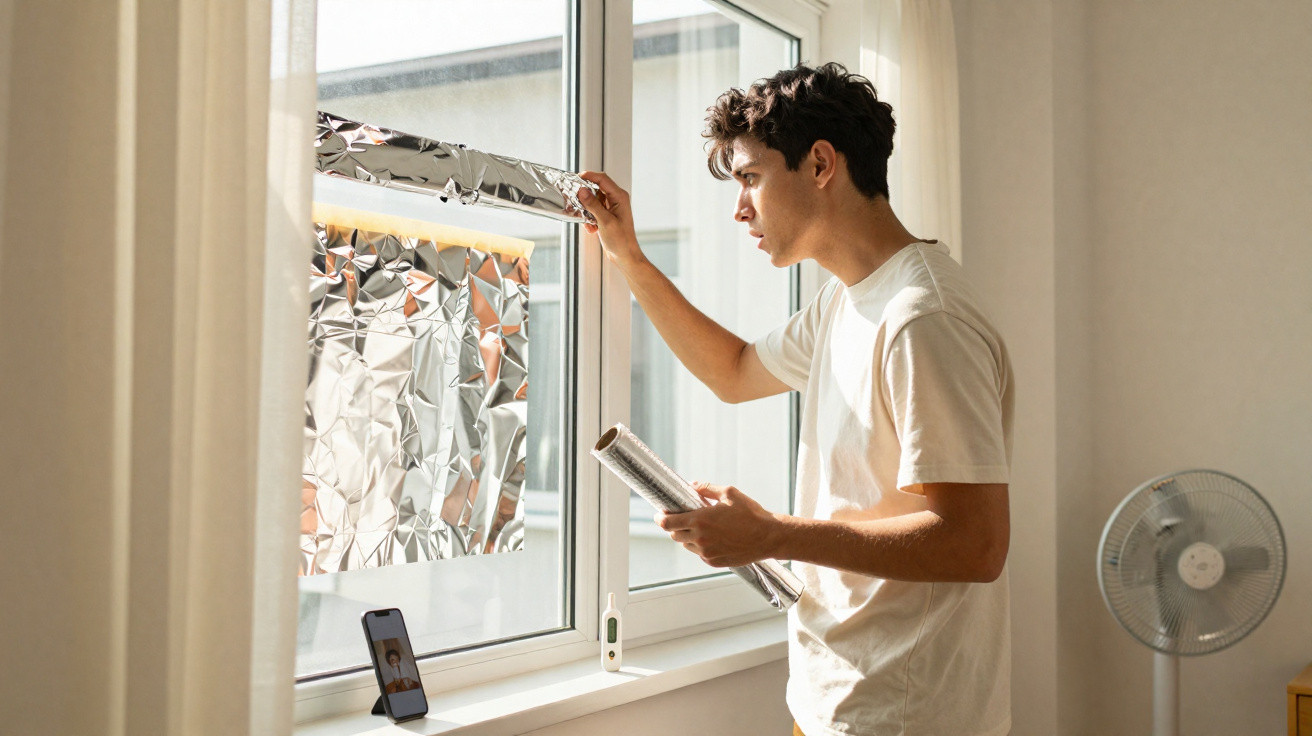
It was a blisteringly hot afternoon in July when I first noticed it: an entire run of flats in a quiet suburb, their windows covered in gleaming aluminium foil, like improvised satellites angled towards the sun. From the pavement, the effect was almost futuristic.
Inside one of them, a young couple happily recorded a TikTok how‑to, showing how they’d “hacked” their energy bill and kept the heat out for the cost of a supermarket roll.
Reading the replies, the jealousy was obvious: “Doing this tonight.” “Why didn’t I think of this sooner?”
The idea travelled faster than the heatwave itself.
But behind those glittering panes, the reality was far less glossy.
Why covering your windows in foil isn’t the clever hack it looks like
At first glance, it sounds brilliant. Aluminium foil reflects the sun, so you press it onto the glass and cut down the heat coming in. The room dims, the glare drops away, and the temperature can fall by a few degrees. It feels like you’ve outsmarted the system with a £3 roll from the kitchen drawer.
From indoors, it can feel reassuringly effective. You imagine the air conditioning running less, the fan seeming more bearable, and your mind insisting, “This is working - I’m saving energy.”
Seen from outside - or from the perspective of an energy specialist - it’s a different story.
Consider Laura, who lives on the top floor of an older brick building. Last summer, during the third heatwave and at the end of her tether, she copied a DIY clip and covered her south‑facing windows completely with foil, shiny side out. For the first couple of days, her living room genuinely did seem cooler. She boasted to her neighbours, told friends, and even made a quick “before/after” video.
Then the headaches began. Her houseplants started to sag. Her landlord rang to complain that the façade “looked like a grow house.” By late August, she spotted dark marks creeping along the edges of the window frames, along with a damp, musty smell that refused to shift.
What started as a quick win had quietly turned into an expensive headache.
Energy experts stress that foil pressed directly onto glass is rarely as harmless as viral DIY videos make it appear. When sunlight hits foil stuck to a pane, much of that energy is reflected back into the glass rather than away from it. That can drive surface temperatures far beyond what the window was designed to tolerate, particularly with older glazing or double‑glazed units.
Glass doesn’t respond well to that sort of thermal strain. Over time, microscopic cracks can appear. On double glazing, seals can degrade, allowing condensation inside and undermining the insulation you were trying to improve.
And that’s before you factor in trapped moisture, reduced ventilation, and how a fully foiled window can gradually make a home feel like a dim, stale container.
The hidden risks the viral videos tend to skip over
If you’re trying to manage strong sun through your windows, specialists advise thinking in layers rather than sticking something directly to the pane. Reflective barriers are safest when they’re placed outside the glass - or, at minimum, not bonded to it. In practice, that points to exterior blinds, reflective shutters, awnings, or even a light‑coloured curtain hung a few centimetres away from the window.
Professionals do sometimes install reflective films, but these are purpose‑made products - not scrunched kitchen foil. They’re measured, fitted properly with room to “breathe”, and tested so they don’t cause the glass to overheat.
In other words, how you do it matters more than what you use.
The same errors show up again and again online. People press foil onto already‑hot panes, then tape it tight on all four edges so no air can move. They wrap every window in the house, leaving rooms in permanent twilight - and then wonder why they need the lights on from 10 a.m.
Most people recognise that desperate moment when a bedroom is so hot you’ll try almost anything. That’s the emotional engine these clips run on: intense discomfort and fast relief. What never makes it into the video is the gradual condensation building up behind the foil, the mould appearing in corners by September, or tenants falling out with landlords over damage deposits.
Let’s be realistic: hardly anyone performs a careful risk check after watching a 30-second “life hack.”
Energy consultant Martin Gomez, who helps households through heatwaves, sees the consequences first-hand.
“Aluminium foil is reflective, yes, but it’s also unforgiving,” he says. “On the wrong type of glass, in the wrong climate, you can push window temperatures up enough to damage seals or even cause cracks. And if you block light and air without a plan, you’re swapping one problem for three new ones.”
To keep it straightforward, many experts share a simple window‑cooling checklist that avoids kitchen foil altogether:
- Prioritise shade outside the window (awnings, exterior blinds, plants) before doing anything indoors.
- If you add an internal layer, leave a gap so air can circulate between the glass and the material.
- Choose light‑coloured fabrics or certified reflective films, rather than improvised metal layers.
- Ventilate overnight to purge heat, then shut windows early and draw shades during the day.
- Keep at least one room as a “cool refuge” instead of trying extreme fixes on every window.
So what should you actually do when the heat becomes unbearable?
The bigger issue driving the foil trend isn’t really aluminium at all - it’s the sense of vulnerability when your home stops shielding you from the weather. When outdoor temperatures soar and a small fan merely shuffles warm air around, those shiny, foiled windows on your feed can look like a lifeline.
Some people will still tape foil to the glass and shrug, “It helped, that’s enough for me.” Others will decide it’s better to tolerate a slightly warmer room than gamble on damaged windows or stagnant, polluted indoor air.
Between those poles sits a quieter, more sustainable approach: lighter fabrics, targeted shading, balcony plants, certified films, and a bit of forethought before the next heatwave arrives. The real “hack” may be accepting that comfort is rarely achieved with one shiny trick, but with several modest, slightly dull steps that add up over time.
That sort of advice doesn’t go viral - but it’s what usually holds up.
| Key point | Detail | Value for the reader |
|---|---|---|
| Foil can stress glass | Direct contact reflects heat back into the pane, raising surface temperatures and straining seals | Helps avoid cracks, fogged double glazing, and unexpected repair costs |
| Dark rooms aren’t always cooler | Fully covered windows limit natural light and ventilation, sometimes trapping heat and humidity | Encourages readers to balance shade, air flow, and light instead of chasing absolute blackout |
| Layered shading beats quick hacks | External shade, light fabrics, and certified films offer safer, more durable heat protection than kitchen foil | Gives practical alternatives that protect both comfort and the long-term health of the home |
FAQ:
- Does aluminium foil on windows really keep a room cooler? It can cut direct solar gain somewhat, particularly on sun‑facing windows, which is why some people feel short‑term relief. However, energy experts say the benefit is often overstated, and DIY clips rarely show the downsides for glass, daylight, and moisture.
- Can foil on windows cause glass to crack? In strong sun, foil tightly fixed to glass can increase thermal stress, especially with older or double‑glazed windows. That doesn’t mean every pane will break, but it does increase the risk of micro‑cracks, seal failure, and longer‑term fogging between panes.
- Is aluminium foil on windows legal in rentals? Many landlords and building managers dislike it because it alters the outside appearance and can harm frames or seals when taped. Some tenancy agreements ban it outright, particularly on uniform façades or listed buildings, so tenants may end up paying for removal or repairs.
- What’s a safer alternative to aluminium foil for blocking heat? Light‑coloured blackout curtains, external blinds, reflective but certified window films, or even plain white sheets hung a few centimetres from the glass tend to work better over time. Paired with overnight ventilation and shutting shutters early in the morning, they keep rooms cooler with fewer drawbacks.
- Is it ever okay to use foil on windows? Some emergency guidance mentions it as a short‑term measure during extreme heat, usually for temporary situations or when no other option exists. For typical homes and flats, most experts recommend solutions that protect both comfort and windows over several summers, not just a few hot days.






Comments
No comments yet. Be the first to comment!
Leave a Comment