
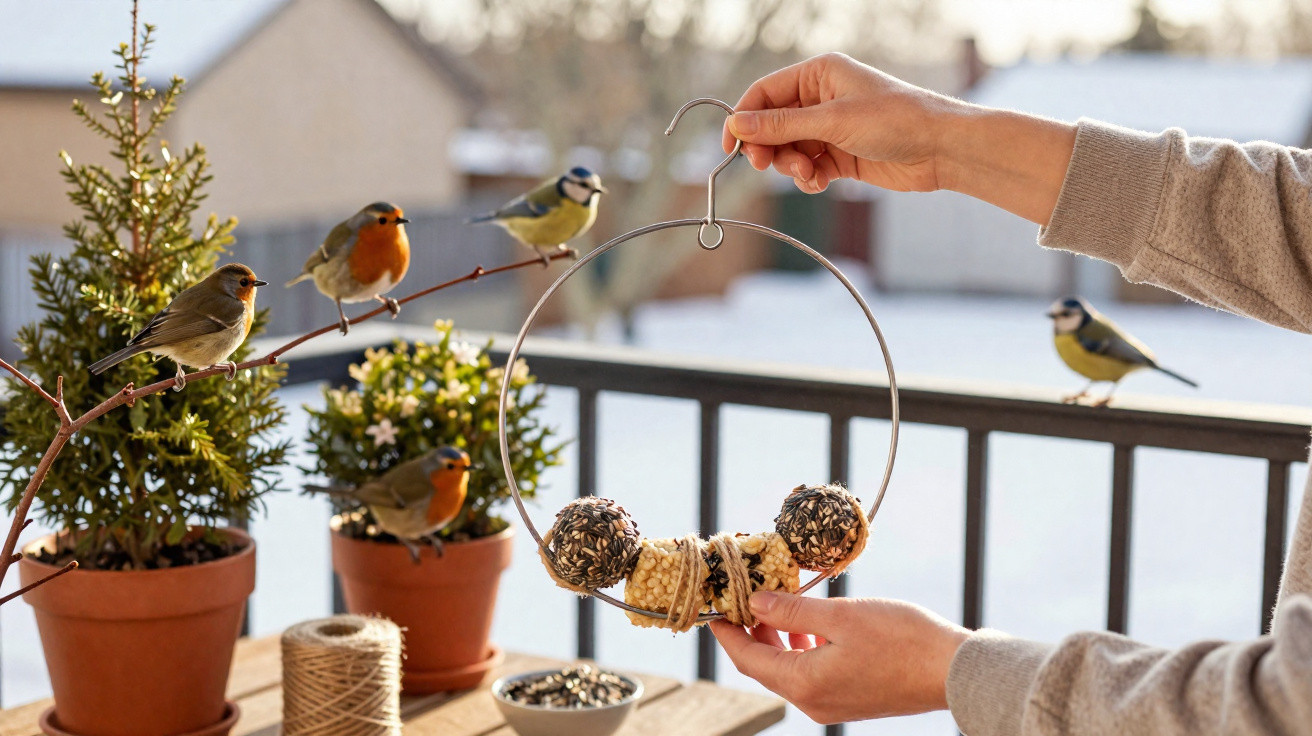
In countless storage cupboards, an old bent metal coat hanger has been left untouched for years. It may look ready for the bin, but an increasing number of nature enthusiasts are turning it into a secure feeding point for tits, sparrows and robins – giving these birds a genuine survival advantage during winter.
Why a metal coat hanger can become vital for garden birds
Winter nights are a demanding test for small birds. They use huge amounts of energy to maintain their body temperature while insects and seeds become scarce. Feeding stations in gardens and on balconies can fill this gap, provided they are positioned sensibly.
Many shop-bought bird feeders topple in the first gale, end up in the snow or sit low enough for cats to wait nearby. This is where an old metal coat hanger proves useful. With just a few simple adjustments, this seemingly worthless item becomes a sturdy support that raises, balances and makes the feeding station considerably safer.
“A simple metal coat hanger can make the difference between an emptied trap and a safe refuelling stop for birds.”
Metal is rigid enough to withstand gusts of wind, yet flexible enough to be shaped with pliers for almost any garden or balcony. By bending the hanger so that the food is suspended at least 1.50 to 1.80 metres above ground, with roughly two metres between it and walls, trunks or fences, you can create a relatively protected spot for hungry visitors.
Step by step: turning a coat hanger into a safe bird feeder holder
Very little equipment – and no DIY expertise – is needed for this conversion. However, a few details matter if the finished holder is to remain safe.
Choosing suitable materials
- a robust metal coat hanger, rather than thin wire
- no obvious rust patches or sharp edges
- combination pliers; for particularly hard metal, a small saw or wire cutters as well
Start by carefully straightening the hanger until it forms a rod around 35 to 40 centimetres long. Minor bends are not a problem, as long as the finished arrangement does not hang at an angle.
At the top: a firm attachment for the feeder
Use the pliers to make a wide, closed loop at one end. This is where the feeder will be attached, whether it is a bought silo-style bird feeder, a homemade wooden feeder or a straightforward food dispenser.
Make sure the loop is fully closed so that the food container cannot come loose in the first gust of wind. If you are unsure, wrap the ends together with a second piece of wire.
At the bottom: a secure hook for a branch, balcony or pergola
At the opposite end, bend a hook suited to the chosen fixing point: a thick branch, a metal hook, a pergola or a balcony railing. The hook must not be left too open, otherwise the entire holder could slip off in high winds.
Before adding food, carry out a trial run. Hang up the feeder, give it a firm tug, let it swing gently and check that everything stays secure. Adjust the shape if the container hangs noticeably unevenly. Otherwise, seeds will fall to the ground, where they can attract rats or pigeons.
“A brief test without food prevents the entire supply from ending up in the snow or a neighbour’s garden later.”
The best location in the garden or on the balcony
The height of the feeding point and its distance from shrubs or walls determine whether it offers birds protection or becomes an unintended buffet for cats.
Allowing space from predators
- Height: ideally from around 1.50 metres, and better still at about 1.80 metres
- Distance: approximately two metres from walls, garden sheds, fences and thick tree trunks
- Avoid placing it directly beside dense bushes where cats may lie in wait
The slight springiness of the metal coat hanger provides an extra benefit. The structure moves a little, making it harder for martens, rats or squirrels to approach. Birds quickly get used to the movement; tits and finches in particular have no difficulty with it.
An ideal option for small balconies
This method also works where space is limited. On a balcony, simply hang the coat hanger from the railing or a sturdy hook. A clear flight path is important: birds must be able to approach freely from at least one side.
People living in a block of flats should ensure that seeds do not continually fall onto neighbouring balconies or pavements. A small catching board beneath the feeder will often solve this issue.
What belongs in the bird feeder – and what does not
Even the best metal holder is of little use if the contents of the feeder make birds ill. Many well-intentioned kitchen leftovers cause more harm than good.
Suitable winter food for garden birds
- black sunflower seeds
- mixes containing hemp, millet and other seeds for garden birds
- plant-fat balls without plastic netting
- unsalted peanuts, roughly chopped
- a few pieces of apple or raisins for blackbirds and thrushes
Best avoided: leftovers that can be harmful
- bread, bread rolls and rusks
- biscuits or sweet baked goods
- cooked food leftovers
- fat from frying pans or roasting trays
- dairy products
Many of these foods can cause digestive problems in birds or provide too few nutrients. Specialist bird food is inexpensive and far better suited to their needs.
Hygiene: why the metal coat hanger also helps with cleaning
Where many animals feed in a small area, pathogens can spread quickly. Experts therefore advise cleaning feeding stations once or twice a week during winter. This is another area in which the coat hanger has an advantage.
The feeder can be removed, cleaned and hung back up again in moments. Usually, all that is needed is a bucket of hot water, a splash of mild washing-up liquid and an old brush. Allow everything to dry thoroughly before putting it back in place.
“Anyone who cleans the feeding area regularly protects regular visitors from diarrhoea, fungal infections and parasites.”
If many birds appear unusually quiet, puffed up and lethargic, reduce the amount of food and clean the feeding point especially thoroughly. Where there are clear signs of widespread illness, it is better to pause feeding so that pathogens do not spread further.
When to feed – and for how long?
Many bird conservation organisations recommend concentrating feeding efforts from mid-November until the end of March. During periods of severe frost or continuous snow cover, it is worthwhile increasing portions or topping up more often. In spring, reduce the amount of food gradually so birds begin seeking sufficient natural food again.
Anyone wishing to feed birds throughout the year needs a slightly adjusted mix, with less fat in summer, and must not neglect hygiene. The metal coat hanger simplifies this routine because feeders can be swapped and varied quickly.
More benefits than expected: sustainability, crafting fun and biodiversity
This improvised bird feeder holder brings another welcome benefit: it saves resources. Rather than purchasing new brackets, you reuse materials already available. It suits a lifestyle that reduces waste and uses raw materials thoughtfully.
Children can be involved in bending the hanger, attaching it and watching the birds. The result is a small winter project that encourages an interest in nature conservation while also teaching species recognition. With a little patience, great tits are often joined by blue tits, chaffinches, nuthatches or even a great spotted woodpecker.
| Bird species | Typical favourite food |
|---|---|
| Great tit | Sunflower seeds, fat balls |
| House sparrow | Grain mixes, millet |
| Robin | Soft fruit, raisins, porridge oats |
| Blackbird | Apples, berries, raisins |
Over time, the whole small wildlife community in the garden benefits. Helping birds through harsh winters supports populations that, in summer, eat insects and thereby help keep pests under control. Bats and hedgehogs also benefit indirectly from a garden managed close to nature, where feeding stations, hedges and leaf piles together form a small network of habitats.
Anyone who has watched ten or twenty birds crowd around a homemade metal coat hanger feeding point on a bitterly cold morning will soon understand: that old hanger belongs outdoors, not in the bin – at the heart of winter life for its feathered neighbours.
Comments
No comments yet. Be the first to comment!
Leave a Comment