
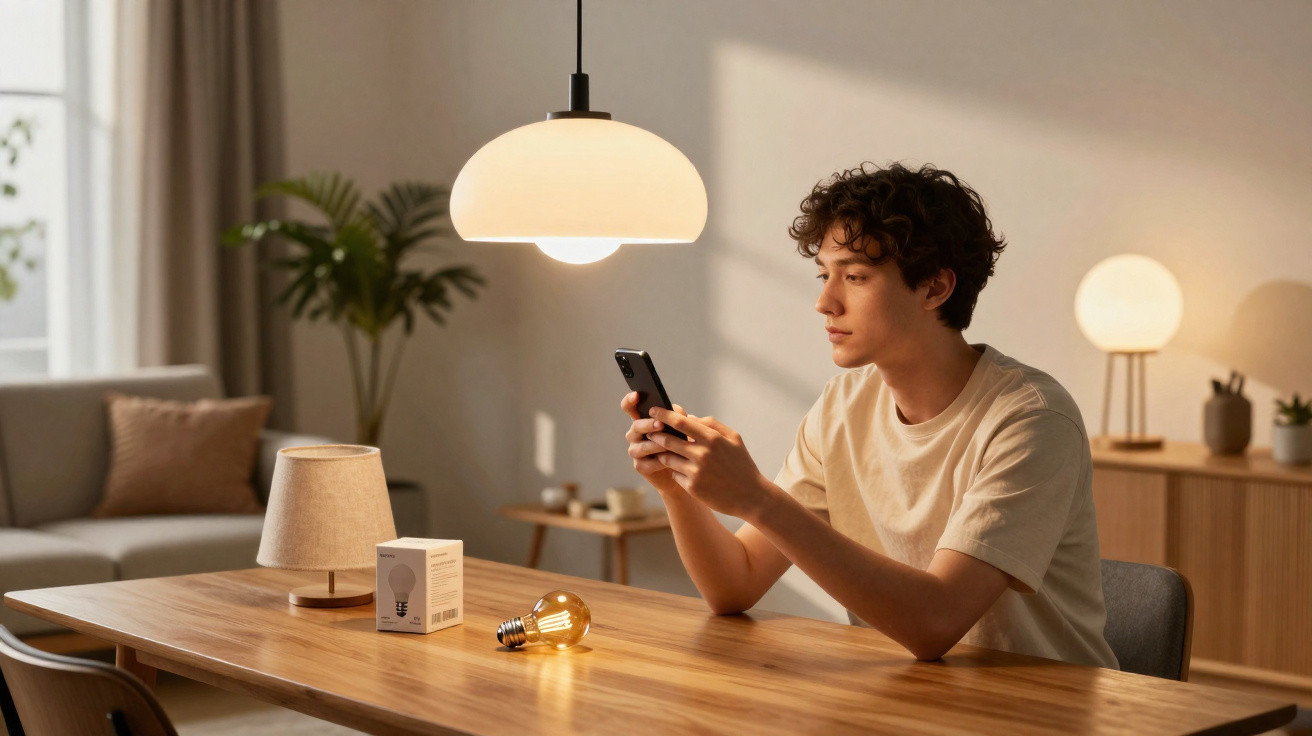
Designers now tend to cringe quietly at the sight of them hanging above a dining table.
In well-styled homes, lighting is moving beyond exposed filament bulbs and industrial track fittings. The focus has turned to warmth, softness and a more considered approach to illumination-one that alters the feeling of a room as the evenings become darker.
Why filament bulbs are falling out of fashion
From icon to cliché: the end of the industrial loft era
For close to ten years, exposed filament bulbs were central to the coffee-shop look. Suspended in groups above counters, arranged across bar ceilings and installed in innumerable living rooms, they offered an affordable route to a New York warehouse atmosphere.
The formula was instantly recognisable: amber-tinted glass, visible filaments, black flexes and metal fittings. It suggested something raw, urban and gently nostalgic, as though every kitchen might secretly be an artist’s workshop. Social media accelerated the trend, making the glowing coils a familiar backdrop for latte photographs and exposed brick.
Trends change quickly, however. By 2025, a theatrical cluster of bare bulbs can appear less like a confident statement and more like a relic from another period. Metal tracks, black cages and tangled cords now evoke a former design phase. For many decorators, this has become a visual shorthand that reveals little about the people living in the space.
The “cool café” bare-bulb look has shifted from cutting-edge to visual déjà vu in many living rooms.
What bothers design professionals in 2025 interiors
Interior designers are increasingly stepping away from interiors that seem overly industrial or intentionally unfinished. Their attention is on emotional comfort: people want homes that calm them, rather than rooms staged to resemble a city-centre bar.
Filament bulbs sit awkwardly within this change. Their uncovered brightness and rigid metal hardware recall factory illumination rather than a gentle, layered setting. Used repeatedly, they can make a room feel flat instead of adding dimension, drawing the eye immediately to the bulbs and nowhere beyond them.
The current direction embraces tactile detail and restrained drama. Design professionals create spaces around textured shades, sculptural lighting and warm materials, including hand-blown glass, matt ceramic, pale timber and brass with a soft patina. Light is diffused and filtered, with its source concealed within a form instead of demanding attention from overhead.
Current lighting trends lean toward texture, craft and quiet glow, rather than visible filaments and hard-edged metal.
What replaces filament bulbs in stylish homes
Decorative and smart LEDs: when tech softens the room
LEDs once brought to mind a cold white glow from an uninspiring plastic bulb. That perception is now out of date. Since 2024, decorative LEDs have filled shop shelves with a much wider range of forms and finishes.
Many recent designs resemble decorative objects more than conventional “light sources.” Options include slender opal tubes for minimalist fittings, globe bulbs in smoky or tea-coloured glass, and soft, irregular shapes suited to Japandi-inspired spaces. Their glass diffuses illumination, leaving the eye with a subtle halo rather than an aggressively bright point.
Technologically, most models can be linked to an app or voice assistant. Homeowners can move from warmer to cooler tones over the course of the day, dim lights from the sofa or programme settings for work, cooking and film watching. Such adaptability is especially valuable in smaller homes, where one room may serve several purposes.
A modern LED can mimic the amber warmth of an old filament while using around ten times less energy.
Energy efficiency is another factor behind the change. A high-efficiency LED generally consumes up to 80% less electricity than a traditional incandescent or decorative filament bulb. Across several years, this reduction can balance out the higher initial cost, particularly in spaces illuminated throughout long evenings.
Statement lamps and bold fixtures: lighting as a key piece
Lighting is also becoming more visible in a different way. Rather than choosing a neutral fitting that disappears into the ceiling, increasing numbers of people see the main light as a defining feature of the room.
Designers are using oversized rattan or wicker pendants above dining tables. On sideboards, they place sculptural ceramic lamps with uneven glazes that remain eye-catching when switched off. Hand-blown glass shades can cast pools of colour onto surrounding walls.
Colour is making a return too. Muted teal, soft terracotta, wine shades and smoky greens appear on lamp bases or filter through the light itself. When illuminated, they give the room a faint tint, much like a delicate filter over the space. The intention is not to recreate a themed bar, but to establish a nuanced atmosphere that affects how you feel when sitting down.
- In a living room, an oversized woven pendant can warm the ceiling and reduce echoes.
- In a hallway, two brass or ceramic wall lights can frame a mirror while greeting visitors.
- In a bedroom, a small hand-blown glass lamp can provide a restful glow before bed.
- In a kitchen, a subtle LED strip beneath cabinets can define the worktop without creating harsh glare.
How new lighting trends transform daily life at home
Room-by-room ideas that shift the mood fast
Updating an old filament-bulb track seldom requires major renovation or a large budget. Replacing a handful of important pieces can transform the way a room is perceived, particularly when autumn evenings close in.
| Room | Old setup | Current alternative |
|---|---|---|
| Living room | Black metal bar with exposed bulbs | Large rattan pendant plus two dimmable floor lamps |
| Kitchen | Single ceiling bulb over the table | Warm LED strip under cabinets and a compact, opaque pendant |
| Bedroom | Industrial bedside cage lamp | Soft glass bedside lamp or fabric shade with warm LED |
| Hallway | Harsh central spot | Pair of wall lights plus a low-level guide light |
Layered illumination is more important than ever. Rather than relying on one overhead bulb, designers refer to three lighting types: general, task and accent. A straightforward floor lamp by a sofa or a small clamp lamp attached to a bookcase can bring greater depth to the setting. Each source remains relatively gentle, yet together they create a richer and more flattering environment.
Several gentle light sources at different heights usually feel kinder than one brutal ceiling lamp, even at the same brightness level.
Costs, maintenance and the environmental angle
LEDs reduce practical inconvenience as well. Many modern bulbs have lifespans of between 15,000 and 30,000 hours. In a frequently used living room, that could mean ten years without needing a replacement. They also usually run cooler, making them suitable for paper shades, fabric diffusers and children’s bedrooms.
Energy costs have also encouraged households to scrutinise every watt. Replacing a collection of filament bulbs with efficient alternatives can noticeably lower yearly consumption, especially in home offices or rooms where the lights remain on through long evenings. Smart controls can add to the saving by dimming automatically overnight or when a room is empty.
Material selection is shifting too. Many manufacturers now promote fittings produced from natural fibres, FSC-certified timber or recycled glass. Some sell repairable designs with replaceable sockets and standard bulbs, instead of sealed units. This reflects a wider preference for retaining objects longer, even when they align with current trends.
Going further: how to choose the right light for your space
Reading the technical jargon without getting lost
Style aside, several specifications can help you select suitable bulbs for each room. Colour temperature, measured in kelvins, determines the general atmosphere: around 2700K produces a warm amber effect for bedrooms and living rooms; 3000–3500K is appropriate for kitchens and dining spaces; and 4000K or more is better suited to desks and worktops.
Brightness, measured in lumens, is equally worth considering. A compact bedside lamp may require only 250–400 lumens, whereas a main kitchen fitting might need more than 1000. Many shoppers still choose bulbs according to wattage from habit, but LEDs have broken that connection. Checking the lumens and kelvins stated on the packaging will usually avoid disappointment after fitting the bulb.
Using light creatively: small experiments with big impact
Light can also gently define zones and support everyday rhythms. In the evening, a warm, low side lamp signals rest to the body more effectively than a bright ceiling spotlight. A cooler desk lamp in the morning can support concentration during remote working. Families may set distinct scenes for regular activities, such as homework, cooking, film night and weekend brunch.
Even without smart technology, a dimmer or two different lamps in one corner can make rapid changes possible. One light may be directed towards a wall to reflect a soft glow, while another can highlight a painting or bookcase. These small experiments offer a way to leave behind the old industrial cliché and create something more personal, even with a limited budget.
As filament bulbs leave the trend spotlight, they make room not merely for different products but for a changed relationship with lighting. Homes are moving towards softer glows, crafted shades and more intelligent control, with technology kept unobtrusive and atmosphere given centre stage.
Comments
No comments yet. Be the first to comment!
Leave a Comment