
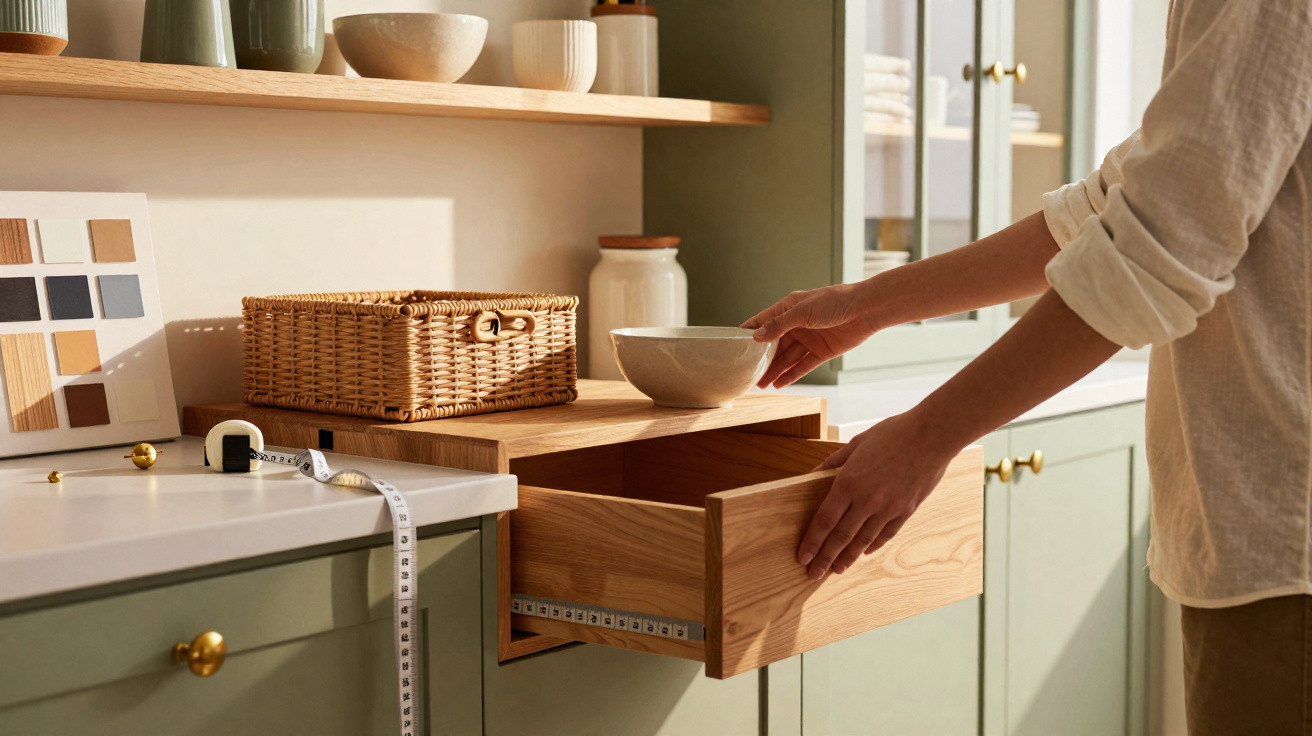
A narrow span of open shelving reveals a pile of handmade bowls. Underneath, a glazed cabinet shines with carefully arranged glasses, while a tall warm-oak larder stands in the corner, a calm giant beside painted drawers. By rights, it ought to seem disorderly. Yet the kitchen feels lived-in, individual and almost as though it has evolved gradually with its owners rather than being selected from a catalogue in a single day.
Throughout design studios and Instagram feeds, the rigid, one-style-fits-all approach to cabinetry is steadily falling from favour. In place of matching units across every wall, designers are creating layered combinations: open shelving alongside enclosed cupboards, larders with freestanding dressers, metal rails paired with concealed drawers. The effect is less showroom and more personal narrative. Once noticed, a wholly uniform kitchen can begin to seem unexpectedly flat.
There is a reason this change is taking hold now.
Why designers are moving away from matching cabinets
Step into a recently renovated home today and you may register something instinctively before you consciously see it. The strongest kitchens feel less like a set and more like a conversation. A painted base cabinet can “talk” to a vintage glazed cupboard, while a slender rail of hooks can counterbalance a bank of drawers. It is this contrast between open and enclosed, heritage and contemporary, that gives a room life.
Cabinetry arranged in an uninterrupted line, using one colour and one door design, provides order and can support resale value. It may, however, leave a space feeling slightly anonymous. Designers favour mixed storage because it can reflect the people living there: their coffee ritual, enthusiasm for baking or chaotic school-morning drawer. Storage is no longer simply about concealing everyday life; it is increasingly about presenting it.
In a London terrace, interior designer Hannah Preece took on a narrow, dark galley kitchen. Instead of fitting more matching cupboards into the room, she removed half of the upper units. Their replacement was a single oak shelf for everyday plates, a small brass rail for mugs and a tall Shaker-style larder at the far end. The base cabinets remained a restrained putty shade, while the solitary oak larder provided the room’s focal point.
The owners, a couple who cook on most evenings, had previously found their belongings spilling across the worktops. Within a week of the renovation, they were sending Preece photographs of uncluttered surfaces and a glass of wine set on an empty corner of the island. As they put it: “It finally feels like us.” Mixed storage altered more than the kitchen’s appearance; it reshaped the rhythm of their everyday routine.
Designers stress that this layered appearance has a practical basis. Mixed storage allows every area to perform a particular role effectively. Deep drawers work well for pans and food-storage containers that never stack properly on conventional shelves. A tall larder can contain dry goods, small appliances and even cleaning products behind one door. Open shelves accommodate the items used daily, making the movement between cooking and cleaning easier rather than more laborious.
A visual device is involved, too. Interrupting the cabinet grid with a glazed door, a differently coloured larder or a stretch of open shelving prevents the kitchen from reading as one flat wall. The eye travels, pauses and settles. That visual movement brings depth and ease. In compact rooms, it can make the difference between a cramped-feeling space and one that feels quietly spacious.
How to combine kitchen storage like a designer without losing your mind
The sensible route into this trend is not to remove every cabinet before collecting images of dramatically mismatched kitchens. Begin by considering how you actually live. Where do keys or post always get left? Which pan do you use three times a week? What is attractive enough to keep on view each day, and what would you prefer to hide until 2034?
Choose a single wall or corner, then build it in layers. The lower section might remain traditional, with broad drawers in the main colour. Rather than adding another row of cupboards above, introduce one long shelf and a slim rail. Elsewhere, install a tall furniture-style larder in a slightly deeper or richer shade than the surrounding units. Modest variations in height, depth and material disrupt repetition without making the room resemble a patchwork quilt.
Let’s be honest: nobody really does that every day. Most people put things wherever there is space and hope it works out. For that reason, designers use straightforward rules of thumb to stop mixed storage becoming untidy. One is the 70/30 rule: around 70% of storage should be enclosed, with 30% open or glazed. This proportion gives the eye sufficient calm surfaces while allowing personality to remain visible.
A further understated rule is to repeat an element. That could mean using the same timber tone for open shelves and inside the larder, or fitting identical hardware to painted drawers and a freestanding dresser. Such repetitions keep the combination from looking like a jumble sale. Emotionally, they also establish a rhythm whenever you enter the room. On a busy weekday morning, that rhythm matters more than might be expected.
One designer described it like this:
“Uniform cabinetry is like wearing a perfectly matching suit every day. Mixed storage is when you keep the great blazer, but pair it with your favorite jeans, a worn-in T-shirt, and shoes you actually love walking in.”
We have all experienced that moment when a picture-perfect kitchen feels oddly intimidating, as if leaving a mug in the wrong place would be a mistake. Mixed storage does the reverse. It welcomes a little real life into the arrangement, particularly when a few guiding principles are followed:
- Choose one dominant cabinet colour, then introduce contrast through only one or two accent materials.
- Keep open shelving brief and intentional rather than creating wall-to-wall dust traps.
- Use glazed fronts sparingly for items that still appear orderly on a bad day.
- Allow at least one tall item, such as a larder or dresser, to interrupt the horizontal run of standard cabinets.
- Repeat finishes: use the same wood twice and the same metal twice, so the room feels coherent rather than chaotic.
Where the mixed storage trend is going next
Many trends flare up across social media before disappearing when the next glossy style emerges. Mixed storage differs because it is rooted in the way people genuinely cook, work and come together at home. It is not solely about “open shelves” or “statement pantries”; it acknowledges that one wall may need to conceal disorder while another can display the things used almost automatically.
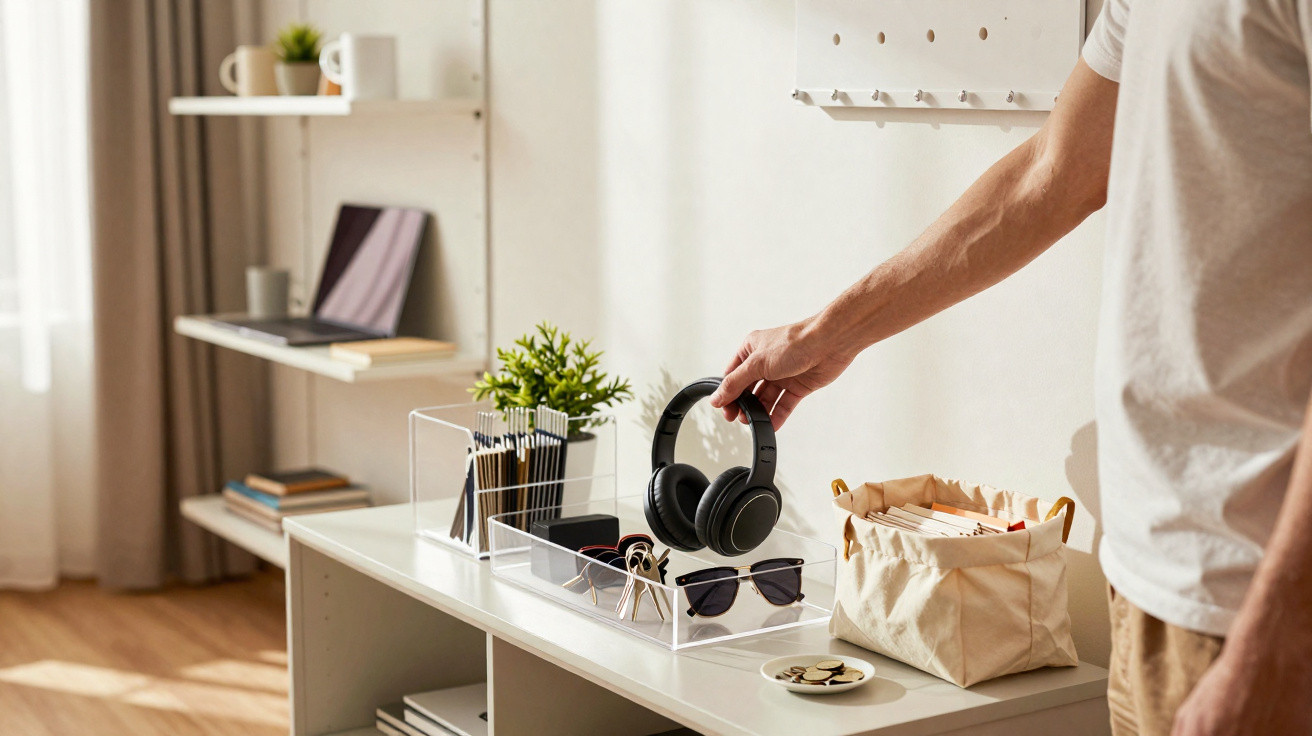
Designers are already extending the concept beyond kitchens. In living rooms, enclosed sideboards are appearing alongside slim library-style shelving. In bathrooms, drawer-equipped vanities meet tall open towers for rolled towels and plants. Entrances are receiving the same approach: an enclosed bench for shoes, a small expanse of pegs and a narrow glazed cabinet for attractive baskets. The combination becomes a reusable design language rather than a one-room trial.
For anyone preparing a renovation, this poses a subtle question: where do you want order, and where are you comfortable being seen? Some people prefer everything behind doors apart from a single coffee station with a café-like feel. Others enjoy having activity on display: piles of plates, jars of grains and cookbooks marked with splatters. Mixed storage recognises that both preferences are valid. The aim is not perfection, but a home that allows you to breathe.
| Key point | Detail | Benefit for the reader |
|---|---|---|
| Combine open and closed storage | Use approximately 70% enclosed cabinets and 30% open or glazed units | Balances visual calm with personality and easy access |
| Interrupt the cabinet grid | Add a tall larder, dresser or unit with a different depth to break up long runs | Makes rooms seem deeper and less like a flat showroom wall |
| Repeat materials and finishes | Echo one timber tone or metal at least twice in the room | Helps an eclectic combination feel intentional and cohesive |
FAQ:
- Isn’t mixed storage just a fad that will date my kitchen? Mixed storage is less about a particular “look” than function and zoning, both of which generally age well. Simple cabinet forms, balanced proportions and natural materials help it remain timeless.
- Will open shelves make my kitchen look messy? When kept short and reserved for everyday objects that remain in regular use, they seldom look cluttered. The key is to avoid turning every wall into a display.
- Can I mix storage styles in a small kitchen? Yes, provided you remain disciplined. One tall larder, one short stretch of open shelving and otherwise calm, matching cabinets can work beautifully in compact spaces.
- Do I need bespoke cabinetry to get this look? Not necessarily. Standard cabinet runs can be combined with a freestanding larder, vintage dresser or simple floating shelves to achieve the same layered effect.
- How many different colours or materials is too many? As a broad guide, use one main cabinet colour, one accent material such as timber or glass, and one metal finish. Adding more than this requires a very steady hand.
Comments
No comments yet. Be the first to comment!
Leave a Comment