

You wake up in the morning, raise the blinds – and instead of a clear view, you find wet, cloudy window panes.
A simple household trick can put an end to this routine.
Many people know the situation: it is freezing outside, the heating is warming the home, and the windows are completely fogged up. Rather than daylight, only a grey haze enters the room, while water collects on the window sills. Although it may seem like a harmless winter occurrence, over time it can damage frames, seals and even your health. An easy-to-use method involving an everyday product can keep panes clear in the morning – without expensive equipment.
Why windows constantly fog up in winter
Misted-up windows are not simply a quirk of nature; it is basic physics. Warm indoor air can hold a great deal of moisture, created by breathing, cooking, showering and drying laundry. When this humid air meets a cold pane of glass, it cools down and can no longer retain all of its water. The excess moisture settles on the glass as tiny droplets.
This is precisely when the familiar morning “mist” develops. The greater the difference between indoor and outdoor temperatures, the more pronounced the condensation becomes. The rooms most commonly affected are:
- Bedrooms (breathing overnight with windows closed)
- Kitchens (cooking, kettles and dishwashers)
- Bathrooms (showers and baths)
- Rooms containing many houseplants or clothes airers
This is more than an aesthetic nuisance. When moisture repeatedly runs down windows and frames, it can penetrate wood, silicone seals or even masonry. Over time, this can result in damp patches and mould.
Damp panes are a warning sign: the indoor air contains more water than cold surfaces can cope with.
Many people react automatically by wiping the panes every morning or turning the heating up even further. Neither approach addresses the underlying issue. A cloth merely spreads the moisture around, while higher temperatures can often make matters worse if the room is not aired properly.
The surprisingly simple solution from the kitchen cupboard
Rather than constantly cleaning up afterwards, you can tackle the issue directly at the surface. The idea is to alter the glass so that water droplets cannot gather into that cloudy film in the first place.
There is no need for a specialist cleaner. Two everyday products are entirely sufficient:
- ordinary washing-up liquid, or
- a vegetable glycerine solution from a chemist or health and beauty shop
Both substances belong to the group of surfactants, meaning surface-active substances. They do not damage the glass, but they do change the way water behaves on its surface.
The trick is to apply an invisible, ultra-thin layer to the glass that stops water droplets from “beading”.
Normally, the moisture forms countless small beads that scatter light, giving the pane a milky appearance. With a surfactant-based layer, the moisture is more likely to spread into an extremely thin film that still allows light to pass through. The pane remains transparent even though moisture is still present on it at a molecular level.
Divers use the same principle on masks, as do motorcyclists on visors. The effect also works on ordinary window panes – for virtually no cost.
How to apply the anti-fog window trick correctly
What matters is not so much the product itself, but how little you use. Too much washing-up liquid or glycerine will leave streaks on the glass. Use the right amount and you will notice nothing except a clear view.
Step 1: Clean the windows thoroughly
Before applying the anti-fog film, the panes need to be clean and dry. Otherwise, dust, grease residue and fingerprints will be effectively “sealed” beneath the protective layer and later cause visible smears.
- Clean the windows with a standard glass cleaner, or with warm water and a little washing-up liquid.
- Dry them using a squeegee or a lint-free cloth.
- Quickly wipe the frames and seals too, so that no water remains there.
Step 2: Apply the anti-fog film
Now for the actual trick – and it takes less time than brewing a pot of coffee:
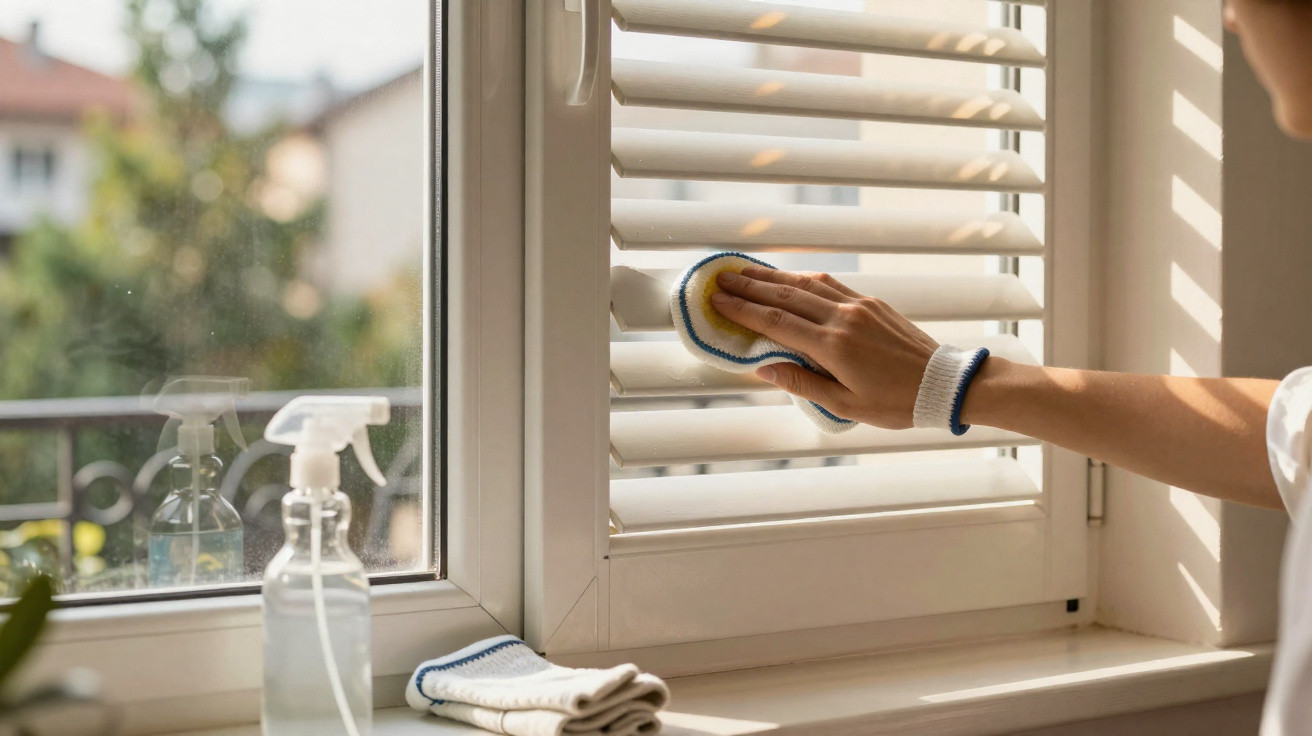
- Put one small drop of washing-up liquid or glycerine onto a slightly damp microfibre cloth.
- Rub the entire inside surface of the pane using circular movements.
- Without rinsing, buff it with a second dry cloth until no marks remain visible.
The glass will look completely normal afterwards: clear, streak-free and free from any greasy coating. The effective part is the invisible residue left behind as a film on the glass. Importantly, do not wipe it with water afterwards, as this would remove the fine protective layer.
If you can see streaks, you have simply used too much product. Buff more thoroughly with a dry cloth – do not apply another layer.
What really changes the following morning
Anyone who uses this trick in the evening will usually notice the effect the very next morning. Temperatures may be frosty outside and the heating may be on indoors, yet the treated pane remains surprisingly clear.
Of course, this does not remove all humidity from the room. It simply prevents it from settling on the glass as a dense layer of droplets. This brings several advantages:
- No more wiping the panes every day
- Less moisture running into seals and frames
- A lower risk of mould near the window
- More daylight and a better mood in the morning
Many people report that the room feels generally “drier” and more comfortable because the usual damp corners around the window are no longer there. Depending on humidity levels and how you ventilate, the effect lasts from several days to around a week. After that, a quick reapplication using a minimal amount of washing-up liquid or glycerine is enough.
How to reduce condensation even further over the long term
The anti-fog trick works directly on the pane. Managing the indoor climate as well will strengthen its effect considerably. Useful measures include:
- Airing rooms fully: open all windows wide for 5–10 minutes several times a day instead of leaving them permanently tilted open.
- Keep doors shut while cooking and showering, then ventilate thoroughly afterwards.
- Do not dry laundry in small rooms with poor ventilation.
- Avoid placing houseplants in every corner, and limit varieties that require a lot of moisture.
- Keep the heating at a moderate but consistent level instead of allowing frequent temperature fluctuations.
If you are unsure how humid the air really is, a simple hygrometer can help. Relative humidity levels between 40 and 60 per cent are considered comfortable in living spaces. If readings remain significantly higher over long periods, not only does the risk of mould on walls increase, but dust mites and other allergy triggers also thrive more easily.
Why glycerine and washing-up liquid work so well
Glycerine binds moisture without evaporating itself. It is used in cosmetics, foods and pharmaceutical products, and is available in small bottles from chemists and health and beauty shops. On glass, it produces a particularly durable film that lasts relatively well.
Washing-up liquid has similarly useful properties, is available in almost every home and can be used immediately. Its surfactants would usually dissolve grease in the sink; here, they mainly alter the surface tension on the pane. It is therefore the practical choice for anyone wanting to act quickly.
What matters is not the “perfect” product, but consistent and sparing use – both products can achieve the effect.
Anyone with particularly sensitive surface finishes on their frames or with allergies should first test the method on a small area. In most cases, however, the quantities used are so minimal that they have little potential to cause irritation. Glycerine is a suitable option for children’s bedrooms because it is generally formulated more mildly.
This everyday trick can also be used on other glass surfaces: shower enclosures, bathroom mirrors and glass covers in the hallway can all benefit from the effect. Bathroom mirrors in particular, which fog up as soon as someone showers, remain clear for noticeably longer – a few seconds of work that can save time every morning.





Comments
No comments yet. Be the first to comment!
Leave a Comment