
At a glance
- 🧪 The science: vinegar’s acetic acid breaks down calcium carbonate limescale; sufficient contact time loosens deposits without force while helping to protect finishes.
- ⏱️ Get dwell time right: leave vinegar in place for 5–30 minutes (taps 5–15, glass 10–30, grout 15–30, kettles 10–20), re-wet it with fresh acid, and prevent drips by using soaked-cloth “compresses”.
- 🧰 A reliable method: apply a generous spray, use gently warmed vinegar if preferred, secure a vinegar-soaked microfibre cloth around fittings, wait until fizzing has eased before agitating, then rinse-while avoiding natural stone and unsealed grout.
- 🔄 Pros vs. Cons: Soaking before cleaning requires less effort, produces more shine and reduces surface damage; scrubbing first may seem quicker but creates micro-scratches and leaves nuclei that can restart scale formation.
- 🌊 Everyday relevance: In UK hard water areas such as London, a soak-first routine gives dependable results on taps, shower glass and grout, while reducing costs, time and landlord-deposit worries.
One straightforward yet game-changing cleaning practice is easy to overlook: spray first and scrub afterwards. When tackling the chalky coating of limescale-particularly in the hard-water regions of the UK-the amount of contact time vinegar has can determine whether deposits wipe away easily or demand exhausting elbow grease. The fizzing process is not immediate; it takes several minutes for the solution to work into tiny pores and soften the mineral. Let the acid do its job first, and you will have much less work to do.
Having visited treatment works and descaled more kettles than I would like to count, I have seen this principle work in kitchens, bathrooms and on ordinary showerheads. Here is why soaking is more effective than scrubbing, and how to make it part of your usual cleaning routine.
Why Contact Time Outperforms Brute Force
Scrubbing can feel productive, yet limescale is not like a chalkboard that simply wipes clean. It is a crystalline deposit, largely made up of calcium carbonate, which attaches itself to surfaces through microscopic anchor points. Using force alone can smear, chip or merely buff the top layer, rather than releasing the base of the deposit. This is why frantic scouring may leave a tap dull-looking while it still feels rough.
Instead, allow the acetic acid in vinegar to dissolve the mineral bonds before you start wiping. Once the limescale has softened, it can be removed with a light cloth pass rather than a struggle.
There is another important benefit: protecting the surface. Heavy abrasion can mark chrome, etch glass and create minute grooves where limescale can build up more quickly. By soaking first, the chemical reaction handles the difficult part before the sponge touches the surface. This makes the approach quieter, kinder to finishes and, for heavy deposits, faster overall. In my informal testing over the years, extended dwell times have repeatedly meant less work and better results on taps, tile grout lines and kettle spouts, especially in London’s well-known hard water areas.
- Less effort: Softened limescale comes away in sheets rather than crumbs.
- Better finish: Chrome and glass are less likely to develop micro-scratches.
- Consistency: Results remain dependable across different surfaces.
The Science Behind Dissolving Limescale
Ordinary vinegar usually contains 5% acetic acid. Limescale consists mainly of calcium carbonate (CaCO3). When they come into contact, they react to create soluble calcium acetate, water and carbon dioxide gas-the familiar fizz visible on the surface. However, the reaction starts on the outside and needs time to work its way inwards. If it is not left for long enough, the outer layer alone is neutralised, leaving a tough core that will not yield to a cloth.
This also explains why applying a second spray after scrubbing too soon can appear to do “nothing”: the initial wipe may have packed the tiny pores with slurry, preventing fresh acid from reaching inside.
Success depends on three things: concentration, temperature and dwell time. Household vinegar is gentle, but warmth speeds up the reaction, so a slightly warmed solution-never boiling-acts more quickly. Re-wetting is useful because it stops the acid becoming too diluted as the reaction progresses. Gravity is equally important: vinegar can run down vertical tiles within seconds unless contact is maintained with a soaked cloth or paper-towel “compress”. The aim is straightforward: keep fresh acid against the limescale until the fizzing settles and the deposit feels soft and waxy beneath a fingernail.
| Surface | Typical Dwell Time | Notes |
|---|---|---|
| Chrome taps | 5–15 minutes | Wrap with a soaked cloth to stop run-off. |
| Shower glass | 10–30 minutes | Treat in sections and re-spray if it starts to dry. |
| Tile grout | 15–30 minutes | If necessary, use a gel form (vinegar + small amount of thickener). |
| Kettle parts | 10–20 minutes | A warm solution speeds results; rinse thoroughly. |
Practical Method: Help Vinegar Work Harder
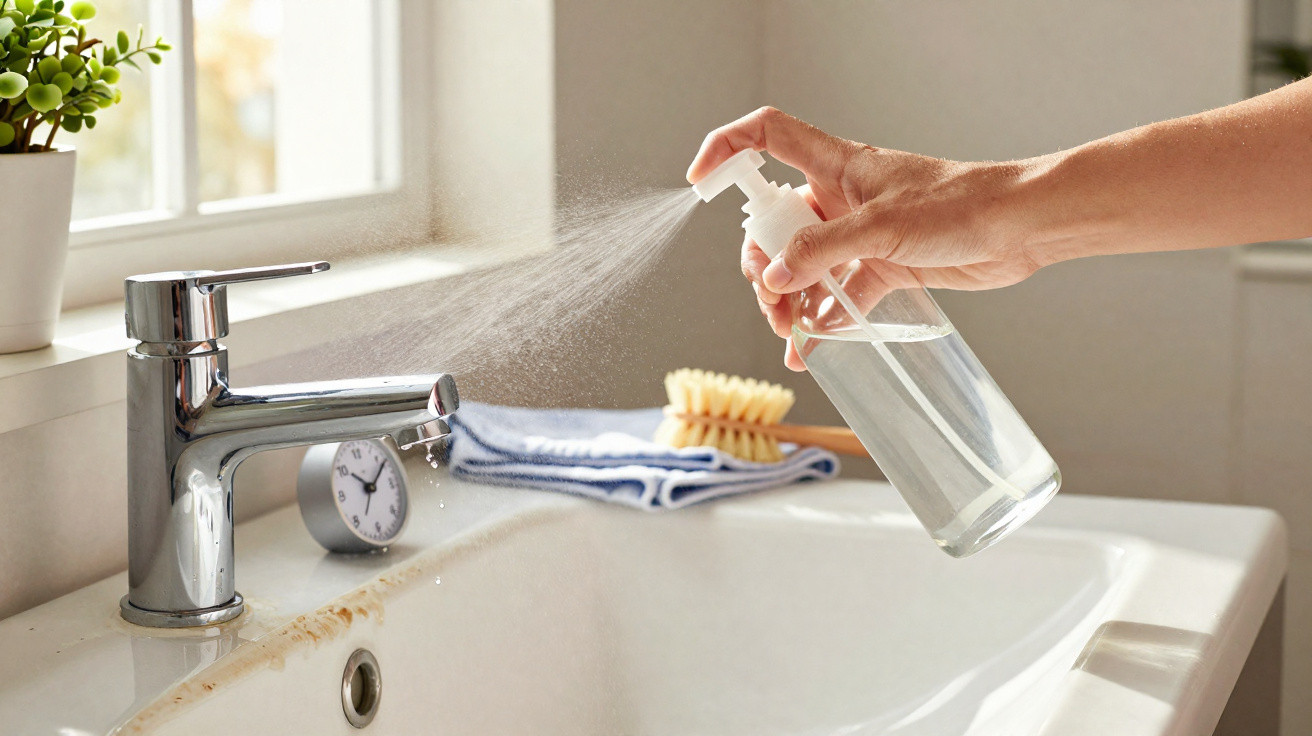
Treat vinegar as a patient technician: your task is to bring it into contact with limescale and keep it there. Begin with a generous spray, then create lasting contact. For taps and showerheads, wrap them in a microfibre cloth or paper towel soaked in vinegar; around difficult curves, a reusable elastic or reusable food-grade silicone band can hold the compress firmly in place. On upright glass, spray first and then lay on a soaked cloth to prevent the liquid running away. If liquid remains clinging to the limescale for a few minutes, you are on the right track.
The boosts that genuinely help are simple: warm the vinegar slightly in a safe container, re-wet it halfway through the dwell period to add fresh acid, and only gently agitate with a soft brush once the fizzing has reduced. With thick deposits, carry out a second short soak rather than increasing the scrubbing pressure. Rinse everything thoroughly, then wipe briefly with plain water to remove any remaining acidity. Do not use vinegar on natural stone or unsealed grout; choose a pH-neutral cleaner for these materials and reserve vinegar for surfaces that can safely tolerate acid.
- Test a discreet area first if the finish is delicate.
- Choose white vinegar for less odour and clearer results.
- Keep the room ventilated; acetic acid is mild but may smell pungent.
| Deposit Thickness | Suggested Approach | Expected Outcome |
|---|---|---|
| Light haze | 5–10 min soak, gentle wipe | Streak-free finish, no scrubbing needed |
| Moderate crust | 15–20 min soak, light brush, rinse | Scale releases in flakes/sheets |
| Heavy scale | Two 15–20 min cycles, minimal abrasion | Deep removal without surface damage |
Pros vs. Cons: Why Scrubbing Is Not Always Better
Cleaning with vinegar first is not a trend but a practical workflow. The Pros are persuasive: it lowers the effort required, helps preserve finishes and reduces chemical consumption, meaning fewer harsh descalers, less plastic and lower cupboard costs. Once you understand dwell time, it also delivers pleasingly consistent results. The Cons mainly involve patience: you need to wait, control run-off and keep away from vulnerable materials such as marble. When you are short of time, scrubbing early can be tempting, but it generally exchanges a quick start for damage and repeat cleaning later.
This is the real choice facing many busy households. Forceful scrubbing creates an immediate impression of progress, but it can leave micro-scratches and stubborn nuclei that allow limescale to re-form. Soak-first cleaning may seem slower initially, yet it is quicker by the end, leaves a smoother sheen and extends the time before the next clean. Whether you are a tenant protecting a deposit, a homeowner looking after shower glass or simply someone living in a hard-water postcode, chemistry-led care is the stronger option every time.
| Approach | Effort | Finish Quality | Risk to Surfaces | Repeat Frequency |
|---|---|---|---|---|
| Soak-first (vinegar) | Low | High sheen | Low (on safe materials) | Less frequent |
| Scrub-first | High | Variable | Moderate–High | More frequent |
Effective cleaning is equal parts science and choreography: spray, wait and then wipe. For limescale, contact time is the understated advantage that protects your wrists and your fittings. Use wrapped compresses on taps, warm the vinegar slightly and re-wet it before it dries; these small habits add up to major gains in shine and durability. The more you rely on chemistry, the less you need force-and the better your bathroom will look months later. What will you test first this week: a tap wrap, a section test on a glass panel or a kettle soak to see how much patience can achieve?




Comments
No comments yet. Be the first to comment!
Leave a Comment