
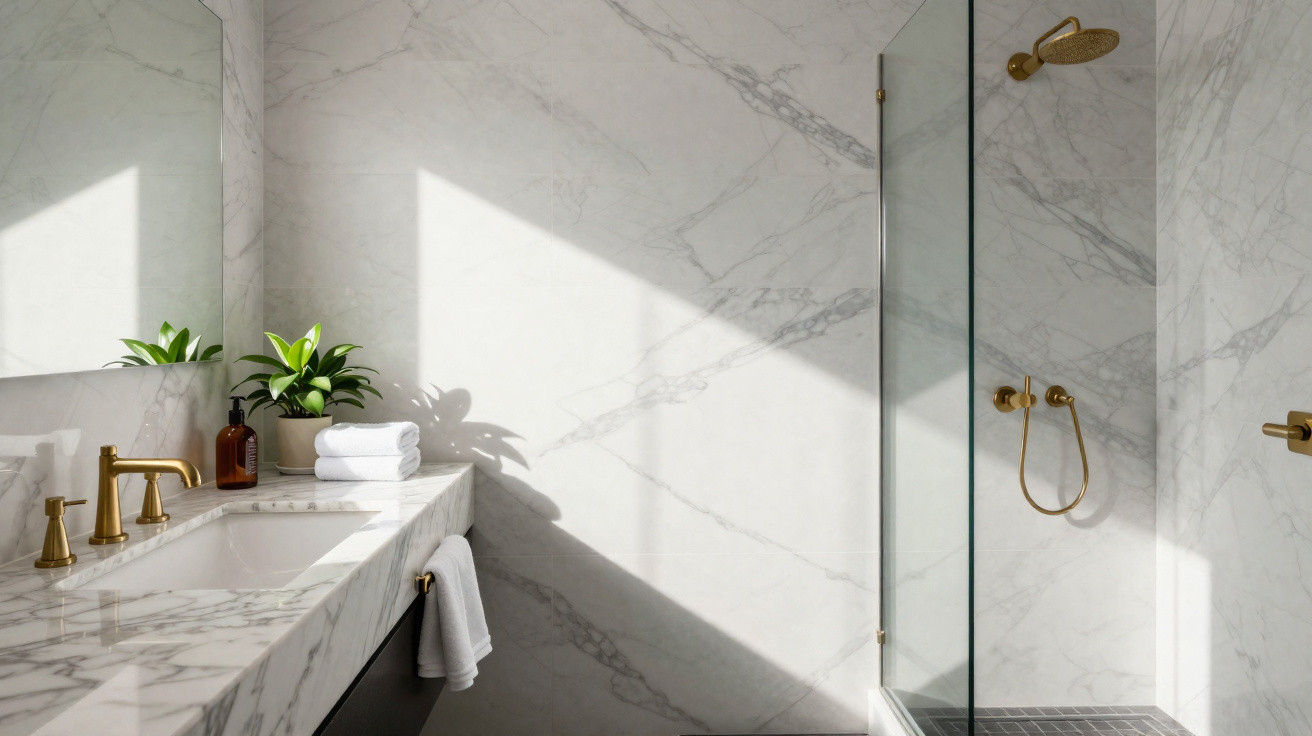
If you are planning a bathroom or considering a refurbishment, one clear trend quickly becomes apparent: grey, standard tiles are giving way to expansive, refined surfaces. Leading the way is a material once associated mainly with palaces and luxury hotels, but which is now appearing in ordinary detached homes: marble.
Why traditional tiles are losing their appeal
For years, tiles were seen as the only real bathroom option: easy to maintain, affordable and available in an enormous range. Yet this is increasingly becoming their drawback. Many bathrooms are virtually indistinguishable, while the familiar 30 × 60-centimetre tiles are starting to feel generic.
At the same time, expectations of the bathroom have changed dramatically. It is no longer expected to be purely practical; it should feel like a compact spa, a private retreat with a touch of the hotel-holiday experience every day. Standard tiles and a wellness lounge are only a partial match.
“People building today no longer plan the bathroom as a ‘wet room’, but as a lifestyle space – and look for materials with character.”
This is where marble excels. Every slab is one of a kind, with veining that resembles natural watercolours across stone. This individual appearance is increasingly replacing the sterile look of tiled surfaces.
Marble in the bathroom: timeless, sophisticated and suddenly practical
Marble is not a passing fad; for centuries, it has represented elegance. Historic villas, sculptures and grand entrance halls are full of it. What is new is that this stone is now finding its way into bathrooms in entirely ordinary homes, sometimes even into the downstairs cloakroom.
The reason is that marble fits today’s interior trends perfectly. Many schemes combine retro elements from the 1950s with restrained contemporary design. Marble creates a link between nostalgia and clarity, looking both classic and fresh at once.
Its tactile qualities add another benefit: the cool, smooth surface feels premium, light is softly reflected by the stone, and its colours change with the time of day. As a result, the room feels alive without becoming overpowering.
More than appearance: the practical facts about marble
When marble comes to mind, luxury pricing is often the first thought. However, the stone also offers several tangible advantages that matter when calculating overall costs.
- Durability: When properly treated, marble can last for decades. It ages gracefully and can be restored.
- Added value: A high-quality bathroom can increase a property’s value, and marble is a genuine selling point in a property listing.
- Versatility: From floors and walls to vanity worktops, marble can be incorporated almost anywhere.
Its higher initial cost can therefore pay off over the long term, especially compared with inexpensive tiles that can look “worn out” after ten years and often need replacing.
How marble is replacing bathroom tiles
Marble’s rise in bathrooms is far from subtle; it is clearly visible. Interior professionals use it strategically to break up the familiar tiled look.
Large formats instead of a sea of grout lines
One major advantage is that marble is usually installed as large slabs on walls and floors. This removes the countless grout lines that can make bathrooms feel rigid and fragmented. The room appears calmer, more spacious and more contemporary.
Statement features rather than full cladding
There is no need to cover an entire bathroom in marble. A few selected features are often enough to outshine tiles visually:
- one uninterrupted marble wall behind the shower or bath
- a substantial stone vanity worktop instead of standard ceramic
- a recessed shelf or ledge as a striking focal point
The remaining areas can still be tiled, but will look considerably more premium alongside it.
Current bathroom design trends with marble
It becomes particularly interesting when marble is paired with other materials rather than used alone. Designers deliberately play with contrasts here.
Bold contrasts with dark tones
Combinations of pale marble and dark details are especially popular. Black taps, anthracite cabinets or deeply dark marble varieties create a graphic, almost glamorous effect. It feels like a boutique hotel rather than a standard bathroom on a new-build estate.
Metal and marble: warm sophistication
For a softer result, choose brass or copper taps and lighting. These warm metallic tones reduce the severity of the cool stone appearance, creating a homely atmosphere that is almost living-room-like.
Soft colours for a spa-like feel
Pastel shades around the stone make the bathroom more tranquil and relaxing. Popular choices include:
| Shade | Effect in the bathroom |
|---|---|
| Rose | romantic, soft, subtly glamorous |
| Sage green | natural, calming, fresh-looking |
| Light blue | clear, clean, lightly nautical |
Combined with marble, these shades can quickly turn a bathroom into an understated wellness zone without making it feel overloaded.
How to care for marble properly
For all its appeal, marble contains calcium and is therefore more sensitive than many porcelain stoneware tiles. Anyone introducing stone into their bathroom should understand a few key rules.
Protection from the start
As soon as installation is complete, the surface should be treated with a high-quality impregnating or water-repellent sealant. This invisible layer prevents water, shampoo and soap from penetrating the stone as deeply.
The second rule is to avoid harsh cleaners. Acid-based bathroom products, vinegar and cream cleaners can attack the surface and leave it dull. Better options are:
- pH-neutral stone cleaners
- mild soap solutions
- soft cloths rather than abrasive sponges
Dealing with everyday damage
If a heavy object falls on a sharp edge, marble can chip or crack. In these cases, a specialist can usually grind down or repair the affected area. Small stains and dull patches can often be removed by polishing again.
“Marble requires a little more attention than an ordinary tile – but rewards you with a look you will hardly ever tire of.”
Who is switching to marble worthwhile for?
Marble in the bathroom is not suitable for every project. A few questions can help with the decision:
- Will the bathroom be used for the long term, or will the property be sold within a few years?
- How important are effortless maintenance and complete resistance to wear?
- Does a distinctive look matter to the resale value?
Anyone building with quality, longevity and added value in mind will find marble a compelling alternative to standard tiles. For heavily used family bathrooms with several young children, durable porcelain stoneware may be the more sensible choice – or a thoughtful combination of both materials.
Alternatives and additions when the budget is limited
Not every budget stretches to genuine stone. Ceramic and porcelain stoneware tiles with a marble effect have therefore become established in recent years. They reproduce the veining rather convincingly, require less maintenance and cost considerably less.
A particularly effective approach is a material mix:
- real marble in a prominent location, such as behind the bath
- more affordable marble-effect tiles in peripheral areas
- simple, plain-coloured tiles in zones that attract less attention
This creates the appearance of a luxurious stone bathroom without the budget spiralling entirely out of control.
What else you should know about marble in the bathroom
From a sustainability perspective, natural stone can initially seem problematic because it has to be quarried and transported. At the same time, it benefits from an exceptionally long service life and from the option of grinding down and reusing surfaces rather than disposing of them. Those who prioritise shorter transport distances can ask for locally sourced, or at least European, stone.
Underfloor heating beneath marble is also an appealing option. The combination of a cool visual effect and a pleasantly warm surface creates an especially comfortable feel in the room, even barefoot in winter. This makes it even clearer why so many homeowners are leaving their old tiles behind in favour of a stone that turns a functional bathroom into a true favourite room.
Comments
No comments yet. Be the first to comment!
Leave a Comment