
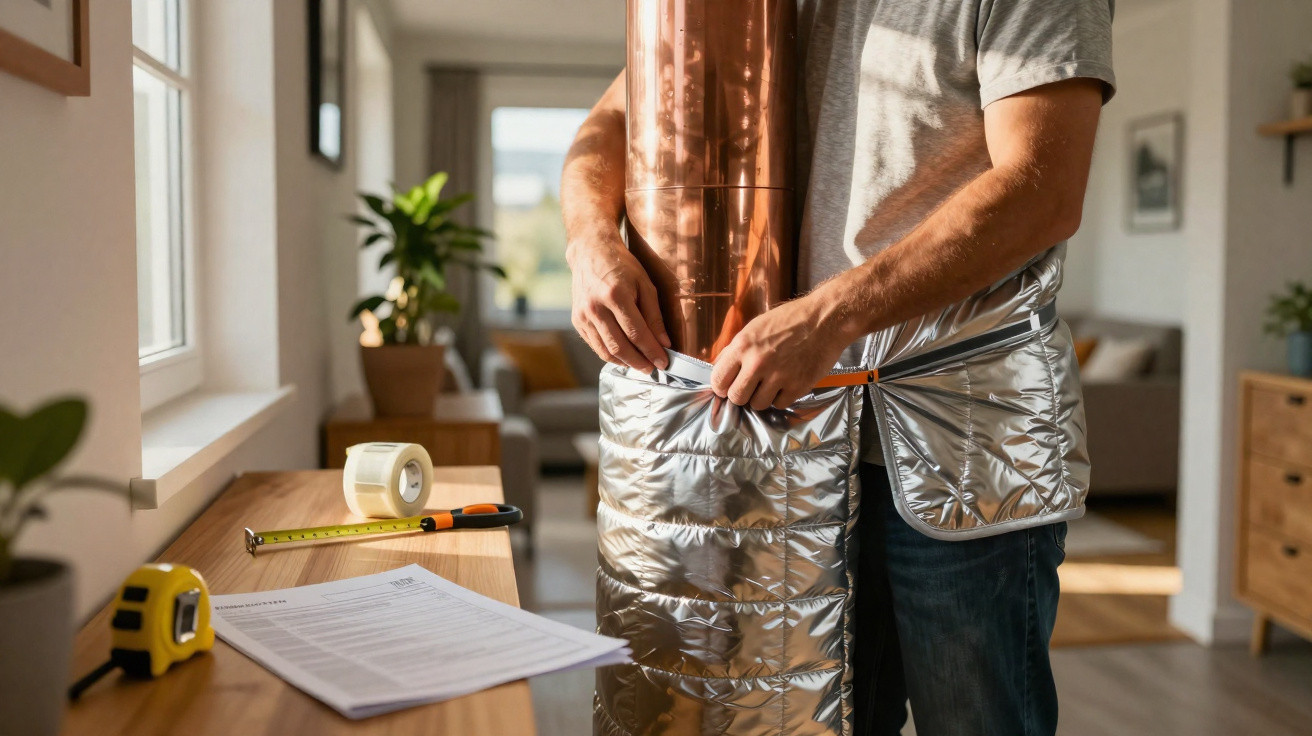
Even with all the gadgets running in the background, one workhorse is easy to overlook: the hot water tank. Because it keeps water up to temperature around the clock, it can quietly take a sizeable bite out of your energy spend, particularly through the colder months. The good news is that fitting a simple insulating “jacket” can reduce those losses and bring your bills down by a noticeable amount.
Why your hot water tank is costing you more than you think
In a lot of homes in the UK and across Europe, the hot water cylinder is among the largest single users of energy indoors. It heats the water, then keeps it hot, and it does so day and night - whether you are taking a shower or away for the weekend.
If the cylinder is positioned in a chilly spot - such as a garage, loft, basement, or an unheated utility area - it sheds heat more quickly. Warmth radiates from the metal casing into the surrounding air, so the boiler or immersion heater has to switch on again to raise the water back to the target temperature.
Without extra insulation, a hot water cylinder can lose around 20% of its energy through simple heat escape into the room.
That lost heat is, in practice, money disappearing into the air. And even newer cylinders with factory insulation often still gain from an additional layer, especially if the location is draughty or not heated.
How an insulating “jacket” cuts those losses
A cylinder insulating jacket does exactly what the name suggests: it is a padded cover that wraps around the tank to limit heat loss - essentially a winter coat for your hot water.
With a barrier between the hot surface and colder air, heat leaks out more slowly. In practical terms:
- the water inside remains hot for longer
- the boiler or heating element runs less frequently
- the cylinder holds a steadier temperature
A basic jacket and insulated pipe sleeves can trim hot water energy use by 15–20%, often saving around £50–£60 a year.
You will see an even bigger improvement if you insulate the first metres of hot water pipework leaving the cylinder. Uninsulated pipes behave like little radiators, continually dumping heat into the room.
What does a cylinder jacket cost – and how hard is it to fit?
For most households, this is a straightforward, low-risk improvement. Ready-made cylinder jackets typically cost about £15 to £50, depending on your tank size and how thick the insulation is.
Installation in three simple steps
For standard jackets sold in DIY shops, you usually will not need a plumber or electrician.
- Clean the surface: Remove dust and grime from the outside of the cylinder so straps and any adhesive sections can grip properly.
- Wrap the jacket: Fit the panels (or the single wraparound piece) around the tank, lining up the cut-outs with pipes, valves, and any access panels.
- Secure it: Fasten ties, straps, or adhesive bands so the jacket sits neatly and tightly, but without squashing the insulation excessively.
For a typical domestic cylinder, the task generally takes 10 to 20 minutes. There is normally no drilling involved and, in most cases, no need to turn off the water supply, because you are not interfering with the internal pipework.
The best materials for hot water tank insulation
Jackets vary, and the insulation type (and thickness) has a clear impact on how well they perform.
- Polyurethane foam: Light, very insulating, and easy to mould. Common in pre-insulated cylinders and available in some add-on kits.
- Mineral wool (glass wool or rock wool): Strong thermal insulation with useful sound-dampening, which can help if cylinder noise is an issue.
- Reflective foil layers: Often paired with foam or wool. The reflective surface bounces radiant heat back towards the cylinder, which can be particularly helpful in cold lofts or garages.
Pay attention to insulation thickness and the stated thermal resistance (often given as an R-value). Thicker jackets with higher R-values cut heat loss more effectively, though they can be slightly pricier.
How much can you realistically save?
Hot water consumption differs from one household to another, but broad examples give a sense of what to expect.
| Scenario | Annual hot water use | Potential saving with jacket + pipe insulation |
|---|---|---|
| Small flat, one or two people | Up to ~1,200 kWh | £25–£40 per year |
| Typical family home | ~1,600–1,800 kWh | £40–£60 per year |
| Large household, high hot water use | 2,000 kWh and above | £60+ per year |
With today’s energy prices, the cost is often recovered within a single heating season. If you pay £30 for a jacket and it reduces bills by £50 a year, it has effectively paid for itself within just a few winter months.
Extra perks: comfort, noise and appliance lifespan
The benefits are not only financial. When a cylinder is well insulated, it loses heat more slowly, so the hot water temperature tends to feel more consistent - and you are less likely to end up with a lukewarm shower late in the day.
If you choose a mineral wool-based jacket, you may also notice less of the clicking and creaking that can occur as tanks warm up and cool down. In a small flat, or where the cylinder is near a bedroom, this can make nights noticeably quieter.
By reducing the number of reheating cycles, insulation can ease wear on elements, thermostats and valves, extending the tank’s useful life.
Fewer reheating cycles also mean fewer rapid temperature changes inside the cylinder, which reduces strain on internal parts and can postpone an expensive replacement.
Simple precautions before you start
Before you wrap the cylinder, a handful of checks are worth doing.
- Confirm you will still be able to reach safety valves, thermostats, and inspection hatches once the jacket is fitted.
- Avoid covering any warning labels or operating instructions.
- Keep insulation clear of flues or other very hot surfaces on gas or oil systems, and follow the manufacturer’s required clearances.
- If the cylinder is very damp or badly corroded, get professional advice first - repairs or replacement may be needed.
Some older immersion heaters and cylinders operate at very high temperatures. Setting the thermostat to a sensible level - typically around 60 °C to prevent bacteria while avoiding unnecessary overheating - can reduce energy use further when combined with insulation.
Combining a jacket with other small‑scale upgrades
A jacket delivers the best results when it is part of a small package of improvements rather than a one-off gesture. Adding foam pipe sleeves to the first two to three metres of hot water pipework reduces heat loss between the cylinder and your taps. Swapping to low-flow shower heads also reduces the amount of hot water used, without compromising comfort.
Where you have a timer or smart controls, heating the cylinder during off-peak tariffs (where available) can increase the savings. The better insulated the tank is, the longer that cheaper stored heat remains available later.
Making sense of the numbers on your bill
If the terminology feels unfamiliar, a kilowatt-hour (kWh) is simply a unit of energy. Your supplier charges a set amount per kWh. So, if your cylinder uses 1,800 kWh a year to provide hot water and your rate is, for example, 30p per kWh, that portion of the bill totals £540.
Reducing that usage by 15–20% through insulation means 270 to 360 fewer kWh. At the same unit price, that is £80–£110 that stays in your account. Actual savings depend on tariffs and how you use hot water, but the logic is straightforward: every kWh you avoid wasting is one you do not have to buy.
This kind of small, practical improvement will not solve the energy crisis by itself. However, for renters, homeowners, and anyone keen to avoid disruptive work, adding a simple insulating jacket to a hot water tank remains one of the easiest ways to push back against rising winter bills.





Comments
No comments yet. Be the first to comment!
Leave a Comment