
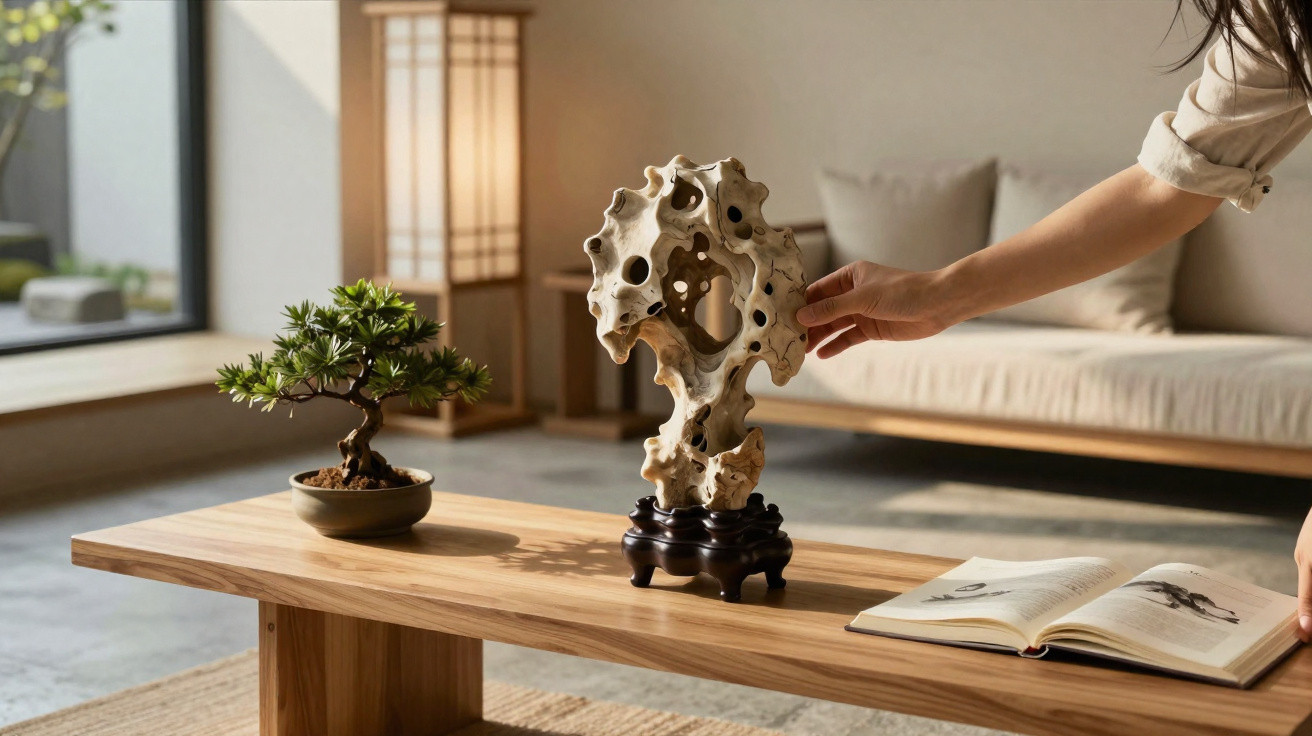
The search for calm, well-balanced rooms has given rise to a refined new direction in modern interior décor. Natural elements with ancient origins bring distinctive textures that enhance minimalist living spaces, creating an atmosphere of quiet contemplation and understated elegance in today’s most sophisticated contemporary spaces.
How does the scholar stone transform interiors?
Historically known as gongshi, this ornamental piece stands out for its organic shape and the details carved by time itself. Placed on display shelves or a coffee table, it softens the severity of straight lines, adding unexpected visual richness and a distinctive sense of personality to the room.
Introducing this element into minimalism helps establish a striking focal point that immediately draws the eye. Its imperfect, natural beauty offers a refined contrast with smooth surfaces, creating a balanced harmony that can completely shift the aesthetic perception of modern interiors.
Below are the key qualities that make this rock so highly prized in residential projects:
- Natural form: Shows organic silhouettes shaped by nature over centuries.
- Contemplative focus: Encourages moments of calm, relaxation, and reflection in everyday surroundings.
- Sophisticated aesthetic: Delivers high visual impact without overcrowding the available space.
- Cultural heritage: Links modern décor to the traditional philosophy of ancient Chinese gardens.
- Rich texture: Features tactile grooves that contrast beautifully with polished finishes.
What are the historical origins of the scholar stone?
Originating in ancient China, this valued rock was collected by scholars and intellectuals as a source of strong spiritual inspiration. Revered in traditional Asian gardens, it symbolised nature’s vastness condensed into a smaller scale-ideal for meditation and for nurturing contemporary Eastern design.
Over time, the idea travelled across centuries and beyond geographic borders until it reached Western homes. Today, the piece functions as a sculptural artwork that celebrates deliberate simplicity, bringing ancestral spirituality into seamless alignment with the aesthetic minimalism of today.
How can you apply this concept in contemporary décor?
Because of its versatility, this rock can be introduced easily in different rooms throughout the home. Displayed on its own on a low table or sideboard, it creates a visual point of interest that removes the need for multiple unnecessary decorative objects in the space.
Harmony and Focus
Perfect Balance
Choosing the right wooden base highlights the stone’s curves and natural openings with elegance. Keeping the surrounding area completely clear ensures the piece receives the full prominence it needs to be properly appreciated.
Showing the piece under gentle, directional lighting helps bring out its deep textures and complex outlines. This careful staging elevates the natural element, turning the stone into a living work of art that communicates tranquillity and exceptional sophistication within a modern space.
Consider these ideal placements for your decorative rock:
- Coffee tables in the main living room.
- Upper shelves of well-lit minimalist bookcases.
- Sideboards installed in the home’s entrance hall.
Why does minimalist aesthetics elevate this stone?
Minimalism is built on removing excess so what truly matters can stand out. In such a clean setting, an ornamental rock takes on a magnificent sculptural presence, becoming a statement piece that fills negative space with elegance and deliberate artistic purpose.
The interplay between the stone’s organic shapes and the straight lines of modern furniture creates a pleasing, dynamic balance. This complementary relationship elevates natural materials, reinforcing our connection with the Earth through a textured composition that remains free from exaggerated artifice.
Here are the visual benefits that come from this harmonious integration:
- Balance between structural straight lines and organic curves.
- A dramatic reduction in the build-up of small decorative items.
- A notable increase in the feeling of warmth and naturalness.
Where can you find more inspiration for Eastern design?
Seeking authentic references is essential for creating residential projects that feel balanced and genuinely harmonious. Studying classical Asian architectural principles helps explain how small natural details can completely shift the energy and sophistication of any modern space with great elegance.
To deepen your understanding of ancestral pieces in today’s architecture, it is worth exploring the ancient Japanese object that beautifies compact homes. This complementary element adds a distinctive charm, broadening your view of minimalist design applied with complete success.






Comments
No comments yet. Be the first to comment!
Leave a Comment