
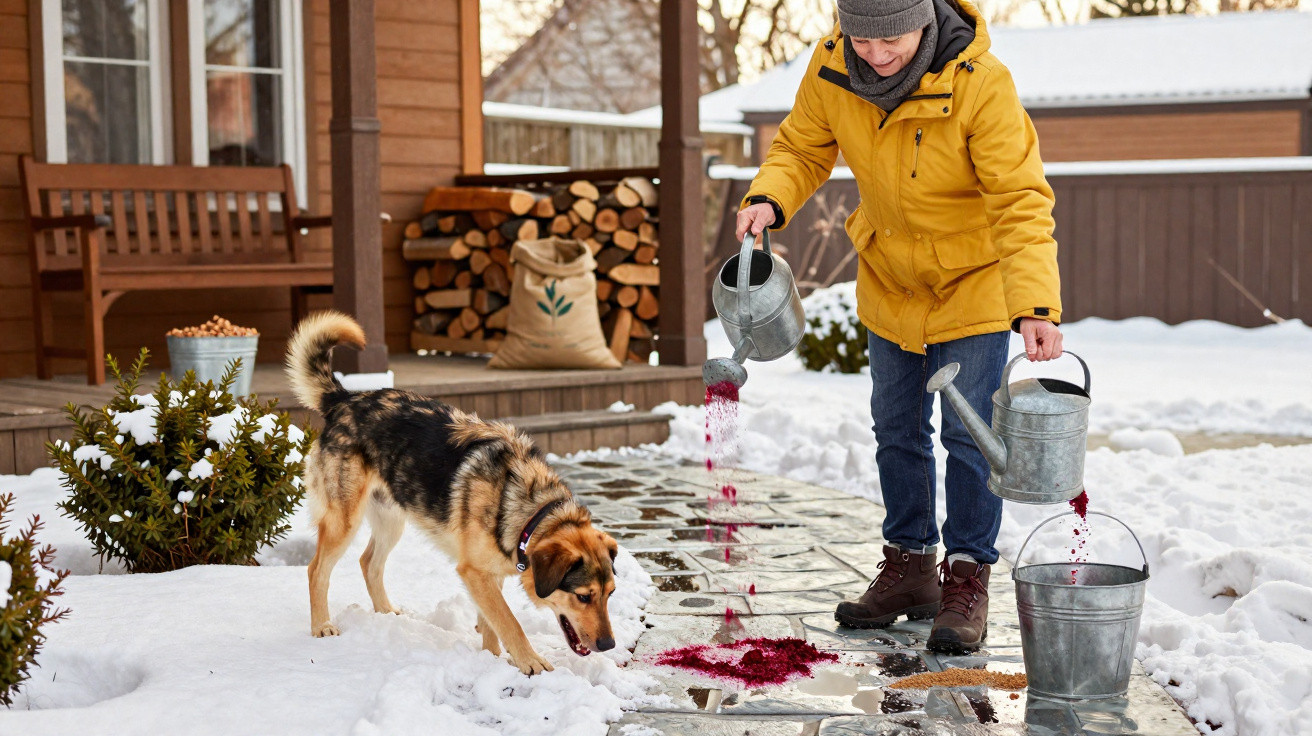
Across North America and Europe, councils and householders alike are searching for ways to keep pavements safe in winter without damaging soil, scorching pets’ paws or accelerating rust on vehicles. A newer wave of de-icers, paired with practical low-tech habits, is beginning to reshape what we do about ice right outside our homes.
Why rock salt is getting sidelined
Conventional road salt - most often sodium chloride - is inexpensive and works quickly, yet it brings plenty of downsides. It can leach into groundwater, dehydrate plants, eat away at concrete and metals, and irritate skin and paws. In tightly built-up towns and cities, those effects quickly stack up.
Across a single winter, a typical city can spread tens of thousands of tonnes of salt, much of which ends up in rivers and garden soil.
That growing environmental cost is why many councils and residents are shifting towards options that still reduce slips and falls. The aim is not to stop de-icing altogether, but to apply smaller quantities of more suitable products, at better times, and to combine them with straightforward traction aids.
Two strategies: melt the ice or grip it
Most winter safety measures fit into two main approaches. One is to melt ice (or stop it bonding strongly to the ground). The other is to increase traction so footwear, pushchair wheels and bicycle tyres can grip even if some ice remains.
Think of it as a toolkit: a melting product for thin, stubborn ice, and a grippy material for brutal cold or sensitive areas.
A further option is often missed: preventing adhesion before it starts. Applying a liquid treatment ahead of snowfall can make later shovelling far easier and can sharply reduce how much product you need overall.
Softer de-icers: calcium chloride, magnesium chloride and CMA
There are several salt-based choices that work in colder conditions and, when used properly, can be less aggressive than standard rock salt.
Calcium chloride for deep cold
Calcium chloride (CaCl₂) is a common step up. It draws moisture from the air and gives off heat as it dissolves, which helps it break down ice rapidly.
- Effective down to around -32 °C (-25 °F)
- Acts quickly on steps, tight corners and shaded spots
- Commonly sold for household use as pellets or flakes
Used with restraint, it can reduce the total amount of de-icer required. If you apply too much, however, it can still put stress on soil and nearby plants, so many specialists recommend saving it for the iciest patches rather than treating an entire drive.
Magnesium chloride for pets and plants
Magnesium chloride (MgCl₂) is widely chosen in homes with dogs or where borders sit close to the path. It generally remains effective to roughly -23 °C (-10 °F) and often leaves less gritty residue than sodium chloride.
Animal welfare and veterinary organisations frequently describe it as less irritating to paws than rock salt, though any de-icer can cause issues if pets ingest large quantities. Many “pet-friendly” products sold in shops use magnesium chloride and add a traction ingredient as well.
CMA: the anti-stick specialist
Calcium magnesium acetate (CMA) is different: it is not a chloride. Rather than tackling thick ice head-on, it is designed to stop snow and thin ice from bonding firmly to the surface.
| Product | Main role | Typical use |
|---|---|---|
| Calcium chloride | Fast melting in deep cold | Steps, steep drives, shaded paths |
| Magnesium chloride | Gentler melting | Areas used by pets and near plants |
| CMA | Prevention and anti-adhesion | Before snow, on pavements and car parks |
Because CMA is usually pricier, it is often deployed as a preventative spray on high-risk areas such as outside hospitals or railway stations. It breaks down into compounds that are generally less harmful to soil structure.
Beet brine and homemade mixes
One of the most noticeable alternatives in recent winters has been beet brine - a dark, syrupy liquid made from sugar beet processing and blended with a small amount of salt. Some North American councils already spray it on roads before snow arrives.
By helping salt stick to the road and slowing refreezing, beet brine can cut total salt use while keeping surfaces workable.
For householders, beet brine is usually used sparingly on existing tarmac or concrete, rather than on new concrete or directly over delicate beds. It tends to work best as a preventative treatment or during snowfall, not as a magic fix for thick, polished ice.
On a smaller scale, some people make a simple de-icing solution for a step or porch: lukewarm water with a little washing-up liquid and a small amount of rubbing alcohol. The detergent reduces how strongly ice clings, while the alcohol depresses the freezing point.
This sort of DIY mix is only suitable for very thin ice films, and it should always be followed by brushing away slush so it does not refreeze into a smooth, glass-like layer.
Traction without melting: sand, ash and grit
When temperatures drop sharply - or when you want to avoid adding moisture near planted areas - traction materials are often the better choice.
Sand and wood ash for quick grip
Ordinary sand remains a go-to. It provides immediate grip, and its darker colour can absorb a little warmth from the sun on brighter days. The trade-off is that it can block drains and will need sweeping up once conditions thaw.
Wood ash from a clean-burning stove can deliver a similar underfoot improvement at almost no cost. A light dusting over an icy path can make a real difference. Ash may also offer a mild de-icing effect thanks to its minerals and residual warmth, but it can be messy and should not be laid down in thick piles.
Wood chips and crushed stone
Chunkier options such as fine wood chips tend to stay put through repeated freeze–thaw cycles, which can make them handy on slopes or gravel drives. Many households also like that they are less likely to be carried indoors.
In some rural areas, people use “chicken grit” or “traction grit” - typically crushed granite or a similar stone sold for poultry. The sharp, angular grains bite into ice and provide strong grip without dissolving into the ground. You only need a light scattering, and much of it can be swept up and reused.
Heated mats and high-tech driveways
Where there are mobility concerns or steep steps, technology can reduce - and sometimes remove - the need for chemicals.
Electric heated mats placed on the top few steps or along a narrow walkway can clear a thin layer of snow and frost at the press of a button. They operate only when required, and they can be rolled up and stored away once spring returns.
At the more expensive end are fully heated driveways and paths. Electric cables or pipework installed beneath the surface warm it from below. These systems can consume a lot of energy and generally only suit particular settings, such as exposed hillsides or shared routes outside busy blocks of flats.
How to choose the right option for your pavement
What works best depends on your local weather and what you need to safeguard - people, pets, plants, or all three.
- Mild winters, lots of pets: choose magnesium-based products and traction; avoid heavy use of any chloride near lawns.
- Very cold climates: keep a small container of calcium chloride for the worst areas, and use sand or grit more widely.
- Gardens close to paths: rely on abrasives, use CMA as prevention, and prioritise early shovelling rather than heavy de-icing.
- Small urban balconies or steps: heated mats and tiny doses of liquid de-icer may be sufficient.
Thinking ahead – clearing early, using preventive sprays and targeting only high-risk areas – can cut your chemical use by half or more.
Key terms and real-world scenarios
Winter safety advice often treats “anti-icing” and “de-icing” as though they mean the same thing, but they do not. Anti-icing is what you do before or during snowfall to prevent the first layer from bonding tightly. De-icing is what you do later, once snow has compacted or ice has hardened.
Picture a typical suburban pavement. If you apply a thin coat of CMA or a light brine ahead of a forecast freeze, any overnight snowfall is usually far easier to shift with a shovel the next morning. Often a quick clear is enough, followed by a small sprinkle of sand on any remaining slick areas. Miss that early treatment and you may end up hacking away with a metal scraper and using much more chemical de-icer to achieve a similar outcome.
A second everyday example is the school run. Many parents worry about children slipping on steps while also thinking about what ends up on the dog’s paws. In that situation, people often use a more pet-friendly de-icer on the steps, then back it up with crushed stone or grit along the pavement edges where plants are growing.
None of these decisions has to be all-or-nothing. Minor changes - moving from pure rock salt to a blended product, using beet brine only as a pre-treatment, and saving stronger de-icers for critical points - can reduce environmental damage while keeping winter pavements usable.





Comments
No comments yet. Be the first to comment!
Leave a Comment