
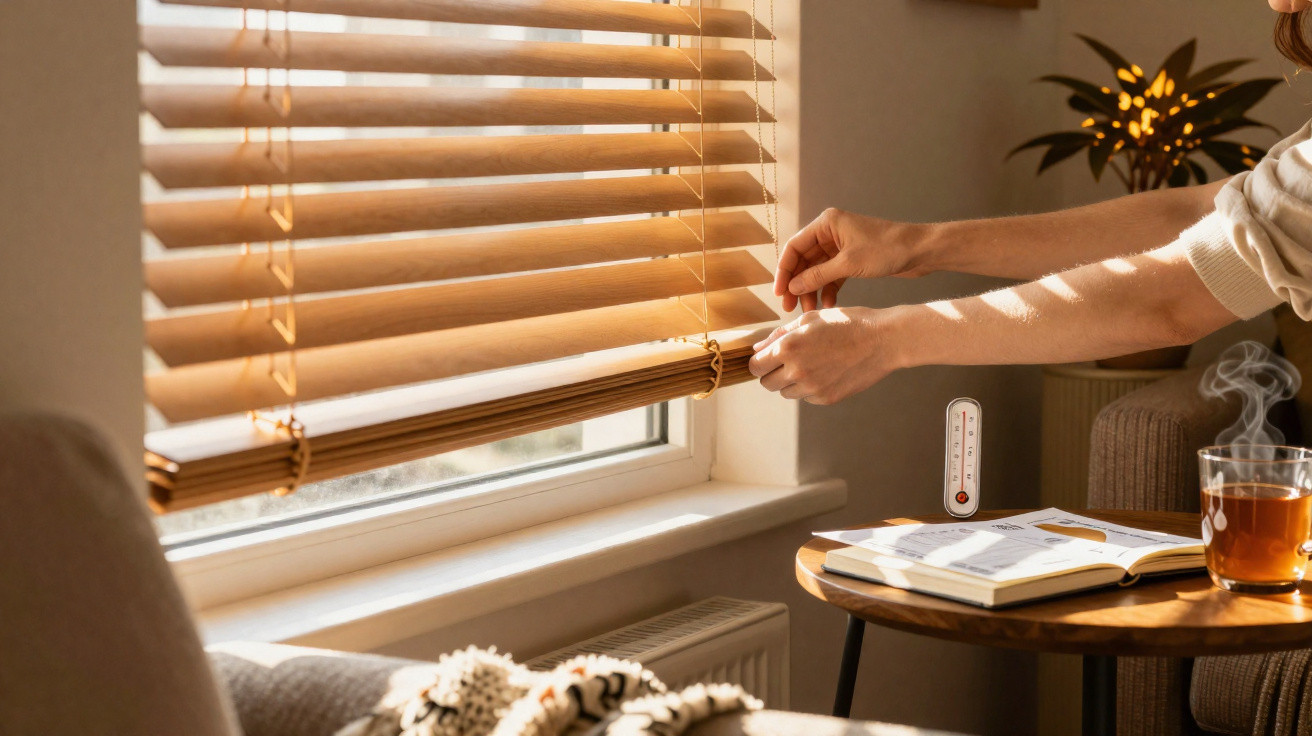
The woman wearing a beige jumper pauses, her hand resting on the window handle.
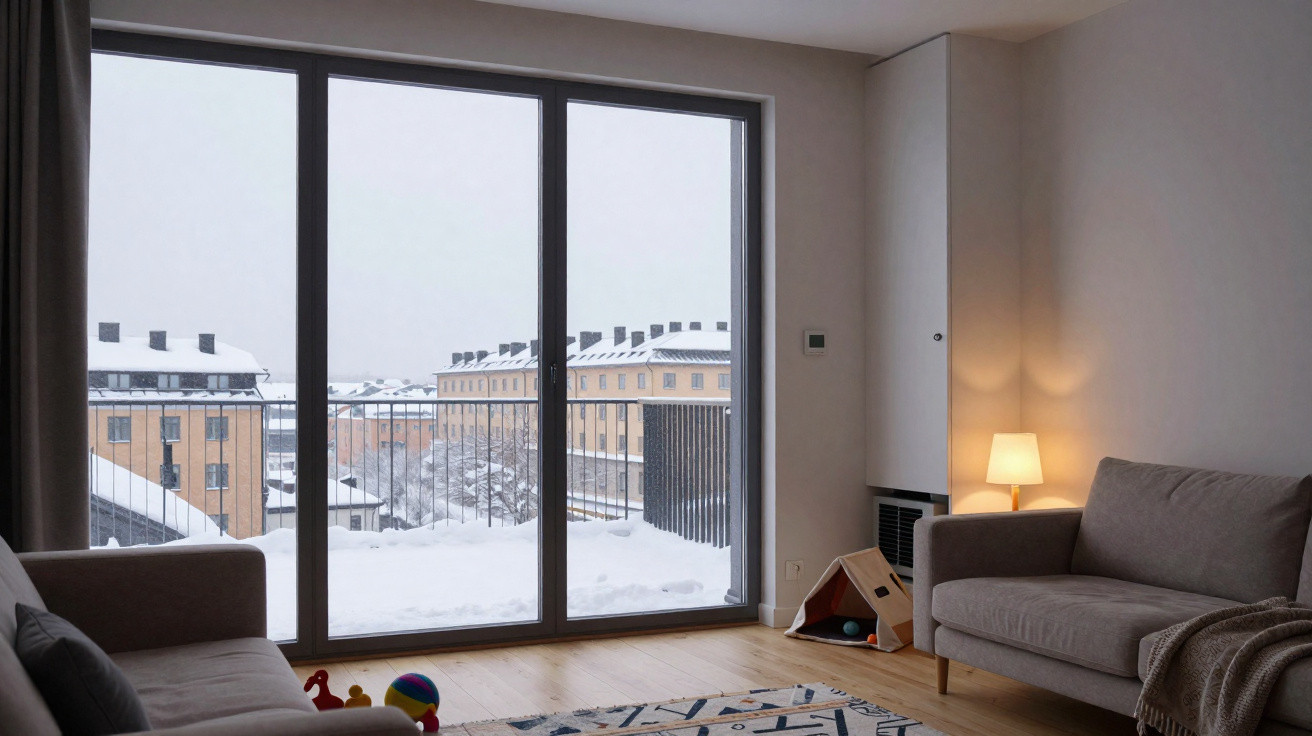
Beyond the glass, the sky is becoming orange in that peculiar winter light which makes everything seem colder than it really is. Indoors, the radiator gives off a quiet hum as it battles the chill seeping through the window.
She asks herself whether to shut the shutters now or wait for proper darkness. Her neighbour has mentioned saving “up to a quarter” on heating simply by getting the timing right. It seems slightly magical and perhaps overstated… but her latest energy bill is still lying on the kitchen table, a silent reproach.
Along the road, shutters close in sequence, forming a daily ballet of hinges and slats. Nobody says it aloud, yet everyone is privately testing ways to reduce the figures on their bills.
She presses the handle down. In an instant, the atmosphere in the room shifts.
She does not know that she has just made one of the least expensive energy choices of her entire winter.
Why the time you close shutters affects your heating bill
Most of us see shutters as a privacy feature, or as protection from noise and early daylight. During winter, however, they work rather like enormous fold-out jumpers for your windows. Shut them too late and heat has already escaped through the glass for hours. Shut them too early and you forgo the free warmth the sun could have supplied.
The brief period between “the sun no longer warms your room” and the arrival of the night-time cold is when money is either saved or lost. The problem is that no notification appears to tell you, “Now is the smart moment to close your shutters.”
Instead, we make it up as we go along. Our heating bills bear the cost.
For years, France’s national energy agency, ADEME, has stated that roughly 10 to 15% of the heat in a poorly insulated property is lost through its windows. With thin glazing and draughty frames, the proportion can rise far higher. Shutters form an added barrier, rather like placing a further door between your home and the cold air.
Households that have adopted the straightforward routine of letting in sun by day and closing shutters at dusk have reported reductions of between 5 and 25% in heating use. They achieved this without smart thermostats or sophisticated connected valves: only shutters. It may sound implausibly simple, until you consider one basic fact: glass is very poor at retaining heat.
Consider all those evenings when the sitting room gradually became chilly while the shutters stayed open “because it’s not night yet”. In that mismatch between habit and reality, money quietly drifts away.
In physical terms, windows are among the weakest points in a home’s thermal envelope. Even with double glazing, there is a marked difference between an exposed pane and one protected by shut shutters and closed curtains. The air held between the window and shutter behaves somewhat like a duvet, creating a still layer that slows heat loss.
When sunshine reaches the glass, it delivers passive solar gain and gives your radiator a little respite. As soon as the sun disappears behind hills or buildings, the situation reverses. The same pane that admitted warmth becomes a cold surface, radiating chill into the room. Your heating system must then work harder, quietly running for longer or at a greater output.
Savings result from ending this phase in which the glass acts as a cold plate as soon as it begins. By closing shutters after the final useful sunlight, you retain the day’s warmth in much the same way as sealing a thermos.
Shutters: the ideal timing for an evening routine that works
There is no single universal time, nor a magical “6:32 pm” suitable for every household. The right point depends on your location, the direction your rooms face and the time of year. One simple principle works remarkably well: close your shutters when daylight no longer provides warmth in the room you are in. Do not wait for the sun to vanish from the sky; act when brightness is no longer accompanied by genuine heat.
Try a simple test one evening. Sit close to the window towards the end of the afternoon and touch the pane. Once it moves from “mild or slightly warm” to “fresh or outright cold”, you have your cue. At that point, shutters become a tool for saving money rather than merely a routine learned from your parents.
On a bright winter’s day, this key moment may arrive around 30–60 minutes before complete darkness. It will come sooner on an overcast day. Some households even set a seasonal reminder on their phone, adjusting it by a few minutes according to the weather. It is not high-tech; it simply requires awareness.
In a small street in Lyon, a retired couple began closing their shutters “with the first cold touch of glass” after talking to their daughter, an energy consultant. During the first year, they altered nothing else: the boiler, thermostat and general routines all stayed the same. Their only change involved the shutters and, on the coldest days, closing thick curtains immediately afterwards.
When they compared their gas use with that of the previous year, the outcome was obvious: consumption was roughly 18% lower across the heating season. They had not begun living in darkness; they had merely stopped heating the neighbourhood by leaving the panes uncovered once they became icy.
They also began to spot clear patterns. Their south-facing sitting room could remain open slightly longer. The north-facing bedroom required shutters earlier, particularly when it was windy. Eventually, they turned it into a game, seeing who could remember the right time for each room.
This is how an unremarkable act such as closing shutters can discreetly become a small strategy against increasing prices.
Technically, shutters limit heat loss by reducing convection and radiation. Outside air, especially in windy weather, can no longer ‘wash’ across the glass so forcefully. The cold remains separated from the home by the slim pocket of air between the shutter and pane. Indoors, warmer room air is not directly exposed to such a cold surface, meaning fewer draughts and less ‘cold radiation’ when sitting by a window.
There is a psychological benefit, too: a room with its shutters closed and curtains drawn immediately feels more sheltered and cocoon-like. You will often tolerate a slightly lower thermostat setting because the room feels less severe. According to several European studies, reducing the temperature across a home by only 1°C can cut heating demand by around 7%.
The best timing is therefore both physical and mental. You are doing more than closing slats: you are telling yourself that the day has ended and the warmth now stays indoors.
Refining your shutter routine for genuine savings
The most efficient approach is almost deceptively straightforward: welcome daylight and sunshine during the day, then close at the first real chill. By night, lock the warmth in as if your home were a thermos. Begin with the rooms you heat most often - the sitting room, children’s bedrooms and home office - before turning your attention to less-used spaces.
Where rooms face different directions, treat them as separate zones. East-facing rooms need their shutters sooner in the afternoon because their sunlight disappears first. West-facing rooms can usually enjoy the final rays for longer. North-facing windows seldom provide free heat, so their shutters can be closed as soon as the daylight feels cold and unhelpful.
Three measures used together can be highly effective: closing shutters at the correct time, drawing curtains at night and ensuring large furniture does not obstruct radiators. Given how little effort is required, the result can feel almost unfair.
The familiar pitfall is thinking, “I’ll do it later, when I get up from the sofa.” Spoiler: later doesn’t happen. Let’s be honest: nobody really does that every day. This is why a small ritual is useful. Connect it to an existing action: close the shutters when you switch on the lights. Shut the sitting-room shutters when you begin making dinner. Lower those in the children’s rooms when you put them into pyjamas.
Another common error is spending an entire afternoon in semi-darkness with shutters half shut “to keep the cold out”. This sacrifices both free daylight and free solar warmth. Leave them completely open while the sun reaches the glass, even when the air outdoors feels freezing. You are not letting in the outside temperature; you are admitting radiation that warms floors, walls and furnishings.
Be kind to yourself as well. Some evenings you will forget, while on others you will close too soon or too late. That is absolutely fine. These energy savings build over time rather than depending on perfect performance.
“We changed nothing radical in our flat,” says Martin, 34, from Manchester. “We just started playing a little ‘race against the cold’ with our shutters. Over winter, our smart meter told the story before we even looked at the bill: fewer peaks at night, less frantic heating. It felt good, because it was one of the first times energy savings didn’t feel like punishment.”
To make the approach manageable, picture the routine as a short checklist that eventually becomes automatic. Many families end up following this simple evening script without consciously thinking about it:
- Open shutters fully in the morning to make the most of every bit of daylight and solar warmth.
- Touch the glass in late afternoon and close the shutters once it feels noticeably cool.
- Draw the curtains immediately afterwards to create a second thermal layer.
- Reduce the thermostat slightly when the room feels cocooned.
- Reopen them gradually in the morning so the home can breathe and reset.
Rethinking comfort: shutters as quiet allies
There is something almost traditional about the action: a hand on a handle, the gentle clatter of slats and a room shifting from outward-facing to private within seconds. Behind that familiar sound, though, is a thoroughly modern question: how can we stay warm without feeling overcharged or guilty about our environmental footprint?
Once you begin paying attention to timing, your idea of comfort changes. You discover that warmth is not merely a thermostat reading; it is also the lack of draughts around your ankles, a wall that does not send cold into your back and the soft light of a room protected from the night. This explains why some people insist their home “feels” better at 19°C with shutters shut than at 20°C with them open.
We have all opened an energy bill and felt a mixture of anger, shame and “how is this even possible?”. Closing shutters at the appropriate moment will not erase that feeling by magic, but it restores a small degree of control. It is a practical, repeatable action requiring no app, renovation loan or replacement boiler.
What is particularly interesting is how rapidly the habit can spread. Visitors notice the cosy atmosphere. Children compete to be “the one who closes the shutters”. Neighbours wonder why your sitting room seems warmer despite fewer radiators blazing. Gradually, this very low-tech action subtly changes how we think about energy in the home.
| Key point | Detail | Benefit for the reader |
|---|---|---|
| Shutter timing | Close them once the light no longer provides warmth and the glass becomes cold | Reduces heat loss at the most critical time |
| Double barrier | Shutters plus curtains form an insulating layer of air in front of windows | Greater sense of warmth and the option to lower the thermostat |
| Daily ritual | Link shutter closing to an established action, such as switching on lights or preparing dinner | Embeds savings throughout winter without having to think about it |
FAQ:
Can closing shutters really save up to 25% on heating? In some poorly insulated homes with large areas of glazing, studies and real-world feedback indicate savings of between 10 and 25% when shutters and curtains are used strategically every evening during winter. In a well-insulated home, the reduction is generally smaller, although it can still be noticeable.
What if I don’t have traditional shutters? Thick curtains, thermal blinds and even correctly used roller blinds can perform a similar function. The essential aim is to create a still layer of air in front of the glass at night. Pairing blinds with heavy curtains produces an effect closer to that of shutters.
Should I keep shutters closed all day in winter? No. Doing so would forfeit free light and passive solar warmth. The most effective method is to open them during the day to capture every ray of sun, then close them once the glass cools and the sky no longer warms the room. Shutters kept shut continuously can make rooms gloomy and damp.
Does this work in flats as well as houses? Yes. Flats can also lose substantial heat through windows, especially corner flats or top-floor homes exposed to wind. The only distinction is that neighbouring properties and surrounding buildings may influence how much sun and cold reach you.
Is it worth it if I already have double or triple glazing? Even high-performance windows offer a measurable improvement in comfort and some additional savings when paired with shutters, especially on cold and windy nights. Double glazing slows heat loss; shutters and curtains reduce it further and make the room feel more comfortable, often allowing you to lower the set temperature slightly.


Comments
No comments yet. Be the first to comment!
Leave a Comment