
On peaceful streets, the quickest break-ins can be brutally precise: twist, pull, snap. What makes it unsettling is how readily ordinary doors can enable them. Euro cylinders protruding by a few millimetres can give criminals something to hold on to. Most of us know the feeling when, suddenly, a lock seems far less substantial than it did before.
That is why a small metal shield is becoming an understated front-door essential.
At 7:12 a.m., beneath the dull light of a terraced street, a locksmith raised a little steel ring that caught the light like a coin. He did not try to frighten anyone into buying it. He simply knocked it against the door and let its heft make the point. The neighbour's ageing cylinder was marked and projected a few millimetres, almost begging to be gripped.
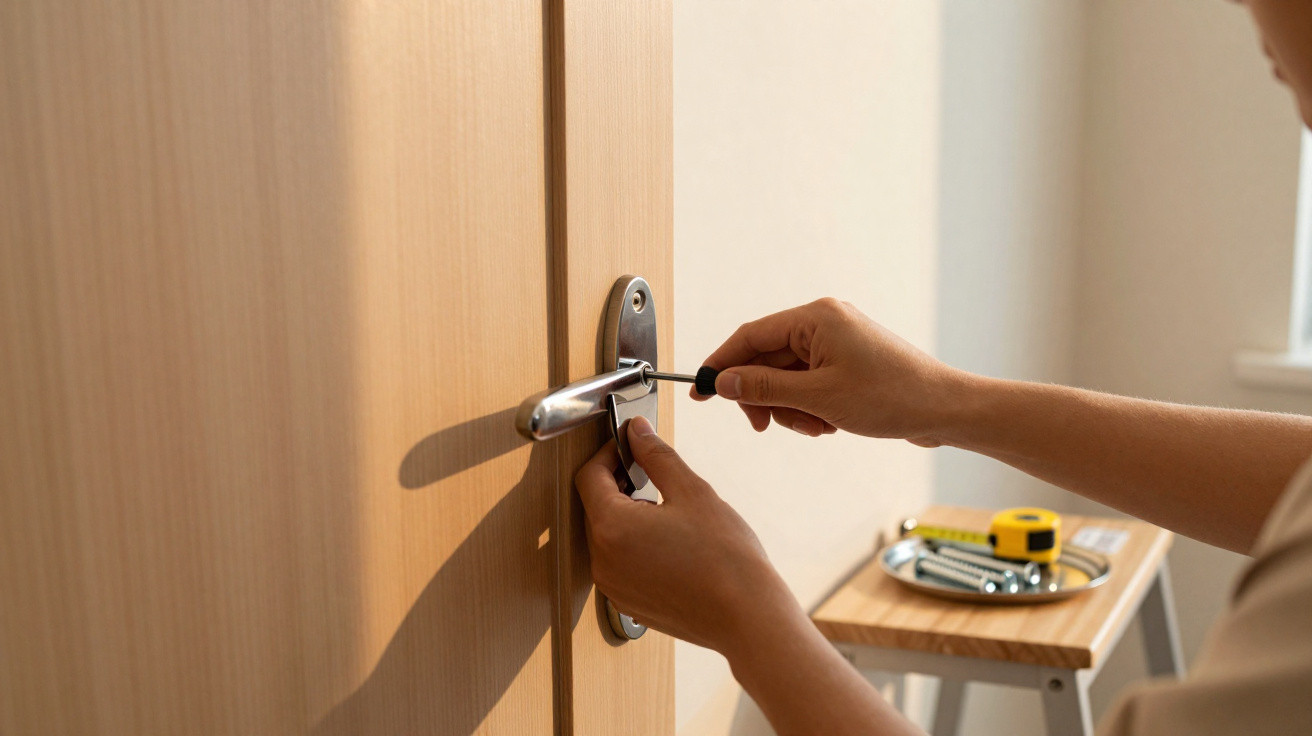
He swapped the outer plate for a hardened escutcheon and secured the through-bolts. There was no fuss and it took ten minutes. Visually, the door was unchanged, but it felt different. Like fitting a seatbelt to the front door.
It barely looks like anything at all.
The small metal component that changes the odds
Burglars rely on straightforward physics: grip it, pull it, twist it, and it is gone. Cylinder pulling and snapping take advantage of a protruding section and a weak breaking point in the lock body. A hardened escutcheon with cylinder pull protection takes away that grip.
It encloses the cylinder in steel, conceals its edges and prevents a tool from getting purchase. If there is nothing to hold, the rapid method becomes slow and noisy. That change alone can be enough to make an intruder try somewhere else.
Speak to a locksmith who is called out late at night. They will know the stories from uPVC and composite doors on large housing estates. Police briefings in parts of the UK and mainland Europe have associated Euro cylinder snapping or pulling with a substantial proportion of forced door entries, particularly where older locks are fitted. A landlord I met in Leeds installed pull-protection escutcheons on six flats after two burglaries in the same stairwell. Several weeks later, an attempted attack produced only scuffs on the rosette. The door remained locked. The burglar moved on.
The principle is reassuringly unexciting. Pulling a cylinder depends on leaving its front exposed, gaining a hold, wrenching out the core and then operating the mechanism. A pull-protection escutcheon obstructs every one of those stages. It combines hardened steel with a domed or flush front and a rotating ring that spins rather than catches when somebody tries to grip it.
The fixings pass through the door instead of being screwed into soft timber from outside. The cylinder should sit level with the faceplate, or just slightly behind it. No protruding edge means no leverage and no easy victory. It is not a miracle; it is physics working in your favour.
Choosing and fitting cylinder pull protection
Begin with the standards and correct dimensions. In the UK, seek a TS 007 2-star or Sold Secure SS301 escutcheon, then combine it with a 1-star or 3-star cylinder for layered protection. Across much of Europe, DIN 18257 (ES1–ES3) and SKG ratings indicate hardened steel and suitable resistance to pulling.
Before purchasing, measure the door thickness, backset and handle centres. The outer face should allow the cylinder to sit flush rather than stand proud. Through-bolts clamping the fitting from the inside to the outside are consistently better than surface screws.
Confident DIYers can fit one carefully. Anyone who is not can have a locksmith install it in less than an hour, and they will probably accept a cup of tea. The aim is a neat, secure fitting that appears integral to the door rather than added as an afterthought. Fit it once, then feel more at ease for years.
The usual errors are minor and easy to avoid. Some people choose the best-looking plate while ignoring its rating, while others retain an excellent plate but pair it with a poor cylinder. That is rather like putting a helmet on before riding an unstable bike.
Another common problem is leaving the cylinder proud by a couple of millimetres because its size was not checked against the new escutcheon. In fairness, this is not something people fit every day. Spend the additional five minutes measuring, or have a professional handle it and move on.
For the protection it offers, the cost is approachable. Many good-quality escutcheons cost about the same as a meal out. A complete professional installation is an expense you are likely to have forgotten by the time next month's card statement arrives.
“I don’t sell fear,” a Birmingham locksmith told me. “I sell time. Make a door loud and slow, and the bad guy leaves.”
- Choose hardened steel, a rotating outer ring and through-bolts.
- Combine ratings: use compatible UK TS 007 stars or EU DIN/SKG marks.
- Ensure the cylinder is flush with, or slightly recessed behind, the faceplate.
- If the handle becomes loose after installation, check the through-bolts again.
What this small shield actually gives you
An escutcheon will not turn a home into a fortress. It makes the property an unattractive option instead. That is its quiet brilliance. A thief expecting a 20-second job instead faces 90 seconds, followed by noise, risk and a reason to leave.
It offers reassurance, too. You will still lock up and inspect the windows. You will still leave a light on while you are away. Yet there is a subtle sense of relief when the key turns and the steel settles into place.
Others may never spot it on your door. You will know it is there. And if somebody attempts the usual method, they will know too.
| Key point | Detail | Why it matters to the reader |
|---|---|---|
| What is cylinder pull protection? | A hardened escutcheon or rosette that protects the cylinder and resists pulling or gripping. | Learn about the small component that interrupts a rapid break-in technique. |
| How do I choose one? | Match recognised ratings (TS 007, SS301, DIN 18257, SKG) and choose a size that leaves the cylinder flush. | Purchase once, install correctly and avoid weak points. |
| Does it replace a good cylinder? | No. It works alongside an anti-snap, anti-drill cylinder as part of layered security. | Layer defences to turn seconds into a failed attempt. |
FAQ
- Is cylinder pull protection the same as an anti-snap cylinder? No. The escutcheon is the external metal shield, while the anti-snap cylinder is the lock body. Used together, they obstruct the fast methods.
- Will it spoil the appearance of my front door? Contemporary options are slim and come in brushed finishes or black to complement handles. Many people will not notice any difference unless they are specifically looking for one.
- Can I install it myself? Yes, if you are practical and have taken the right measurements. Otherwise, a locksmith can fit and align it properly, without damaged screws or poorly aligned bolts.
- How much does it cost? Good-quality escutcheons often cost less than a tank of fuel. Professional fitting adds labour, but is still generally far below the excess on a burglary insurance claim.
- Does it prevent every break-in? No single product can do that. It removes one common, quick entry route and adds time, noise and risk. That change deters most opportunistic burglars.






Comments
No comments yet. Be the first to comment!
Leave a Comment