
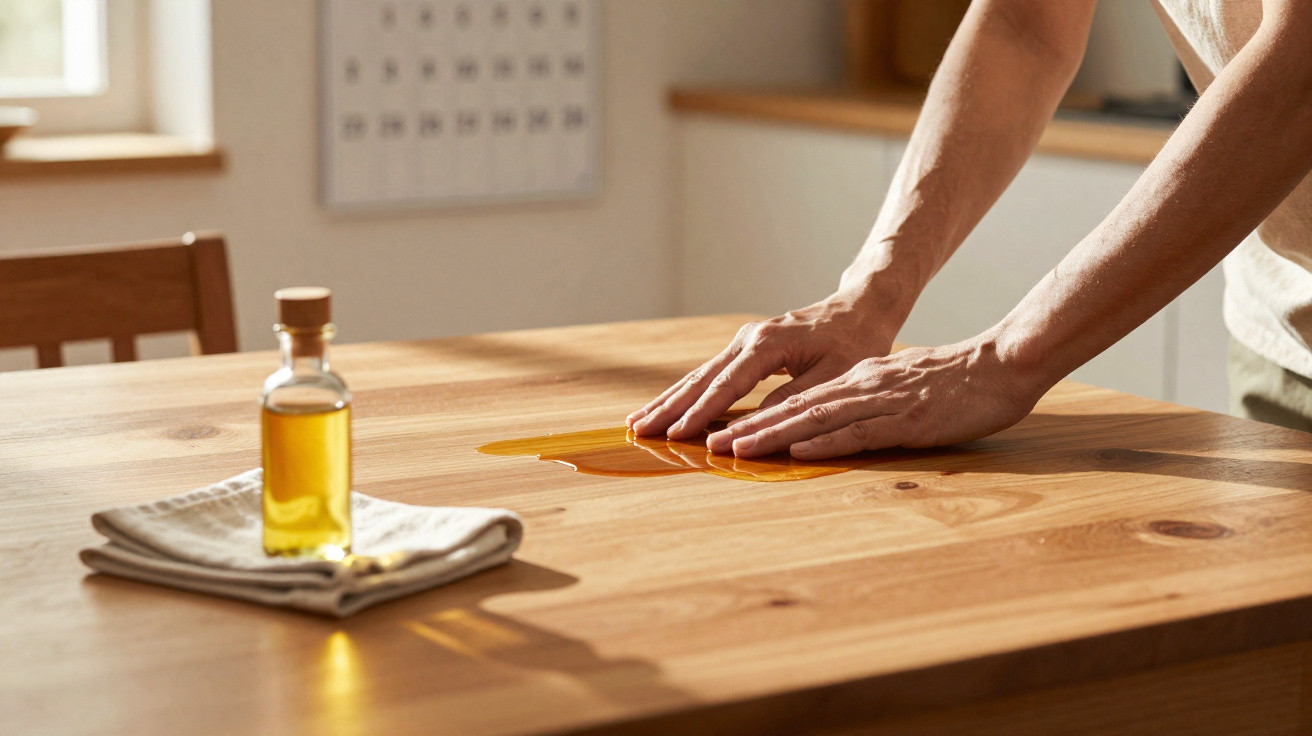
The oak table that used to glow in the late-afternoon sun now seems worn-out, almost grey. A coffee ring in one place, a dry patch in another-like skin that’s been left too long without moisturiser. You glide your hand across the top and it feels… parched.
In the corner there’s still a small area that catches the light. That little patch-where oil has somehow built up over the years-looks younger: deeper, warmer, richer. The contrast is unforgiving. Same table, same timber, two completely different outcomes. One gradually draining away; the other quietly looked after.
You try to pinpoint when it shifted-when routine care became accidental neglect. And then a simple thought lands: the beauty in wood doesn’t vanish. It just sits there, waiting to be brought back.
The quiet power of a monthly oil ritual
Most wooden furniture doesn’t fail because of one dramatic mishap. It dulls because of countless tiny acts of nonchalance: a mug set down without a coaster; afternoon sun hitting the same spot day after day; cleaning sprays that remove more than they protect. Timber is tough, but it’s also porous and reactive-and yes, a little temperamental.
Oiling once a month works like hitting reset. It nourishes the fibres, lifts the colour, and slows the creeping, barely-noticed ageing. The difference isn’t instant in the way a fresh coat of paint is. You notice it years later, when your table still looks like it has stories ahead of it-not only behind it.
There’s pleasure in the process as well: the gentle resistance of the cloth, the scent of a natural oil, the soft sheen appearing as you buff. It doesn’t feel like a chore so much as a small dialogue with the material. Over time, that steady habit is what separates furniture that simply lasts from furniture that genuinely matures.
Take a kitchen worktop. It’s often the hardest-working strip of wood in the home, enduring knives, hot pans, splashes of wine and wet veg. When it’s left dry, the fibres open up; stains bite deeper; the top starts to feel rough and uneven. First you reach for chopping boards, then tablecloths-and eventually, regret.
Now imagine the same worktop with a monthly oil routine. A family in Lyon kept track of their solid beech top for six years. Roughly every four weeks, they oiled it using a straightforward food-safe oil. In year one, the tone became noticeably richer. By year three, fine scratches melted into a soft patina. At the six-year mark, visitors still described it as “new but vintage.” That’s the ideal balance.
The counterexample is just as telling. A joinery workshop in Bristol compared two identical oak benches: one oiled monthly, the other done “whenever we remember”. After three years, the neglected bench had dark water marks around the legs, raised grain, and ended up needing sanding. The bench that was maintained? Smooth, honey-coloured, and free of deep stains. Same timber, same space, different routines.
The reason monthly oiling is so effective is straightforward. Wood cells behave like tiny straws. When they’re dry, they’ll happily drink anything: water, coffee, skin oils, sauces, wine. That’s how you get staining, swelling, and warping. When those cells are already filled with a suitable oil, they’re far less desperate-spills sit on top longer instead of racing inside.
Oil also brings out the grain by changing how light interacts with the fibres. Dry timber scatters light and can look pale, chalky, even dusty. Oiled wood absorbs and reflects light in a deeper, softer way. That’s why the very same table can look flat one month and almost three-dimensional the next, purely from a proper oiling.
There’s a mental benefit, too. A monthly habit makes you really see your furniture. You catch the tiny chip before it turns into a break; you spot early sun-fade before it becomes a permanent ghost patch. It’s a conversation with time, rather than a fight against it.
How to oil wooden surfaces like a pro (without being one)
A monthly routine starts before the oil comes out. Step one is cleaning-not with aggressive sprays, but with a slightly damp cloth and a mild soap if there’s grease. The goal is simple: remove crumbs, dust and sticky residue without stripping the wood back to something raw.
When the surface is dry to the touch, tip a small amount of oil onto a clean, lint-free cloth-think teaspoon, not ladle. Then wipe with the grain using long, unhurried strokes. You’re not painting; you’re working it in. Leave that first coat for 10–20 minutes, then return with a fresh dry cloth and remove every bit of excess.
That final stage is where it comes together. Buffing doesn’t just take away what the wood can’t absorb-it also reveals the soft sheen. The finish should feel velvety, not tacky. If it still feels oily the next day, you applied too much. Next month, you’ll adjust.
Here’s what glossy interiors magazines rarely say out loud: most people oil their furniture once when it’s new, and then don’t think about it again for years. Life gets busy. You move. Children arrive. Worktop care drops to the bottom of the list. Let’s be honest: nobody truly does this every day.
That’s exactly why a realistic rhythm matters. For indoor wooden surfaces that see regular use-dining tables, worktops, desks, chopping boards-monthly is a very workable sweet spot. Pieces that take heavy wear in homes that are extremely dry or very humid may need a touch more; quieter items may need less. But if you set a reminder for the first weekend of every month, you’re already ahead of 90% of people.
The big errors? Using cooking oils that can go rancid. Forgetting the wipe-down and leaving thick, gummy layers behind. Combining random products without checking labels. And sanding too aggressively every time you spot a mark. Wood doesn’t need punishment-it needs care, consistency and a light touch.
“I tell clients the same thing I tell new guitar owners,” explains Mark, a cabinetmaker who’s been working with walnut and oak for 25 years. “You’re not just preserving the object. You’re slowly teaching it how to age well. Oil is part protection, part conversation.”
If you prefer a simple checklist you can glance at on a Sunday morning, use this monthly routine:
- Wipe the surface with a slightly damp cloth, then let it dry completely.
- Apply a small amount of a suitable wood oil using a soft cloth, following the grain.
- Wait 10–20 minutes, then buff off all visible excess until it feels dry to the touch.
- Leave the surface overnight before heavy use or contact with water.
- Every 6–12 months, review the finish: does it need a deeper refresh or a light sand?
Living with wood that grows more beautiful, not more fragile
There’s something quietly grounding about furniture that gets better with age. Not the manufactured “aged look” you buy ready-made, but a real patina built mug by mug, season by season. A properly oiled table holds its history without shouting. The faint ring from last winter’s mulled wine. The softened scratch from a child dragging a toy car across the top.
Monthly oiling won’t remove the marks of living. It integrates them into a surface that makes sense. It’s the difference between scars that look fresh and scars that have healed. That’s why people who keep up the habit often find their perspective shifts: surfaces stop being “things to protect at all costs” and become everyday backdrops that move through life with the family.
Practically speaking, the long-term payoff is real. Wood that stays fed is less likely to crack during dry winters than timber that’s been left to dehydrate. Corners don’t chip as readily. Colours are less prone to washing out into that uneven, dispiriting yellow. And when it’s time to sell, gift, or pass something on, you’re not doing damage limitation-you’re handing over a piece with years left in it.
There’s also a quiet mental lift in the ritual itself. Ten minutes spent oiling a table is ten minutes away from screens, alerts and mental noise. It’s a small hands-on job with an immediate, visible reward. You watch the surface change under your palms-and you know you caused that change. Some people meditate. Some go for a run. Some oil the dining table and breathe.
So the next time you walk past a dull sideboard or a tired oak worktop, stop for a moment. Under the dryness, the original colour is still there, waiting. A decent bottle of oil, a soft cloth, and one slow Sunday each month can be the difference between “old furniture” and “future heirloom”. The wood is ready. The question is: are you?
| Key point | Detail | Why it matters to you |
|---|---|---|
| Make monthly maintenance a ritual | Pick a fixed day each month to clean, oil and buff | Builds consistency without daily mental load |
| Choose the right oil | Use oils designed for wood (linseed, tung, food-safe mineral oil, professional blends) | Prevents rancid smells, staining and sticky finishes |
| Always buff | Wipe off excess after 10–20 minutes for a dry feel | More pleasant surface, better durability, more premium look |
FAQ:
- How often do I really need to oil wooden furniture? For surfaces you handle every day (tables, worktops, desks), once a month is a reliable rhythm. Lower-use pieces such as shelves or sideboards can often be done every 2–3 months, with a more thorough treatment once a year.
- Which oil should I use on a table or worktop? Choose products clearly labelled for wood: hardwax oils, tung oil, boiled linseed oil, or food-safe mineral oil for kitchen surfaces. Avoid everyday cooking oils such as olive or sunflower oil, which can become sticky and rancid.
- Can I apply oil over old varnish or lacquer? Not in any meaningful way. If the timber is sealed with varnish or lacquer, the oil can’t soak in. You would need to sand or strip back to bare wood before starting an oil routine. If the surface is already oiled, however, you can top it up without stripping.
- How long should I wait before using the surface after oiling? Leave it at least overnight before heavy use, and 24–48 hours before exposing it to water or hot items. Curing times depend on the product, so read the label for precise guidance.
- Do I have to sand every time I oil? No. Light sanding is only useful when the surface feels rough, has built-up product, or shows deeper staining. For normal monthly upkeep, a gentle clean and a fresh application of oil is usually sufficient.





Comments
No comments yet. Be the first to comment!
Leave a Comment