
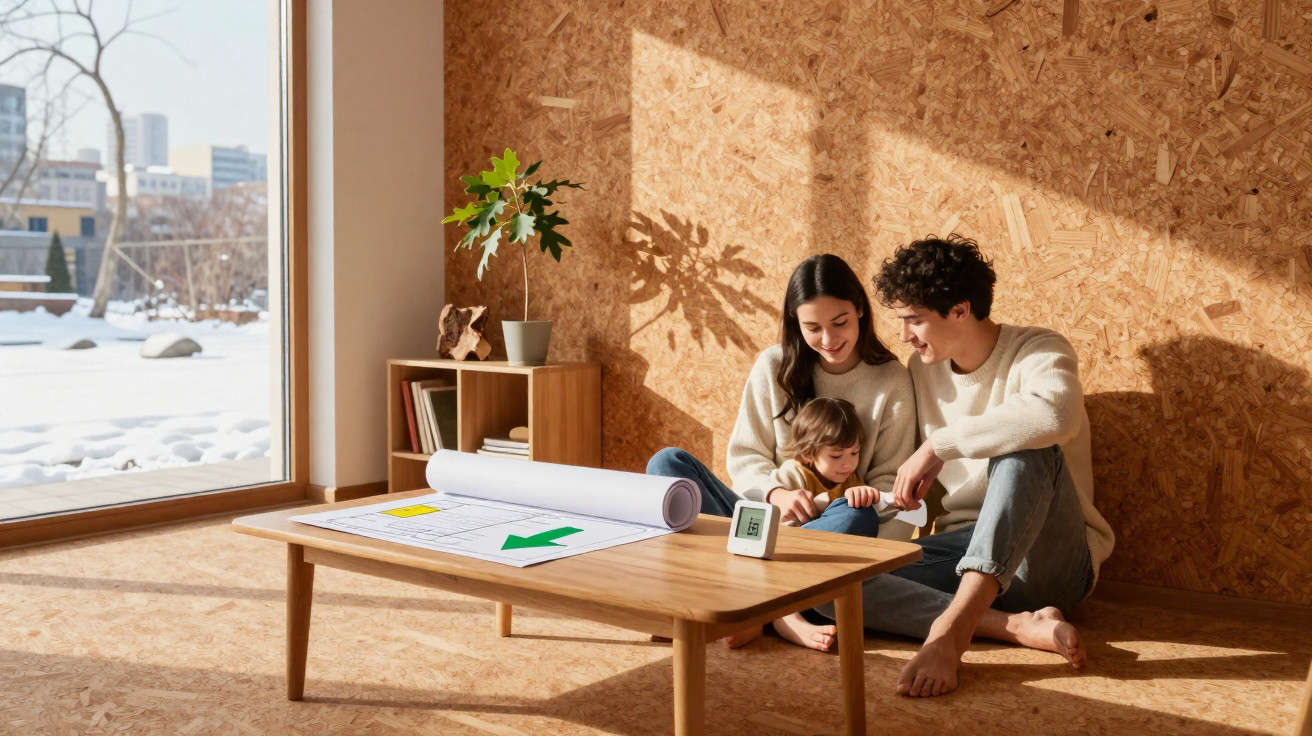
Most people only know cork from wine bottles or as a noticeboard above a desk. On building sites, however, the material is making a quiet comeback: more and more homeowners are turning away from glass wool and other traditional insulation products and insulating their homes with cork. What is driving this trend - and is it genuinely worth it?
Why insulation has suddenly become a top priority
Energy prices have become hard to predict, new builds must meet strict requirements, and older properties can lose value quickly without refurbishment. If you own a home today, it is difficult to avoid the insulation question. This is exactly where cork shows what it can do.
"Cork combines thermal protection, sound insulation, environmental credentials and durability in a single natural material."
Many people planning building work want alternatives to glass wool or polystyrene because they would prefer fewer plastics, less dust and fewer chemicals indoors. Cork fits neatly into that gap - and brings features that many simply do not expect.
Strong thermal protection: cork keeps heat and cold under control
Cork is made up of millions of tiny cells filled with air. That structure acts like a natural cushion and noticeably slows down heat transfer. In winter, warmth stays in the house for longer; in summer, heat takes longer to move indoors.
A key idea here is the so-called “thermal phase shift effect”: cork takes a relatively long time before absorbed heat reaches the inside face of the wall. You notice this most in loft rooms, which can otherwise heat up quickly on hot days.
- In winter: Less heat escapes, and heating bills fall noticeably.
- In summer: Rooms stay cooler for longer, so air conditioning runs less - or is not needed.
- In the in-between seasons: Temperatures remain more stable, and the whole home feels more comfortable.
Many owners report a clear change in living comfort after installing cork insulation: no more cold wall surfaces, less of that “draughty” sensation, and more pleasant temperatures spread across the day.
Quieter living: cork as natural noise control
As well as thermal insulation, cork performs strongly on sound. Its elastic structure absorbs sound waves very effectively. That applies both to noise coming from outside - such as traffic or neighbours - and to impact noise within the home.
Typical sound-insulation uses include:
- Impact-sound insulation beneath parquet, laminate or tiles
- Internal wall insulation between a flat and the stairwell
- Separating off a home office or music room
"Cork reduces noise without the need for additional specialist soundproofing materials - an advantage, especially when refurbishing existing buildings."
This aspect matters more than ever in blocks of flats or terraced houses, where peace and quiet has become a genuine selling point.
Natural raw material: how cork is harvested
Cork comes from the bark of the cork oak, which grows mainly in Portugal, Spain and other Mediterranean regions. The tree does not need to be felled. Roughly every nine to twelve years, the bark can be carefully removed, and the tree then forms new bark.
For that reason, cork is considered a fully renewable raw material. The trees store large amounts of CO₂ as they grow, and that carbon remains locked into the products over the long term. Processing also requires comparatively little energy and is usually done without problematic chemicals.
"Choosing cork means bringing an insulation material into your home that does not rely on petroleum and can be recycled or composted at the end of its life cycle."
For owners who care about a “clean” building-material footprint, this is a decisive point - also with an eye on future legal requirements and grant schemes.
Where cork can be used
Cork insulation is available as rigid boards, flexible rolls or granules. That range makes it surprisingly versatile.
Cork on walls
Rigid boards are most commonly used for external and internal walls. Externally, they can be bonded to masonry like other insulation boards and finished with render. Internally, boards make it possible to upgrade older, cold walls afterwards without changing the building’s façade.
Insulating the roof
In roof structures, cork can be fitted between rafters or laid as a continuous insulation layer over the roof decking. The combination of winter warmth retention and summer heat protection is what makes cork particularly appealing in this area.
Comfort underfoot
Under screed or as an underlay beneath the finished floor covering, cork improves both impact-sound performance and the feel underfoot. Floors feel warmer and softer, which is especially popular in children’s bedrooms and main bedrooms.
| Application | Form of cork | Main benefit |
|---|---|---|
| External wall | Boards | Thermal protection and an ecological façade |
| Internal wall | Boards, sometimes rolls | Less noise, fewer draughts |
| Roof | Boards, granules | Heat protection under the roof |
| Floor | Rolls, boards | Warmth underfoot and impact-sound insulation |
Robust, moisture-resistant and surprisingly safe
Cork does not rot easily. It is naturally resistant to moisture, mould, many pests and rodents. It achieves this without extra impregnation treatments or biocides - a clear advantage over some other insulation products.
There is also the fire-safety angle: cork does not ignite easily. It chars on the surface rather than catching fire quickly, and in a fire it does not release large quantities of toxic gases. That can be reassuring, particularly in timber houses or roof constructions.
"The combination of rot resistance, moisture tolerance and fire protection makes cork a classic ‘fit it once, forget it for decades’ material."
It costs more, but can save real money over time
Cork is more expensive upfront than many standard insulation materials. When people request quotes, the first reaction can be shock. Yet many designers argue that focusing only on the price per square metre is misleading.
If you factor in:
- lower heating costs over decades,
- reduced need for cooling in summer,
- little to no maintenance or replacement,
- and a potentially higher property valuation,
the extra cost becomes far easier to justify. In some cases, a grant may even cover part of the expense when ecological insulation materials are used.
Resale value plays a part as well: homes with sustainable materials and a strong energy profile are often easier to let or sell.
When cork makes particular sense - and what homeowners should watch out for
Cork is especially suitable for people who plan to stay in their property for the long term, care about ecological building, and want high living comfort. In historic buildings with vapour-permeable wall build-ups, it often integrates well because it can regulate moisture without overloading the fabric of the building.
Even so, expert planning is still essential. Like any insulation material, cork needs to be installed correctly: the right thickness, suitable junction details, and careful protection against driving rain or rising damp. Cutting corners here risks building damage that has nothing to do with the material itself.
A discussion with an energy adviser or a designer who already has experience with cork is a sensible step. They can judge whether external wall insulation, roof insulation or a combination is best, and what material thicknesses make economic sense.
What many people do not realise: cork also changes day-to-day living
Beyond pure thermal performance, cork creates a different feel indoors. Walls feel less “hard”, and reverberation in empty or large rooms reduces noticeably. Even everyday sounds such as footsteps, chairs scraping or children’s noise can seem more muted.
Cork can also be of interest to allergy sufferers because it releases very little dust and is generally produced without glass fibres or aggressive binders. Anyone who has previously struggled with itchy skin or irritated airways around glass wool is therefore increasingly switching to natural insulation materials such as cork.
That helps explain why more and more homeowners are taking the step: cork is not a miracle cure, but it is a robust, sustainable alternative to glass wool that combines high living comfort, long-term savings and a better environmental conscience.



Comments
No comments yet. Be the first to comment!
Leave a Comment